When you bite into a piece of meat that is so tender it almost melts in your mouth, there’s often more behind that experience than simply choosing the best cut. Many cultures—especially in East Asia—have long perfected methods to transform the toughest slices of meat into silky, juicy delights. Among these, velveting, enzyme marinades, alkaline pre‑treatments, and precise heat control stand out as traditional yet powerful “Eastern methods” to tenderize meat permanently, not just superficially.
Whether you’re dealing with cheap, lean cuts or budget-friendly beef, pork, or poultry, unlocking these techniques can make your dishes taste luxurious. In this extensive article, we’ll explore the theory, science, method, and step‑by‑step recipes to apply the Eastern approach to tenderizing meat so that even the toughest cuts become soft and flavorful.
Why Eastern Tenderizing Methods Excel
Before diving into techniques, it helps to understand why these methods often outperform simple marinades or mechanical pounding. The goals are:
- To prevent overcooking or drying out
- To protect the interior moisture while allowing flavor penetration
- To weaken connective tissue (collagen) in controlled fashion
- To enhance mouthfeel (the texture sensations) rather than just flavor
Eastern methods approach these goals by combining chemical, enzymatic, and physical strategies in balance—coating, pH alteration, protective barriers, and controlled pre‑cooking (par‑cooking). The result: meat that retains juices, resists chewiness, and achieves a velvety texture even under high‑heat cooking.
One of the most celebrated methods is velveting, commonly used in Chinese cuisine, which combines coating and gentle pre‑cooking to protect meat fibers while sealing in moisture.
The Science Behind Tenderness: What Makes Meat Tough?
To effectively tenderize, you must grasp what gives meat its toughness. The three main structural components influencing texture are:
- Muscle fibers (myofibrils) — the long protein strands that contract and toughen when overcooked
- Connective tissue (collagen and elastin) — the natural “glue” around fibers that resists breakdown
- Intramuscular fat (marbling) — fat acts as a buffer, lubricating and softening the bite when heat melts it
When meat is cooked, muscle fibers contract, forcing moisture out and making it firmer. Collagen gradually melts into gelatin only under extended moist heat or slow cooking. The goal of tenderizing is to either pre-denature the tough proteins or allow the meat to cook in a way that collagen breaks down without over-stressing the fibers.
Eastern techniques often use mild alkaline solutions (like baking soda), enzyme agents (like papain, bromelain), or protective barriers so that high-heat cooking doesn’t over-contract the fibers. They also use par-cooking (brief blanching or steaming before final cooking) to “set” surfaces.
Core Eastern Methods (and How They Work)
Here are the key strategies used in Eastern kitchens to tenderize tough meat before final cooking:
1. Velveting (Starch/Alkaline or Egg White Coating + Par‑Cook)
- Coat the meat with a light mixture (typically cornstarch, egg white, small amount of baking soda, sometimes a dash of oil and wine).
- Let it sit briefly (10–30 minutes) for the coating to interact with the surface.
- Blanch or briefly poach (or flash fry) the meat in water or oil to “set” the coating.
- Finally, stir-fry or finish the meat in the desired sauce or method.
That thin coating forms a protective “insulation” layer. During the final high-heat cooking, the meat inside doesn’t sear and toughen as aggressively, so the interior stays juicy and the outer crust forms. It’s a method that helps produce “velvety” texture. (From the known technique of velveting.)
This method is very tolerant with lean cuts, chicken breast, pork loin—especially when cooked quickly in stir-fry.
2. Alkaline (Baking Soda) Pre‑Treatment
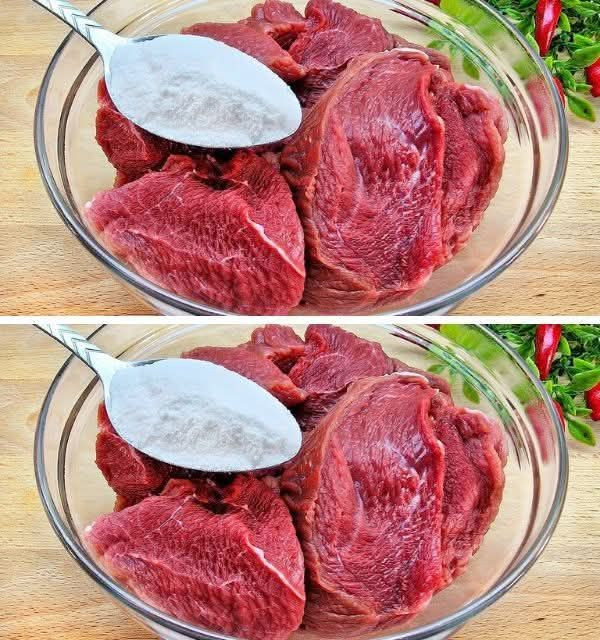
Applying a modest amount of baking soda (sodium bicarbonate) to the surface of meat raises the pH slightly, which weakens the protein bonds. This makes the meat less prone to seizing (becoming tight and chewy) during cooking. Typical usage is:
- Mix about ¼ to ½ teaspoon of baking soda per pound of meat (sometimes diluted in water)
- Rub or massage it over the meat’s surface, or submerge thin slices in the solution
- Let it rest for 15–30 minutes (for thin pieces) or up to an hour (for thicker cuts)
- Rinse thoroughly before cooking so residual soda doesn’t impart an unpleasant taste
This technique is especially effective for thin cuts used in stir-fries or quick sears, where you want tenderness but still want clean flavor.
3. Enzyme Marinades (Papain, Bromelain, etc.)
Many tropical fruits contain powerful proteolytic enzymes that chew up tough muscle proteins gently:
- Papaya (papain)
- Pineapple (bromelain)
- Kiwi (actinidin)
The key is controlled exposure. Too much enzyme or too long in marinade and the meat becomes mushy. Best practice:
- Puree or juice the fruit and mix a small proportion into your marinade
- Combine with acid, oil, aromatics as desired
- Marinate for limited time—often 30 minutes to a few hours (depending on cut and thickness)
- Cook promptly after marinating
This works beautifully for beef, pork, lamb, and even some tougher poultry cuts.
4. Acidic Marinades + Salt Brine Support
While acid alone (vinegar, citrus, yogurt, buttermilk) is a well-known tenderizer, in Eastern methods it’s often used in mild concentrations and combined with coating (velvet) or protective barriers so that the acid doesn’t “cook” the meat or over-denature. The acid loosens collagen and fiber structure. Salt in brine helps the meat retain moisture via osmosis.
5. Controlled Heat & Par‑Cooking
After the pre-treatment, many Eastern recipes use precise, quick heat (stir-frying, wok searing) where the interior is already primed to stay tender. Some methods also par-cook (blanch, steam, or oil flash) before final cooking to finish inside without over-stressing fibers.
Step-by-Step Master Class: Tenderize Tough Meat Eastern Style
Click page 2 for more