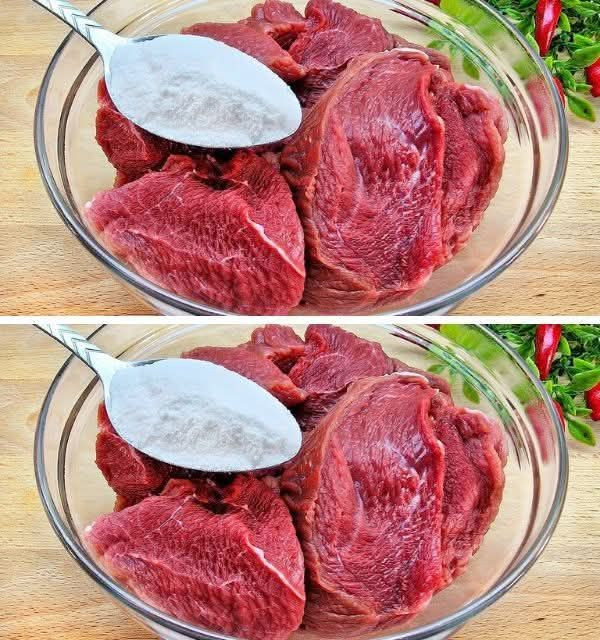
Let’s walk through an example method, suitable for beef slices, pork, or chicken—something you might use in stir-fries, Mongolian beef, or sweet‑and-sour dishes.
Ingredients & Tools You’ll Need
- Tough meat (e.g. flank, rump, pork neck, chicken breast)
- Baking soda (food grade)
- Cornstarch or potato starch
- Egg white (optional)
- A light oil (like vegetable or peanut)
- Wine (Chinese cooking wine or dry white wine)
- Seasonings: salt, pepper, small amount of soy or seasoning sauce
- Clean water (for rinsing)
- A pot or shallow pan for blanching
- Cooking wok or skillet for final finish
Procedure
- Slice Thinly and Against the Grain
Cut meat into thin strips (4–8 mm) or desired shape. Always slice across the grain, not parallel. This physically shortens the fibers and facilitates tenderness. - Apply Baking Soda Pre‑Treatment
- Sprinkle or lightly coat the surface of the meat with baking soda (e.g. ¼ teaspoon per 500g), or use a diluted baking soda solution and massage.
- Let rest 15–30 minutes (for thin slices) or up to 45 minutes for thicker cuts.
- During this time, the meat will start to relax and proteins unravel slightly, making later cooking gentler.
- Rinse Thoroughly
After the rest period, rinse the meat thoroughly under cold water. This removes residual soda and prevents off tastes. Pat dry with paper towels. - Apply Velveting Coating
- In a bowl, mix 1 part cornstarch (or potato starch) with 1 part egg white (or a small amount of liquid) plus a dash of oil, wine, and seasoning (salt, pepper).
- Toss the cleaned meat in this coating so that it is lightly, evenly coated.
- Par‑cook / Blanch or Flash‑Fry
- Option A: Bring water to a simmer, drop meat in for 15–30 seconds (just to set the starch).
- Option B: In hot oil (preheated to ~150–160 °C), quickly stir-fry for ~10–20 seconds.
This step sets the coating and partially “cooks” the surface, protecting against overcooking in the final step.
- Drain and Rest Briefly
Remove meat, drain, and let rest a minute while preparing the main stir-fry or sauce. - Final High-Heat Cook / Sear
In a hot wok or skillet, cook the meat just until done, adding sauce, aromatics, and vegetables. Because the meat has been buffered by coating and pre-treatment, it stays juicy and tender, even under intense heat.
Tips and Variations
- Don’t overload the wok—cook in batches to avoid steaming.
- For very lean cuts, you can skip the egg white stage and rely just on starch + soda.
- Adjust marinade time: thinner slices need shorter soda exposure; thick slabs require more but watch for mushiness.
- Combine enzyme marinade (e.g. a dash of papaya or pineapple extract) with the coating and soda method for extra effect.
- Some versions use milk, wine, or yogurt as minor tenderizing agents in marinade, but always with careful balance.
How to Adapt to Larger or Thicker Cuts
Velveting and soda pre-treatment are great for thin slices, but what about roasts, ribs, brisket?
- Use enzyme marinades over a longer period (overnight), in controlled proportions.
- Employ low-and-slow cooking (braise, stewing) to convert collagen to gelatin.
- Before simmering, apply coating or gentle par‑cooking steps to protect fiber structure.
- Use moderate baking soda amounts on the surface, and optionally inject into the meat interior for large cuts (done cautiously).
- After cooking, rest meat properly before slicing.
Common Pitfalls and How to Avoid Them
Even with a proven Eastern method, things can go wrong. Watch out for:
- Overuse of baking soda — too much can lead to soapy flavor or mushy texture
- Insufficient rinsing — residual soda gives off-taste
- Over-marinating with enzyme agents — meat turns mushy if left too long
- Skimping on the par-cook step — without it, the protective coating won’t form
- High heat too early — prematurely toughens fibers
- Inadequate slicing (with the grain) — incorrect slicing negates tenderizing
- Neglecting rest — cutting meat too soon lets juices run out
Why the Eastern Approach Beats Simpler Methods for Tough Cuts
- It combines multiple tenderizing principles (alkaline, coating, par-cook) rather than relying on one
- It protects meat fibers during high-heat cooking, preserving juiciness
- It’s fast and effective even for lean and tougher proteins
- It requires less marination time compared to deep enzymatic soaking
- It adapts well across meats (beef, pork, poultry) and cuisines
When you master this integrated method, even the toughest, leanest cuts can taste like premium cuts.
Case Studies and Examples
- Stir-Fried Beef Dishes: Many Chinese beef-stir recipes leverage velveting + soda for tender strips in saucy, high-heat cooking.
- Korean BBQ / Bulgogi: Uses pear purée enzyme + coating + quick grilling
- Thai / Vietnamese Street Meats: Use enzyme-rich fruit in marinades along with cornstarch plus brief flash‑fry
- Japanese Yakitori: Chicken pieces often pre-treated with soda or mild marinade before skewering and grilling
In each, the goal is consistent: a succulent interior, resilient surface, and perfect texture under intense flame or heat.
Summary: The Path to Soft, Juicy, Tender Meat
To bring it all together:
- Slice meat thin and against the grain
- Pre-treat with modest baking soda-based alkaline buffer
- Rinse thoroughly
- Apply a light coating of starch / egg white / seasoning (velveting)
- Par-cook (blanch or flash-fry) to set the protective layer
- Final high-heat finish just until done
This “Eastern method” intelligently combines chemical, physical, and thermal techniques to achieve what few methods can: tenderizing the toughest meat while preserving flavor, texture, and juiciness. With practice, you can turn any cut—even economical ones—into a dish worthy of high-end restaurants.