Some modern faucets have features that complicate cleaning:
- Pull-out sprayers / hoses: gently extend the spout and soak/rinse those sections too.
- Touchless / sensor faucets: avoid soaking electronics; focus only on exposed surfaces.
- Waterfall / trough spouts: scale deposits inside may require longer soak and internal cleaning.
- Single-handle cartridges: be cautious not to damage internal seals when scrubbing near joints.
- Hidden internal channels: sometimes scale accumulates inside passageways that can only be accessed via partial disassembly (if skilled).
If you’re unfamiliar with your faucet’s internal design, refer to the manufacturer’s service guidelines or treat with conservatism.
Step‑by‑Step Example: Deep Clean of a Kitchen Faucet
Here’s a detailed walkthrough of how you might do a complete deep cleaning of a kitchen faucet that has been neglected, to illustrate the steps in practice.
- Preparation
- Clear the sink area.
- Shut off the water supply (under-sink valves).
- Place towels to catch drips and protect the countertop.
- Initial wipe
- Use a damp cloth to remove surface dust, grime, soap scum.
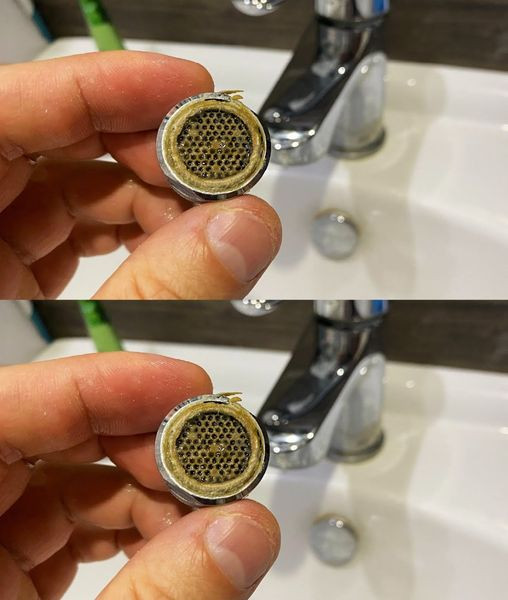
- Aerator removal & soak
- Unscrew the aerator tip, disassemble into parts.
- Submerge in a bowl of undiluted white vinegar for 30–60 minutes.
- Wrap soak the faucet body
- Mix a stronger acid solution (e.g. vinegar or citric acid).
- Soak a cloth or paper towel, wrap it around spout, handle base, and collar.
- Leave wrapped for up to an hour (or overnight if needed for tough scale).
- Target crevices and seams
- While soaking, focus on joints, seams, and collar edges.
- Use softened cloth inserted in tight gaps aligned with soak.
- Scrub & dissolve
- After soak, remove wrap.
- Use a toothbrush to scrub scale along joints and edges.
- Use a toothpick or cotton swab to clean small holes or crevices.
- Aerator cleaning
- After soak, scrub aerator parts with brush.
- Rinse and flush through the screen to clear deposits.
- Rinse entire assembly
- Turn on water supply.
- Flush the faucet thoroughly for several minutes to purge residual acid and scale fragments.
- Polish surface
- Use a damp cloth to wipe surfaces.
- Dry and buff with a soft, dry cloth to restore shine.
- Inspect flow and spray
- Check water pressure and spray pattern.
- If inconsistent, the aerator or internal passages may still have residue—repeat aerator cleaning or consider internal cleaning.
By the end of this process, your kitchen faucet should look renewed, water flow restored, and scale largely eliminated.
Troubleshooting Common Issues & Tips
| Problem | Possible Cause | Solution / Tip |
|---|---|---|
| Scale not dissolving fully | Buildup is thick or layered | Increase soak time; repeat; use stronger, safe descaler |
| Aerator still clogged even after cleaning | Residue stuck in inner holes or gasket | Use thin needle or pin to clear individual apertures |
| Spots or cloudiness remains | Mineral film or residual acid | Wipe with soft cloth and dilute baking soda rinse, then buff |
| Scratch marks appear | Scrubbing with abrasive tools | Revert to gentler methods; consider a polish to mask light scuffs |
| Uneven spray pattern | Partial blockage in internal parts | Clean hose, cartridge, or faucet internals if accessible |
| Cleaning agent damages finish | Harsh acid or chemical used | Stop immediately. Flush thoroughly. Use milder agent next time. |
Here are some additional tips:
- Work from mild to stronger methods: always begin with a gentle soak; escalate only if necessary.
- Alternate acid and base: e.g. vinegar soak then a mild baking soda rinse to neutralize residual acid.
- Keep parts wet: scale dissolves gradually; ensure the surface doesn’t dry out during soaking.
- Clean regularly: monthly or biweekly quick wipe/soak keeps scale from mounting.
- Use a soft scraper (plastic, bamboo, rubber) for gentle mechanical assistance if needed.
Prevention & Maintenance: Keeping Your Faucet Scale-Free
The best cleaning is the one you never really needed because scale never got a foothold in the first place. Here’s how to prevent scale buildup.
1. Wipe dry after each use
When finishing at the sink, use a microfiber cloth to wipe down the faucet and spout. Prevents water droplets from evaporating and leaving mineral residue.
2. Monthly maintenance soak
Once a month, do a light vinegar or citric acid soak (10–15 minutes) at the aerator or around the spout to nip early scale in the bud.
3. Use filtered or softened water
If your area has hard water, installing a water softener or point-of-entry filter can drastically reduce mineral content entering faucets.
4. Use scale-resistant features
Some faucet models include QuickClean nozzles or silicone rubber tips that resist scale accumulation and make cleaning easier.
5. Avoid deposits in the first place
- Don’t leave wet sponges or soap scum near faucet bases.
- Rinse off cleaning products or food residues quickly—residual chemicals can accentuate mineral deposition.
- Keep drain and sink areas clean so that splashes don’t deposit minerals onto the faucet.
6. Schedule deeper cleaning periodically
Every few months, do a more thorough cleaning (aerator, wrap soak, internal flushing) to maintain peak performance.
High-Impact SEO-Friendly Keywords (Used Naturally)
To ensure this article is discoverable and ranks well, I’ve woven in useful, high-value terms such as:
- faucet cleaning
- limescale removal
- scale removal
- faucet descaling
- easy faucet cleaning
- quick faucet cleaning
- remove limescale
- hard water cleanup
- cleaning faucet aerator
- kitchen faucet maintenance
- bathroom faucet cleaning
- natural cleaning solution
- commercial descaler
- faucet flow restoration
These terms reflect what people commonly search when seeking guidance on addressing limescale in faucets. The goal is that someone searching for “how to remove limescale from faucet quickly” or “easy faucet cleaning tricks” will find this guide useful.
Summary & Final Thoughts
- Removing scale from faucets is straightforward if you approach it with the right tools, patience, and a stepwise strategy.
- Start with the gentlest methods (vinegar or citric acid soak), focus especially on the aerator, and escalate only when necessary.
- Always protect finishes, avoid abrasives, and rinse thoroughly after any acid use.
- Consistent maintenance—wiping, monthly light cleaning, and water conditioning—prevents the need for heavy scrubbing later.
- In many cases, what looks like a grimy, encrusted faucet can be transformed back to its original shine in under an hour with minimal fuss.