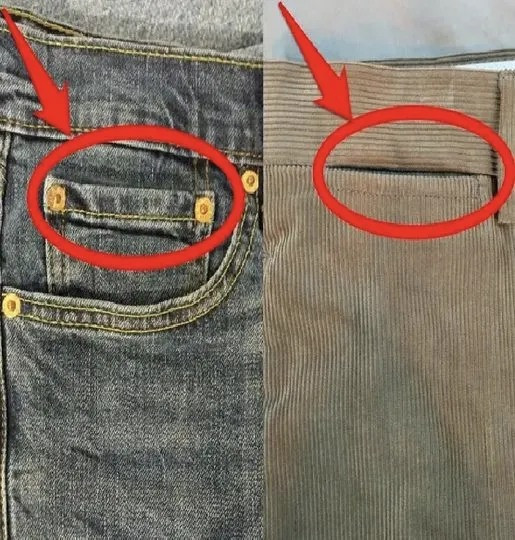
Every pair of jeans you’ve ever owned likely has one—tucked inside the larger front right pocket, there’s a small, almost hidden, fifth pocket. It’s not just a design quirk or a fashion afterthought. This tiny piece of fabric has a story to tell—a tale deeply woven into the threads of industrial evolution, American history, labor culture, fashion innovation, and even modern-day utility.
What began as a functional necessity has transcended centuries to become a stylistic signature. So, why does every pair of jeans have a little pocket? And what does this seemingly insignificant design tell us about the past, present, and future of clothing design?
Let’s take a long, hard look at this iconic element, examining its origin, function, evolution, and modern interpretations—and why it continues to appear in jeans today, even though its original purpose has mostly faded into history.
1. The Anatomy of a Classic Pair of Jeans
Before we can understand the significance of the little pocket, we need to appreciate the construction of a traditional pair of jeans. Typically, jeans consist of:
- Two front pockets
- Two back pockets
- A coin-sized inner pocket inside the right front pocket
- Belt loops
- A zipper or button fly
- Reinforced rivets at stress points
That little inner pocket has many names: watch pocket, coin pocket, fifth pocket, or even the ticket pocket. Despite its small size, its presence is universal across almost all denim brands and styles—from high-end designer jeans to rugged workwear.
2. The Birthplace of Denim and Its Utility Roots
The story of the little pocket starts in the late 19th century, a time when denim wasn’t a fashion staple but a workwear essential. It was created for miners, cowboys, railroad workers, and tradesmen who needed durable, protective, and functional clothing.
Back then, wristwatches hadn’t become mainstream. Men commonly carried pocket watches, which were not only expensive but fragile. These watches were typically worn on chains and stored in the vest or pants to prevent damage during manual labor.
To solve this, early jeans makers—most notably in the American West—designed an extra pocket specifically to protect pocket watches. Positioned snugly within the right front pocket, it was just the right size to hold a watch securely while still allowing easy access. This made it a practical, clever solution for laborers who needed to keep track of time in harsh working conditions.
3. Why the Little Pocket Was Revolutionary in the 1800s
The inclusion of a small watch pocket revolutionized workwear. It demonstrated that clothing could be not only durable and affordable but also purpose-built. For a laborer working 12-hour shifts in the gold mines or on the railroad, protecting a timepiece wasn’t about luxury—it was about efficiency, coordination, and survival.
Here’s why the pocket mattered:
- Protection: Kept fragile items like watches from getting scratched or broken.
- Accessibility: Allowed workers to quickly check the time.
- Stability: The snug fit reduced movement and rattling.
- Convenience: Eliminated the need to wear a vest solely to carry a watch.
This simple design detail quietly reinforced a larger truth: Functionality in clothing matters.
4. Industrial Design Meets Fashion
As jeans grew from rugged workwear into a cultural phenomenon, the little pocket stayed—even when it no longer served its original purpose.
By the early 20th century, as pocket watches declined and wristwatches rose in popularity, one might assume the little pocket would disappear. But it didn’t.
Why?
Because by then, it had become iconic—a symbol of authenticity, a connection to heritage, and a unique design hallmark of classic denim. As the decades progressed, manufacturers began to realize something profound: that aesthetics and story mattered just as much as utility.
Thus, the little pocket transitioned from:
- A functional item → to a style signature
- A utilitarian need → to a heritage badge
- A necessity → to a branding asset
5. The Little Pocket in Pop Culture and Media
Jeans became synonymous with rebellion, youth, and independence during the 1950s and 60s, popularized by Hollywood stars like James Dean, Marlon Brando, and later Bruce Springsteen. These figures wore jeans that still carried the little pocket, reinforcing the idea that it was part of the “uniform” of cool.
Even as fashion trends shifted, from the hippie flare of the 70s to the grunge jeans of the 90s, the little pocket survived. Designers altered fits, dyes, washes, and even pocket shapes—but that tiny rectangle remained untouched.
Its presence in fashion photos, films, and streetwear helped solidify its place as more than a practical detail. It became part of the story and structure of denim design.
6. Modern-Day Uses for the Little Pocket
While pocket watches have faded into antique collections, the little pocket remains. People today use it in various clever ways, depending on lifestyle and personal habits:
- Coin storage for tolls, vending machines, or parking meters
- USB drives or small tech gadgets
- Keys, especially when jogging or cycling
- Guitar picks for musicians
- Medication for quick access
- Lip balm or small cosmetics
- Emergency cash or folded documents
For those in urban environments, travelers, or even construction workers, the little pocket continues to offer practical functionality—not unlike its original purpose.
7. Fashion Design and Brand Identity
Click page 2 for more