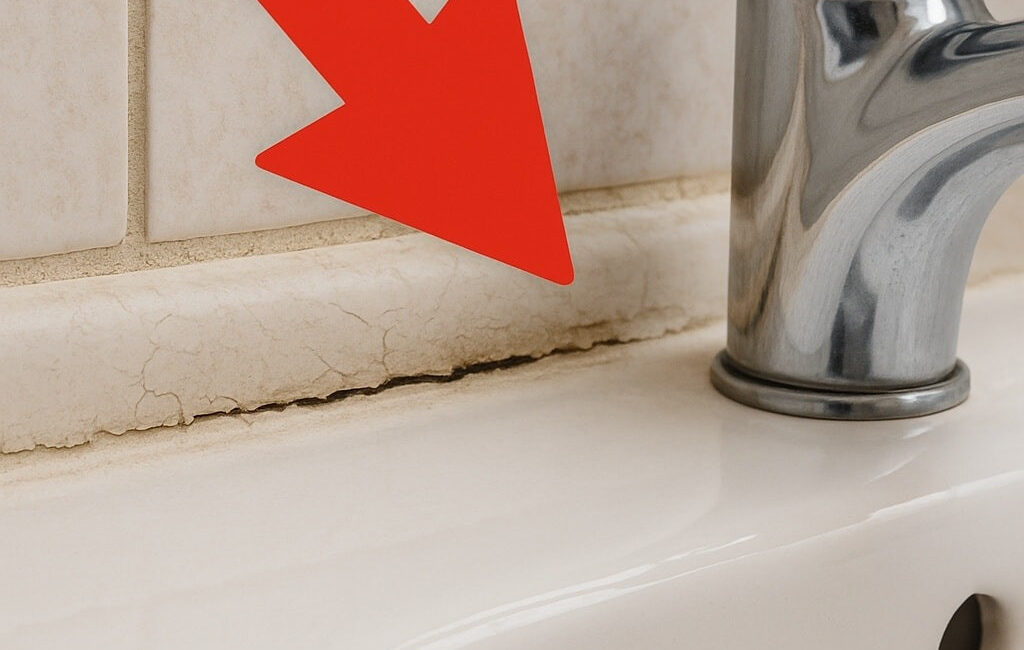
- Removed all old caulk fully, scraped down to solid, clean substrate.
- Treated the mould‑affected joint with a bleach solution (1:10) and allowed to dry for 24 hours.
- Checked tub support beneath, reinforced a few voids under the acrylic tub to minimize future flexing.
- Installed an exhaust fan on a timer to improve ventilation.
- Masked edges with painter’s tape. Selected a 100% silicone mould‑resistant bathroom sealant, colour matched to tile.
- Applied a correctly sized bead, tooled it to a smooth profile, removed tape immediately.
- Allowed full curing time (48 hours) before any heavy water use.
- Inspected monthly for first 3 months—joint held perfectly, no mould, no separation. After one year, still excellent.
Outcome
The crack was eliminated, water damage stopped. The homeowner gained peace of mind that the joint would last several years. The investment in proper sealant, removal, support and ventilation paid off.
When a Full Replacement Isn’t Enough — What to Do Then
If you find recurring caulk cracks even after renewal, or deeper structural issues, you may need to escalate:
- If the tub or floor is shifting or sagging: check supports beneath tub or substrate—may need reinforcement.
- If tile behind joints is loose or wallboard is rotten: you might need to remove tile or drywall, dry out sub‑floor, replace damaged backing.
- If mould keeps reoccurring: inspect for hidden leaks, plumbing issues, poor waterproofing behind tile, trapped moisture behind stud wall.
- If joint width is too wide for standard bead: insert back‑er rod (foam filler) before sealing to give caulk correct depth.
- If you have high‑end finishes or visible seams: consider hiring a professional to apply a high‑precision sealant with matching profile and colour.
The Big Picture: Why Good Caulking Matters for Your Home
Repairing cracked caulking might seem minor compared to full bathroom renovations, but its impact is significant:
- Prevents water damage — A cracked joint allows water to seep behind tiles, under tubs, into drywall or subfloor. That leads to rot, structural damage, mould, costly repairs.
- Enhances hygiene — A properly sealed joint resists mould and mildew, which are health concerns in damp bathrooms.
- Improves aesthetics — Clean, crisp caulking lines give a finished, professional look. Cracked or discoloured caulk cheapens the appearance.
- Preserves value — Evidence of moisture damage is a red flag for home inspectors and future buyers. Well‑maintained joints signal care.
- Minimizes maintenance — A high‑quality job now means fewer “touch‑ups” or full replacements in a few years, saving both time and money.
When you view caulking as part of the waterproofing envelope of your bathroom rather than just a cosmetic seam filler, you’ll invest accordingly and reap long‑term benefits.
Summary — What to Do and Why It Works
In sum:
- Identify cracked caulking early — don’t wait until you see water damage or mould.
- For quick fixes: clean the crack, seal with bathroom‑rated flexible sealant, let cure.
- For full renewal: remove old, clean & dry surfaces, tape edges, apply quality sealant, finish smoothly, allow full cure.
- Invest in high‑performance products: mould‑resistant, silicon‑based, flexible, rated for baths/showers.
- Improve bathroom conditions: ventilation, substrate support, proper joint sizing, movement accommodation.
- Avoid shortcuts (applying new over old, skipping drying, poor material choice) because they lead to early failure.
- Monitor periodically, maintain cleanliness and dry conditions, and treat the seam as a key seam in your bathroom’s waterproofing system.
If you follow this guide, you’ll not only fix the visible crack but you’ll upgrade the performance and lifespan of that joint — often saving much larger future repair costs.