Every home cook has faced it. That frustrating moment when you gently tap a freshly boiled egg against the counter, eager to peel it cleanly—only to have the shell stick like glue. You try carefully picking off bits and pieces, but the egg white tears, chunks come off, and the end result is a pitted, shredded mess. Say goodbye to deviled eggs, elegant salads, or even a halfway appetizing breakfast.
Hard-boiled eggs should be easy. They’re a staple in kitchens around the world—high in protein, rich in essential nutrients like choline, and ideal for a quick snack, keto-friendly lunch, or weight loss meal prep. Yet for something so simple, the battle to peel them cleanly has raged on for decades.
Some people swear by salting the water. Others insist on vinegar. Some believe it’s all about the cooking time, or how fast you chill them afterward. But what if one secret ingredient could eliminate the guesswork entirely?
Let’s settle this debate once and for all. No more cracked shells, no more rubbery whites, and no more ruined deviled eggs. In this article, we’ll reveal:
- Why some eggs peel easily and others don’t
- Why adding salt is NOT the solution
- The science behind egg membrane adhesion
- The one secret ingredient that guarantees easy peeling
- Step-by-step instructions for perfect, peel-friendly boiled eggs
- Common mistakes (and myths) that ruin your results
- How to scale this method for meal prep, holidays, and parties
- Nutritional benefits of eggs for weight management, keto, and high-protein diets
- Bonus tips for flavoring, storing, and reusing boiled eggs
So grab a pot, your favorite eggs, and let’s dive in. Because flawlessly peeled hard-boiled eggs are no longer a culinary mystery—they’re a mastered skill.
Why Do Some Eggs Refuse to Peel?
To understand how to fix the peeling problem, we first need to look at why it happens in the first place. When an egg is laid, it contains a protective coating that helps preserve freshness. Over time, gases inside the egg escape through the shell’s tiny pores, and air seeps in, creating a small pocket.
Fresh eggs have a lower pH (they’re more acidic), which causes the proteins in the egg white to bond tightly with the inner membrane just beneath the shell. When boiled, this tight bond makes peeling difficult—the shell clings stubbornly to the egg white, leading to that ragged, shredded appearance.
Older eggs, in contrast, are more alkaline. The pH rise weakens the membrane’s bond with the protein structure, making peeling significantly easier. That’s why many chefs recommend using week-old eggs for boiling.
But here’s the problem: not everyone keeps track of their eggs’ age. Sometimes you buy a fresh dozen and want to boil them the same day. Sometimes you don’t have the luxury of time. That’s when hacks and techniques become crucial.
Myth-Busting: Why Salt Doesn’t Help—and May Hurt
Let’s address one of the most common internet tips: “Add salt to the boiling water.”
Some people claim that salting the water helps with peeling. Others say it prevents cracking or helps season the eggs internally. In reality, salt doesn’t change the pH of the egg or alter the way the membrane bonds with the shell. All it does is increase the boiling point of water slightly, which has no meaningful effect on the peeling process.
Worse yet, many who try this method report disasters—cracked eggs, weirdly rubbery textures, or worse, yolks that aren’t fully cooked. In fact, in one side-by-side test, eggs boiled with salt were nearly impossible to peel cleanly. The results were so bad, they couldn’t be used for deviled eggs at all.
So if salt isn’t the answer, what is?
The Secret Ingredient: Baking Soda
Here it is: Baking soda.
This humble pantry item is the true game-changer when it comes to boiling and peeling eggs perfectly. When added to the boiling water, baking soda raises the pH level, making the eggs more alkaline—even if they’re fresh.
This chemical shift has one powerful result: it loosens the bond between the egg white and the inner membrane, making peeling smooth, easy, and often automatic. Sometimes the shell practically slips off in one satisfying twist.
And unlike vinegar or salt, baking soda doesn’t compromise the egg’s structure, texture, or flavor.
How Much Baking Soda Should You Use?
You only need a small amount—about 1 teaspoon of baking soda per quart of water. That’s enough to alter the pH without making the eggs taste off or soapy.
The trick is to add the baking soda before the water boils, giving it time to fully dissolve and distribute evenly.
Step-by-Step: How to Boil Perfect, Easy-to-Peel Eggs Every Time
Ingredients:
- 6–12 eggs (fresh or older—this method works on both)
- Water (enough to cover eggs by 1 inch)
- 1 teaspoon baking soda per quart of water
- Ice cubes or very cold water for an ice bath
Equipment:
- Medium or large pot with lid
- Slotted spoon
- Large bowl for ice bath
- Timer
Instructions:
1. Prepare the Water
Place your pot on the stove and fill with cold water. Add the baking soda and stir to dissolve. Then bring the water to a rolling boil over medium-high heat.
2. Gently Lower the Eggs
Use a slotted spoon to lower eggs into the boiling water gently to prevent cracking. Lower the heat slightly to maintain a steady boil without splashing.
3. Boil for 9–12 Minutes
- 9 minutes = medium yolk, slightly creamy center
- 10–11 minutes = classic hard-boiled texture
- 12 minutes = firmer yolk, ideal for deviled eggs
4. Transfer to an Ice Bath
Immediately after boiling, transfer eggs to a bowl filled with ice water. Let them chill for at least 5–10 minutes. This rapid cooling stops the cooking process, firms up the whites, and helps the shell pull away from the egg.
5. Peel and Enjoy
Crack the eggs gently by tapping on the counter, then roll them slightly to loosen the shell. You’ll be amazed at how easily the shells come off in large pieces—or sometimes completely in one pull.
Real-World Test: Salt vs. Baking Soda
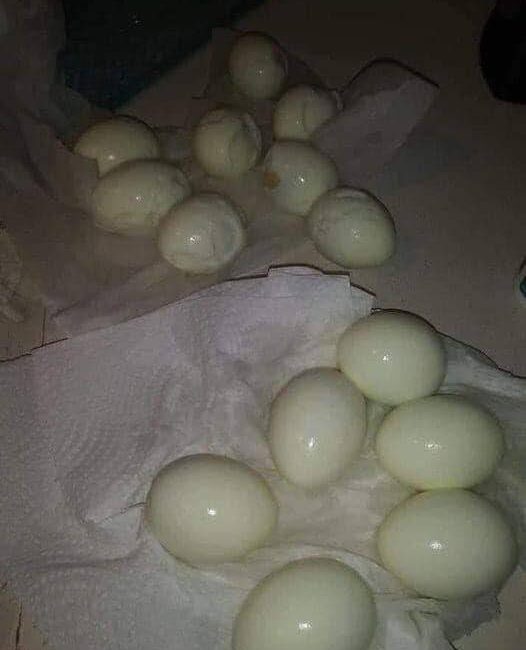
In a real kitchen test, two sets of eggs were boiled:
- Top batch: Salt added to the water
- Bottom batch: Baking soda added to the water
The results were unmistakable. The salted eggs were nearly impossible to peel. The shells clung stubbornly to the egg whites, tearing them apart in the process. The final result? Ugly eggs unfit for display, let alone deviled eggs or gourmet presentation.
The eggs boiled with baking soda, however, were perfect. The shells cracked and slipped off with minimal effort—no tearing, no pits, just smooth, flawless egg whites.
Why This Method Matters for Your Diet and Lifestyle
Click page 2 for more