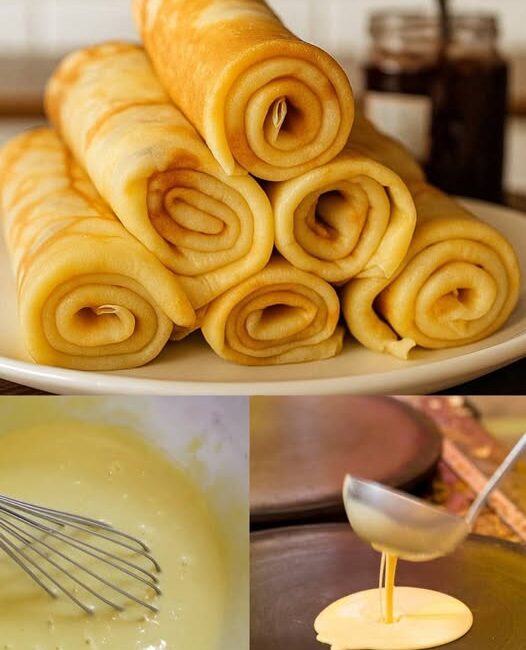
Even with the best batter, cooking technique makes the difference between ordinary and restaurant-quality crêpes.
1. Choosing the Right Pan
- A non-stick or well-seasoned skillet is ideal for even browning and effortless flipping.
- A traditional crêpe pan is shallow with gently sloped sides, which makes spreading the batter easier.
2. Preheating the Pan
- Heat the pan over medium heat.
- Add a light brush of oil or a small piece of butter, wiping away excess with a paper towel. This ensures the crêpes do not stick while avoiding greasy flavor.
3. Portioning the Batter
- Use a small ladle (approximately ¼ cup) to pour batter into the center of the pan.
- Quickly tilt and swirl the pan to evenly spread the batter in a thin, circular layer.
4. Cooking Time
- Cook each side for 1 to 2 minutes, until edges start to lift and the bottom turns golden brown.
- Flip gently with a spatula and cook the other side briefly, just enough to achieve a light golden color.
5. Stacking and Serving
- Stack cooked crêpes on a plate, covering with a clean towel to keep them warm and soft.
- Serve immediately with your choice of sweet or savory fillings — sugar, chocolate spread, fresh fruits, caramel, ham, cheese, or smoked salmon.
Tips for Extra-Light and Elastic Crêpes
- Avoid over-mixing: While whisking is important to avoid lumps, over-mixing can develop gluten excessively, resulting in tougher crêpes.
- Room temperature ingredients: Eggs and milk at room temperature blend more easily, producing a smoother batter.
- Resting is essential: Never skip the resting stage; it allows flour to fully hydrate and improves texture.
- Thin layers: Pouring too much batter creates thick, pancake-like crêpes. The secret is thin, even layers that cook quickly and remain flexible.
Exploring Variations of Cyril Lignac’s Crêpe Batter
While this recipe produces a classic French crêpe, small adjustments allow for creative variations:
1. Gluten-Free Option
- Substitute regular flour with a gluten-free blend or buckwheat flour for a slightly nutty flavor.
- Buckwheat crêpes (galettes) are traditionally savory and pair well with cheeses and vegetables.
2. Vegan Adaptation
- Replace eggs with a mixture of flaxseed meal and water (1 tablespoon flaxseed meal + 2.5 tablespoons water per egg).
- Use plant-based milk and oil or coconut butter to maintain richness.
3. Enhanced Flavors
- Add citrus zest (lemon or orange) to the batter for a fresh aroma.
- Incorporate spices such as cinnamon or cardamom for a unique twist.
4. Infusions
- Let milk infuse with tea leaves, coffee, or vanilla pods before adding to the batter for subtle, sophisticated flavors.
Why Cyril Lignac’s Method Works
This recipe works beautifully due to several culinary principles:
- Gradual incorporation prevents lumps – creating a velvety, smooth batter.
- Resting allows gluten relaxation – ensuring tender, pliable crêpes.
- Balanced fat content – prevents sticking while contributing to moisture and mouthfeel.
- Optional aromatic enhancers – elevate simple crêpes into refined culinary experiences.
Each step, from whisking to resting to cooking, reflects thoughtful design aimed at producing crêpes with perfect texture, flavor, and appearance.
Serving Ideas for Cyril Lignac’s Crêpes
Crêpes are versatile and can be served in countless ways. Here are some inspiration ideas:
- Sweet Classics: Sugar and lemon juice, Nutella with banana slices, caramelized apples with a drizzle of caramel sauce.
- Savory Options: Ham and cheese, smoked salmon with cream cheese and chives, spinach and ricotta.
- Elegant Dessert Crêpes: Fill with mascarpone, berries, and a drizzle of dark chocolate; fold and dust with powdered sugar for a restaurant-style presentation.
Storage Tips
- Batter: Can be stored in the refrigerator for up to 24 hours. Stir gently before cooking as it may separate slightly.
- Cooked Crêpes: Stack between sheets of parchment paper, wrap in foil, and refrigerate for 1–2 days. Reheat gently in a pan or oven to maintain softness.
Conclusion
Cyril Lignac’s crêpe batter is the perfect marriage of simplicity, technique, and flavor. By following his method — careful mixing, gradual incorporation, balanced ingredients, and resting — home cooks can create crêpes that rival those in top French restaurants. Whether enjoyed for breakfast, brunch, or dessert, these crêpes are light, tender, and deeply satisfying.
Mastering this recipe not only brings a taste of authentic French cuisine into your home but also introduces you to the principles of culinary finesse — understanding ingredients, respecting technique, and appreciating the subtle joys of well-prepared food. Every golden, flexible crêpe is a small triumph, a celebration of technique, and a delicious way to bring family and friends together.
By embracing the classic approach of Cyril Lignac, you unlock a world of culinary possibilities — sweet, savory, simple, or sophisticated — all beginning with the perfect crêpe batter.