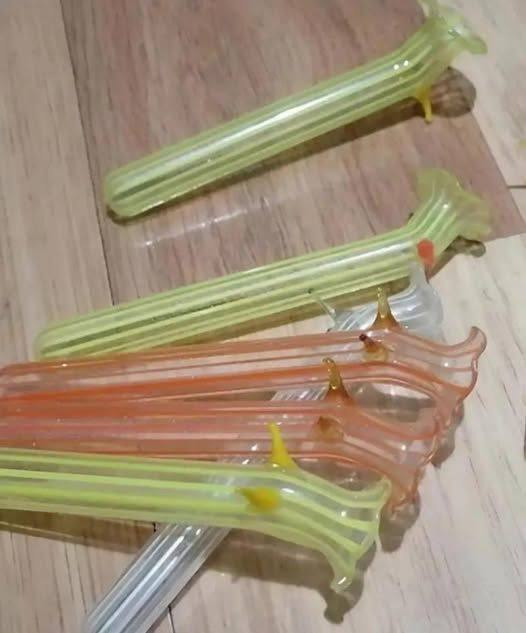
It started with curiosity and a hint of disbelief. While sifting through the cluttered shelves of my grandmother’s crockery cupboard, I stumbled upon a collection of unusual glass items that left me puzzled. At first glance, they looked like thin plastic bars, perhaps leftover cocktail stirrers from a long-forgotten party, or maybe pieces of an old Christmas tree ornament. Their bright colors—orange, yellow, green—glinted in the sunlight, but their fragility and delicate craftsmanship told a different story. They were not plastic; they were glass. Each one bore a subtle little “bun:g” on its side, almost like a signature, hinting at a purpose beyond mere decoration.
Holding them in my hand, I felt a strange mix of wonder and uncertainty. What on earth were these delicate tubes for? Could they be some forgotten domestic gadget, a quirky piece of vintage décor, or an odd tool with a very specific function lost to time?
The mystery remained until I spoke to my grandfather, whose eyes lit up as he recognized them immediately. “They’re miniature vases for suit pockets,” he chuckled, his voice carrying a mix of nostalgia and pride. Buttonholes. Suit jackets. Subtle elegance. Suddenly, the fragile glass tubes revealed their purpose: to carry a single flower, discreetly and beautifully, throughout the evening.
The Origins of the Pocket Vase
Miniature vases for suit pockets, sometimes known as boutonniere vases, are an understated yet remarkable example of design and sophistication. Their origins trace back to a period when attention to small details defined social grace and personal presentation.
Historically, men and women alike sought ways to integrate small, natural elements into their attire. In the Victorian and Edwardian eras, flower symbolism was a key element of personal expression. Each bloom carried meaning—red roses symbolized love, violets represented modesty, and lilies conveyed purity. The pocket vase allowed the wearer to display a live flower, subtly communicating emotions or refinement without uttering a word.
The delicate glass craftsmanship reflected both aesthetic sensibility and technical skill. Thin, lightweight glass, often hand-blown, made the vases functional yet visually captivating. The slight hook or loop on each piece was not ornamental; it was a practical design element, allowing the vase to be suspended securely from a jacket buttonhole or inside a breast pocket.
These miniature vases were a marriage of elegance and engineering, embodying a time when even the smallest objects were imbued with thoughtfulness and purpose.
Design and Aesthetic Features
The beauty of these pocket vases lies in their simplicity and precision. Each tube is slender, designed to fit snugly within a jacket pocket without disturbing the lines of the suit. The colors—soft orange, translucent yellow, delicate green—were chosen for visual appeal and versatility. They could complement a wide range of floral arrangements, from a sprig of lavender to a single rosebud.
The tiny hook, or “bun:g,” on the side of the tube served multiple purposes:
- Stability: When hung on a buttonhole, the hook kept the vase upright, preventing water from spilling and the flower from drooping.
- Ease of Attachment: The hook allowed quick placement and removal without damaging the jacket fabric.
- Subtle Flourish: The design was unobtrusive, blending seamlessly with the suit’s fabric while enhancing elegance.
Function and form were in perfect balance. These vases exemplified the philosophy that beauty is not only in grand gestures but also in the details that are noticed only by the discerning eye.
Cultural and Social Significance
The use of pocket vases and similar accessories reflects a bygone era of formal dress and social rituals. Wearing flowers was not merely decorative; it was symbolic and intentional. In certain social settings, such as dinner parties, weddings, or theatrical events, a single bloom could convey messages of courtship, respect, or friendship.
- Floral Etiquette: Knowing the appropriate flower for an event was a mark of sophistication. A white carnation might be worn at a formal evening gathering, while a bright yellow daisy could signal cheerfulness at a daytime event.
- Attention to Detail: A pocket vase demonstrated meticulous attention to presentation. Men and women who incorporated such subtle flourishes were viewed as refined, thoughtful, and socially adept.
- Conversation Starters: A pocket vase could spark discussions, with observers asking about the flower or admiring the craftsmanship. In a sense, these small items fostered connection and dialogue.
These glass tubes, seemingly trivial at first glance, were thus miniature ambassadors of etiquette and taste.
Rediscovering Forgotten Household Items
Finding these vases in my grandmother’s cupboard was a reminder of how many household objects from the past carry forgotten histories. Everyday items, once functional and fashionable, often become curiosities when removed from context.
Many people encounter similar mysteries when exploring old homes, attics, or family heirlooms. Objects that seem odd or inexplicable at first often have fascinating stories that illuminate the values, aesthetics, and technological ingenuity of previous generations.
The moment of discovery—the initial confusion followed by revelation—is itself meaningful. Holding a fragile, hand-crafted piece of glass that has survived decades evokes a tangible connection to the past, bridging the gap between generations.
How Pocket Vases Work
Understanding the mechanics of these miniature vases enhances appreciation for their ingenuity. Despite their delicate appearance, they are designed for practical use:
- Water Reservoir: The tiny tube holds just enough water to keep a single flower hydrated for several hours. This is sufficient for evening events or short-term displays.
- Stability Mechanism: The hook ensures the vase remains upright, preventing spillage.
- Compact Size: Measuring only a few inches, the vase fits discreetly into a breast pocket, blending seamlessly with the suit.
- Flower Selection: Typically, a small bloom with a short stem is used. Flowers with soft petals or slight curvature are ideal for fitting into the narrow tube without bending or damage.
The result is a miniature botanical display—elegant, functional, and subtly eye-catching.
The Poetics of Pocket Flowers
There is a quiet poetry in carrying a single flower in your pocket. Unlike a bouquet or arrangement, a pocket flower speaks in whispers rather than declarations. It conveys personal attention, elegance, and intentionality.
- Intimacy: A flower in your pocket is for you to enjoy, yet visible to others, creating a subtle dialogue.
- Ephemeral Beauty: The bloom is fleeting, emphasizing the transient nature of beauty and life.
- Sophisticated Gesture: Unlike elaborate floral arrangements, the pocket flower demonstrates understated sophistication, proving that less can be more.
This miniature vase transforms the simple act of wearing a flower into a refined form of expression, where a single bloom can speak louder than words.
Collecting and Preserving Pocket Vases
Click page 2 for more