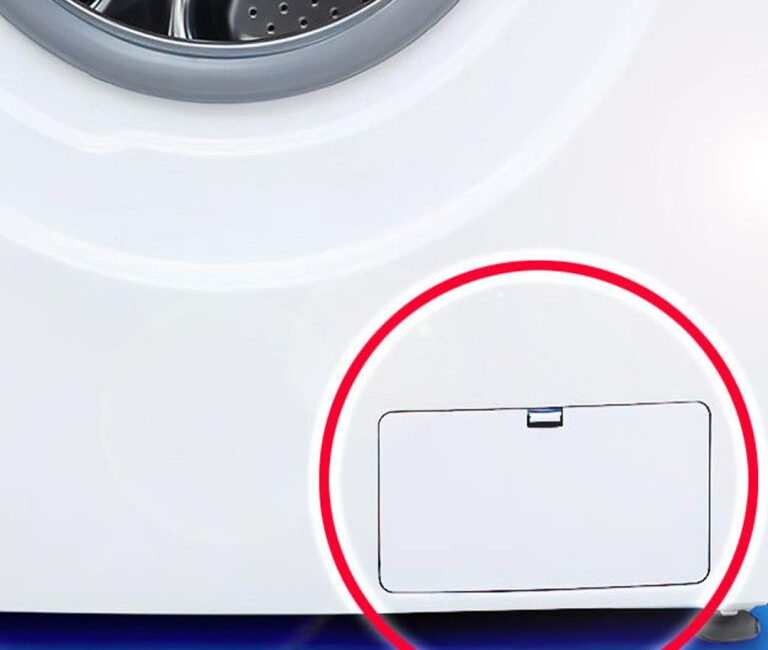
Always unplug your machine before cleaning. If your model has an emergency drain hose, release the water first to avoid surprises. Don’t use sharp objects to poke the filter—it’s delicate and can be damaged easily.
If you encounter a stuck filter cap, use a cloth for better grip and gentle pressure. Forcing it can crack the plastic threads.
Signs That Your Filter Needs Cleaning Right Now
Even if you’ve been neglecting it, your machine will try to tell you when the filter’s crying for help. Look for these clues:
- The machine vibrates excessively or stops mid-cycle.
- You hear strange noises during draining.
- Water remains at the bottom after washing.
- Clothes come out smelling sour or covered in lint.
- Drainage takes longer than usual.
These are early warning signs. Ignoring them could lead to a full breakdown.
Why Cleaning the Filter Makes Clothes Cleaner
You might assume that your detergent and rinse cycles are what make your clothes fresh. But the truth is, the residue filter plays an unsung role in that process.
When it’s clogged, old water and detergent residues linger in the system, re-soiling your garments with microscopic grime. That’s why some clothes can come out of a “clean” cycle smelling like damp fabric instead of freshness.
A clean filter ensures that dirty water exits efficiently, and that each rinse cycle uses pure water—not a mix of lint, grease, and leftover suds.
Your whites stay brighter, your darks stay smoother, and your fabrics last longer.
The Hidden Link Between the Filter and Odor Control
A washing machine’s warm, damp interior is paradise for bacteria and mold. Add organic residue—like fabric fibers and soap scum—and you’ve got a mini ecosystem breeding funky smells.
The residue filter is the first line of defense. If it’s clean, water drains quickly and doesn’t stagnate. If it’s clogged, stagnant water sits in the hoses and drum, fueling microbial growth.
That’s why even expensive washing machine cleaners can’t fix odor issues if the filter is neglected. The smell isn’t coming from the drum—it’s coming from trapped residue below it.
Cleaning your filter monthly does more for odor prevention than any perfumed detergent ever could.
A Small Step with a Big Environmental Impact
Beyond maintenance and hygiene, the residue filter has a surprising ecological purpose: it helps reduce microfiber pollution.
Each load of synthetic clothing—like polyester, nylon, or spandex—releases thousands of microplastic fibers into wastewater. These particles pass through household drains, reach rivers and oceans, and accumulate in marine ecosystems.
When you regularly clean your filter, you’re effectively capturing and disposing of microplastics before they escape. Some manufacturers even design filters specifically to trap finer particles for this reason.
So every time you clear that little mesh screen, you’re not just helping your machine—you’re helping the planet breathe cleaner.
Common Myths About Residue Filters
Let’s debunk a few:
- “My machine doesn’t have one.”
Almost all machines do, even if it’s hidden. Some modern self-cleaning models still contain small filters inside the drain system. - “It only matters for older washers.”
Wrong. Even high-efficiency washers rely on filters to manage fibers and debris. - “Cleaning it once a year is enough.”
That’s like brushing your teeth every Christmas—it’s better than nothing, but far from ideal. - “If my clothes are clean, the filter must be fine.”
Clogs develop slowly. You won’t notice a difference until it’s already impacting your washer’s performance. - “The machine cleans itself.”
Only partially true for self-cleaning models. Lint and hair can still collect and dry out into sticky residue.
How Often Should You Clean the Filter?
The golden rule: once a month for most households.
If you have:
- Pets → clean every 2–3 weeks.
- Large family → every 2 weeks.
- Hard water → every month (mineral buildup accelerates clogging).
Mark it on your calendar or tie it to another chore—like cleaning your lint trap or changing air filters. A consistent schedule prevents surprises.
What to Do If Your Filter Is Damaged
Sometimes, residue filters crack or tear—especially if you try to force them open or clean them with sharp tools. If that happens:
- Turn off the machine immediately.
- Check your manual for the part number.
- Order a replacement from the manufacturer or an appliance parts retailer.
Never operate your washer without the filter—it’s like running a car without an oil filter. The pump can get damaged quickly.
The Surprising History of Washing Machine Filters
The concept of residue filters dates back to the early 20th century. Early washing machines used wringers to squeeze out water, and lint often clogged the drain hoses. Manufacturers began adding simple mesh traps to capture lint and protect plumbing systems.
By the 1950s, automatic washers introduced removable filters, making cleaning easier. Over time, the technology evolved—today’s filters are smaller, more efficient, and designed to trap not just lint but micro-particles invisible to the naked eye.
So when you clean that filter, you’re maintaining a century-old innovation that still quietly does its job in millions of homes.
How It All Ties Together
The residue filter might be tiny, but it embodies the entire philosophy of care: maintaining balance between function, cleanliness, and longevity. It’s the mechanical equivalent of self-care—ignore it, and chaos accumulates silently; tend to it, and everything runs smoothly.
It’s poetic, really. In a world obsessed with convenience, the filter reminds us that even the simplest machines need a moment of attention to keep serving us well.
Final Thoughts: The Unsung Guardian of Clean Laundry
When you think about what makes laundry fresh—the scent, the softness, the color—you probably credit your detergent or your machine’s settings. But behind that effortless cleanliness stands a silent worker: the residue filter.
It protects the pump, preserves hygiene, saves energy, and even shields the environment. It costs nothing to clean, takes minutes to maintain, and saves hundreds in repairs.
So next time your washing machine finishes a cycle and you enjoy the smell of crisp, clean clothes, remember: that little mesh filter made it possible.
Clean it, respect it, and your washer will reward you with years of loyal service.
Because in the quiet, whirring heart of your machine, the residue filter is the difference between chaos and harmony—between dirty water and true cleanliness.