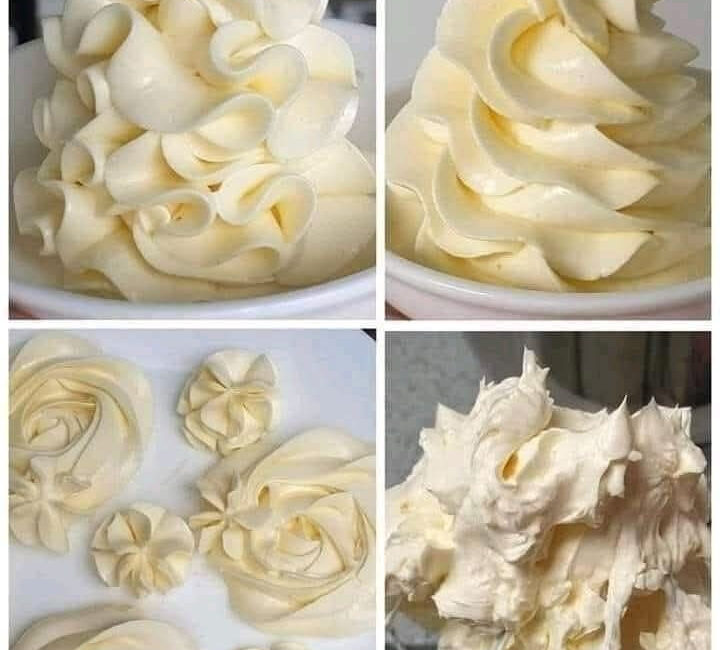
Pastry cream—known in French as crème pâtissière—is one of those culinary creations that quietly shapes entire worlds of dessert without ever demanding the spotlight. It does not shout. It does not decorate itself. And yet, remove it from pastry, and entire traditions collapse. Éclairs become hollow shells. Fruit tarts lose their anchor. Layered cakes fall into confusion. Even modern plated desserts, stripped of nostalgia, still return to pastry cream when structure, smoothness, and comfort are required.
This cream is not dramatic. It is essential.
To understand pastry cream fully is to understand a philosophy of cooking where restraint matters as much as richness, where timing outranks force, and where patience is rewarded with elegance. What follows is not just a recipe, but a slow walk through everything pastry cream truly is—from its physical behavior to its emotional presence in food memory.
The Nature of Pastry Cream: What It Is—and What It Is Not
Pastry cream sits in a unique category. It is not a sauce, because it holds shape. It is not a pudding, because it is enriched with eggs and butter. It is not a custard sauce like crème anglaise, because it contains starch and can be boiled safely. It is not mousse, because it is dense and grounded.
Pastry cream is a thickened egg custard stabilized with starch, designed to be:
- spreadable
- pipeable
- sliceable
- stable under refrigeration
- adaptable to countless variations
Its purpose is not to impress on its own, but to support other elements—fruit, pastry, cake, chocolate—while still being pleasurable enough to stand alone.
This dual role is why pastry cream is studied so seriously in professional kitchens. It must behave.
A Short Historical Pause (Without Romance, Only Function)
Pastry cream did not appear because someone wanted luxury. It appeared because pastry chefs needed control.
Early custards were fragile. Heat them too much and the eggs curdled. Cool them too slowly and they broke. Add fruit and they wept. Add pastry and they soaked.
The introduction of starch—first flour, later cornstarch—changed everything. Suddenly, custards could be boiled without fear. Texture became predictable. Creams could be prepared in advance. Pastry became scalable.
Pastry cream is, in many ways, the result of cooks learning to tame eggs.
The Science Beneath the Surface (Why This Cream Behaves So Well)
Pastry cream works because three physical processes cooperate instead of competing.
1. Egg Protein Coagulation
Egg yolks contain proteins that unfold and bond when heated. This creates thickness. But alone, eggs coagulate too aggressively, producing curds.
2. Starch Gelatinization
Cornstarch absorbs liquid and swells when heated, forming a gel. This:
- reinforces thickness
- absorbs excess moisture
- protects egg proteins from over-coagulating
This is why pastry cream can boil without scrambling.
3. Emulsification
Butterfat and egg yolks help bind water and fat into a smooth, unified texture. This prevents separation and gives the cream its signature silkiness.
When these three elements are balanced, pastry cream becomes stable, elastic, and luxurious.
Ingredients: Simple on Paper, Precise in Reality
Whole Milk
Milk is not filler. It is structure, flavor, and chemistry. Whole milk is mandatory because fat carries flavor and softens texture. Low-fat milk produces a dull, thin cream with sharp edges.
Sugar
Sugar sweetens, but more importantly, it controls egg behavior. Sugar delays protein coagulation, giving you more time and forgiveness during cooking.
Dividing the sugar is intentional:
- half protects the eggs
- half integrates smoothly into the milk
Egg Yolks
Yolks are richness, color, and body. Using only yolks avoids rubbery textures caused by egg whites. The number of yolks determines firmness and flavor depth.
Cornstarch
Cornstarch provides clarity, stability, and neutrality. It thickens without taste and allows the cream to be reheated or adjusted.
Butter
Butter is added last, off heat, because it refines texture. It rounds harshness, enhances aroma, and adds sheen.
Vanilla
Vanilla is not decoration. It defines the emotional profile of pastry cream. Without it, the cream tastes flat, even when sweet.
Classic Ingredient Formula
- 480 ml (2 cups) whole milk
- 100 g (½ cup) granulated sugar, divided
- 1 vanilla bean (seeds only) or 1 teaspoon vanilla extract
- 5 large egg yolks
- 30 g (¼ cup) cornstarch
- 30 g (2 tablespoons) unsalted butter
This ratio is not arbitrary. It balances firmness, smoothness, and flavor without excess.
The Method, Revisited Slowly and Precisely
Click page 2 for more