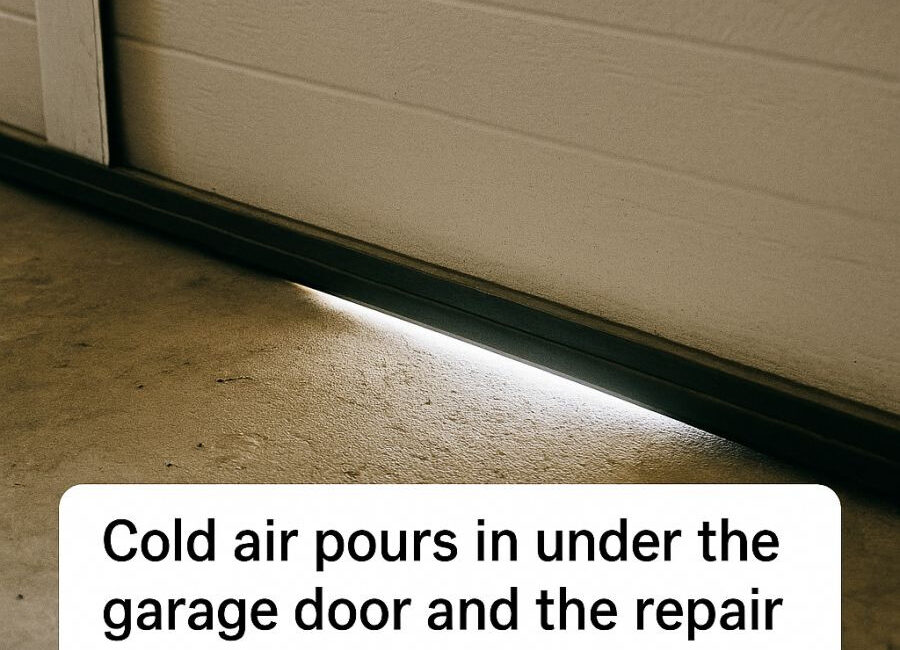
When winter tightens its grip and temperatures drop sharply, few things feel as frustrating as discovering that icy air is pouring straight into your garage through the bottom of the door. The problem becomes even more stressful when you realize professional help is days or weeks away. With the repair company unavailable until after New Year, the situation can feel stuck, uncomfortable, and expensive.
A drafty garage is not just an inconvenience. It can quietly drain heat from your home, raise energy bills, damage stored items, and create condensation problems that linger long after winter ends. The good news is that you do not need to sit helplessly and endure the cold until professionals arrive. There are practical, effective, and often surprisingly simple temporary solutions that can dramatically reduce cold air intrusion right now.
The key is understanding how cold air behaves, where it sneaks in, and how to block it using what you already have or can quickly obtain.
WHY A DRAFTY GARAGE IS A BIGGER PROBLEM THAN IT SEEMS
Garages act like thermal buffers between the outdoors and the rest of your home. When cold air floods into the garage, it doesn’t stay politely contained. It creeps. It sinks. It finds pathways through walls, ceilings, and connecting doors. Even if your garage is unheated, that cold mass lowers the temperature of shared walls and floors, forcing your home’s heating system to work harder.
In attached garages, the door between the garage and the house becomes a critical weak point. If the garage is freezing, the temperature difference across that door increases dramatically, encouraging drafts and heat loss even through well-built structures.
Left unchecked, this can lead to higher heating bills, uncomfortable cold spots inside the house, and in extreme cases, frozen pipes along shared walls.
START WITH DETECTION: FIND EVERY POINT WHERE COLD AIR ENTERS
Before you block anything, it is essential to understand exactly where the cold air is coming from. The most obvious suspect is the gap at the bottom of the garage door, but it is rarely the only one.
Stand inside the garage with the door closed. On a bright day, turn off interior lights and look for daylight creeping through along the bottom, sides, or top of the door. Any visible light is also an air pathway.
At night or on darker days, use a flashlight or a candle. Slowly move it along the bottom edge and door frame. If the flame flickers or smoke drifts sideways, you have found a draft. Measure the width of the gap using a ruler or tape measure. Even a gap of half an inch across a wide garage door can let in a shocking amount of cold air.
Also check whether the door itself is warped or misaligned. Older garage doors, especially wooden or uninsulated metal ones, can bow slightly over time, creating uneven gaps that seals alone cannot fully correct.
TEMPORARY WEATHERSTRIPPING: FAST, CHEAP, AND EFFECTIVE
Weatherstripping tape is one of the fastest ways to reduce cold air intrusion. It is inexpensive, widely available, and requires no special tools. For a temporary fix, choose a thick foam or rubber tape designed for doors.
Clean the bottom edge of the garage door thoroughly before applying. Dirt, dust, or moisture will prevent proper adhesion. Cut the tape to length and press it firmly along the bottom edge, ensuring it makes contact with the floor when the door is closed.
This solution works best for smaller, consistent gaps. While it may not survive long-term exposure to moisture and freezing temperatures, it can significantly cut drafts for days or weeks if monitored and replaced when necessary.
THE POOL NOODLE SOLUTION: SURPRISINGLY POWERFUL AGAINST COLD AIR
One of the most popular emergency fixes is using a pool noodle or foam pipe insulation as a draft stopper. This works particularly well when the gap under the garage door is uniform.
Cut the noodle or insulation to match the width of the door. Slice it lengthwise and fit it snugly along the bottom edge. Secure it using duct tape, zip ties, or strong adhesive tape. The foam compresses against the floor, creating a flexible seal that adapts to minor floor irregularities.
This method provides immediate relief and can reduce cold airflow dramatically. It is also removable and adjustable, making it ideal when professional repairs are imminent but delayed.
FABRIC BARRIERS: OLD RUGS, TOWELS, AND BLANKETS TO THE RESCUE
If you need a solution right now and have no time to shop, fabric barriers can be surprisingly effective. Old towels, blankets, or rugs can be rolled tightly and placed along the bottom of the door from the inside.
Heavier materials work best, especially if layered. Press them firmly against the door to block airflow. While fabric alone will not create an airtight seal, it significantly slows cold air movement, which is often enough to stabilize garage temperatures.
This method is flexible and easy to adjust. If you feel cold air in specific spots, reposition or add material. It is not elegant, but it works.
BUILDING A MAKESHIFT THRESHOLD FOR STRONGER PROTECTION
For larger gaps or stronger drafts, creating a temporary threshold using cardboard or plywood can provide more substantial protection.
Measure the gap height and width carefully. Cut a piece of thick cardboard or plywood slightly taller than the gap and as wide as the door. Place it directly against the floor on the inside of the garage door and secure it with heavy-duty tape or removable adhesive.
This creates a physical barrier that blocks airflow before it enters the garage. While not permanent, it is far more effective than fabric alone and can withstand repeated temperature changes if kept dry.
USING PLASTIC SHEETING OR TARPS AS A SECONDARY WIND BARRIER
When cold air pressure is strong, adding a secondary interior barrier can make a noticeable difference. Plastic sheeting or a tarp can be hung inside the garage, several inches behind the door.
Secure the top edge to the ceiling or wall using hooks, nails, or strong adhesive strips. Let the material extend to the floor, and weigh down the bottom with boards or heavy objects. This creates an air pocket that slows heat loss and reduces drafts.
This technique is especially useful if you use your garage as a workshop or storage area that needs to stay above freezing.
SEALING THE SIDES AND TOP: OFTEN OVERLOOKED BUT CRITICAL
Cold air does not only enter from below. Gaps along the sides and top of the garage door frame are common, especially in older homes.
Click page 2 to continue