Few household disagreements feel as emotionally charged as the ones that revolve around food. Not because food itself is dramatic, but because it touches memory, upbringing, health, control, and trust all at once. One person sees a harmless habit. The other sees a risk. And suddenly, what should be a neutral kitchen staple turns into a silent standoff.
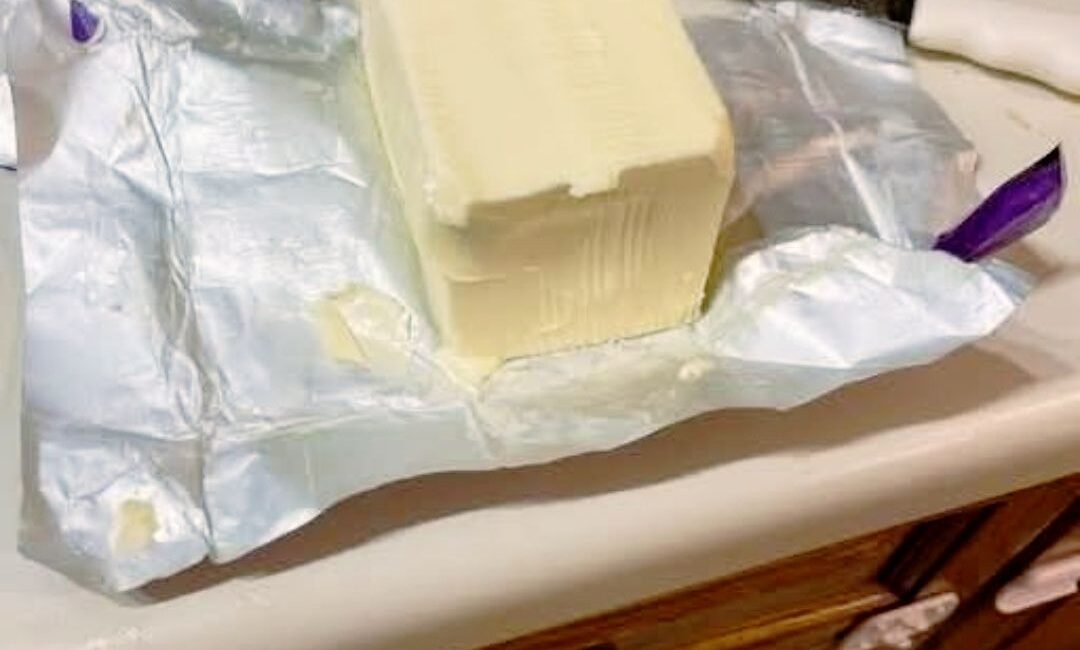
The debate over leaving butter on the counter is a perfect example of this phenomenon.
One roommate insists it’s normal, traditional, and completely safe because “that’s how it’s always been done.” The other refuses to touch it, feeling uneasy, skeptical, or even disgusted by the idea. Feelings get hurt. Accusations remain unspoken but heavily implied. The kitchen becomes tense.
This is not really about butter.
It is about how habits form, how science is interpreted, and how boundaries clash in shared living spaces.
To understand why this disagreement is so common—and how to navigate it without resentment—it’s essential to look at the full picture: history, food science, modern living conditions, psychological comfort, and social dynamics.
WHY BUTTER HAS ALWAYS LIVED ON THE COUNTER FOR SOME PEOPLE
To understand your roommate’s position, it helps to step back in time.
For centuries, refrigeration did not exist. Butter was a staple long before modern appliances. Families stored it at room temperature, often in covered dishes, crocks, or specialized containers designed to keep it cool and protected from air. In many cultures, butter was made fresh and used quickly, never sitting around long enough to become an issue.
Because butter is primarily fat, and fat is not an ideal environment for bacterial growth, people learned through experience that it did not spoil quickly the way milk or meat did. This knowledge was passed down generationally, becoming a habit rather than a conscious safety calculation.
For people raised in households where butter always sat on the counter, the practice feels normal, safe, and even necessary. Soft butter is easier to spread. Refrigerated butter tears bread, frustrates cooks, and feels inconvenient.
So when your roommate says, “That’s how we’ve always done it,” she is not being dismissive. She is invoking a deeply ingrained sense of normalcy and continuity.
WHAT MODERN FOOD SCIENCE ACTUALLY SAYS ABOUT BUTTER SAFETY
Here is where nuance matters.
Butter can be left out safely under specific conditions. But those conditions are far narrower than many people assume.
The factors that make butter relatively stable
Butter’s resistance to spoilage comes from:
- Its high fat content
- Low water activity
- Salt (in salted butter)
These factors slow bacterial growth. Salted butter is more resistant than unsalted butter. This is a crucial distinction that often gets ignored.
When food safety experts discuss butter safety, they are not giving blanket approval. They are describing risk management, not risk elimination.
WHEN LEAVING BUTTER OUT IS CONSIDERED LOW RISK
According to food safety principles, butter may be left at room temperature when all of the following are true:
- The butter is salted
- It is kept in a covered butter dish
- The room temperature is moderate (not hot or humid)
- The butter is used within a short period of time (typically a few days)
- Clean utensils are always used
In this narrow context, bacterial growth remains unlikely, and spoilage is mostly a matter of flavor degradation rather than illness.
This is the scientific foundation behind the “counter butter” habit.
WHEN THE RISK INCREASES SIGNIFICANTLY
Problems arise when people assume all butter behaves the same way under all conditions.
Leaving butter out becomes questionable or unsafe when:
- The butter is unsalted
- It sits out for extended periods
- The kitchen is warm, humid, or exposed to sunlight
- The butter is uncovered
- Knives contaminated with crumbs or saliva are reused
- Multiple people are sharing it inconsistently
At this point, the issue is not just bacteria. It’s oxidation, rancidity, cross-contamination, and sensory degradation.
Butter can absorb odors, develop unpleasant flavors, and harbor microbes introduced through handling—even if it doesn’t look “spoiled.”
This is where many people draw their personal line.
WHY SOME PEOPLE ARE UNCOMFORTABLE EVEN IF IT’S “TECHNICALLY SAFE”
Food safety is not just about statistical risk. It is also about psychological comfort.
Some people are more sensitive to:
- Texture changes
- Smell variations
- Invisible contamination
- Uncertainty around hygiene
Others may have:
- Gastrointestinal sensitivity
- Anxiety related to foodborne illness
- Past experiences with spoiled food
For these individuals, “low risk” does not feel acceptable. They are not being irrational; they are responding to how their body and mind interpret uncertainty.
Comfort matters because food is intimate. It goes into your body. Once consumed, you cannot undo the choice.
Refusing to eat room-temperature butter is not an accusation. It is a personal safety preference.
WHY THIS DISAGREEMENT FEELS SO PERSONAL
If this were only about logic, the discussion would end quickly. But it rarely does.
The emotional intensity comes from what the refusal implies, even unintentionally.
When you refuse to use the butter, your roommate may interpret it as:
- “You think my habits are unsafe”
- “You don’t trust my judgment”
- “The way I was raised is wrong”
- “You’re being controlling”
Even if none of those things are true, habits tied to food often feel like extensions of identity.
Meanwhile, from your perspective, the situation may feel like:
- Your comfort is being dismissed
- You’re being pressured to ignore your boundaries
- Your health concerns are being minimized
Neither person is actually talking about butter anymore.
THE POWER DYNAMIC OF SHARED KITCHENS
Shared kitchens amplify conflicts because:
- Space is limited
- Food is communal by default
- Habits overlap unintentionally
Click page 2 to continue