In shared living situations, food storage becomes symbolic. Who decides what’s normal? Who sets the standard?
If one person feels forced to adapt while the other refuses compromise, resentment builds quickly.
That’s why this issue often escalates despite being objectively small.
WHY YOU ARE NOT WRONG TO REFUSE TO USE IT
This point deserves clarity.
You are not obligated to eat something you are uncomfortable with.
You are not required to override your own boundaries to preserve harmony.
You are not accusing anyone by opting out.
Food consent matters.
Just as one roommate cannot force another to eat meat, dairy, or allergens, no one can force you to eat food stored in a way that makes you uneasy.
Choosing not to use the butter is a valid personal decision.
WHY SHE IS ALSO NOT “WRONG” FOR HER HABIT
At the same time, your roommate is not inherently careless or ignorant.
Her habit:
- Has historical precedent
- Is common in many households
- Is considered low risk under certain conditions
Her frustration likely stems from feeling judged or rejected, not from logic.
Understanding this doesn’t mean you must agree. It means you can navigate the conflict without framing either of you as unreasonable.
THE SIMPLEST SOLUTION: SEPARATION, NOT CONVERSION
The most effective resolution in shared living situations is not persuasion. It’s separation.
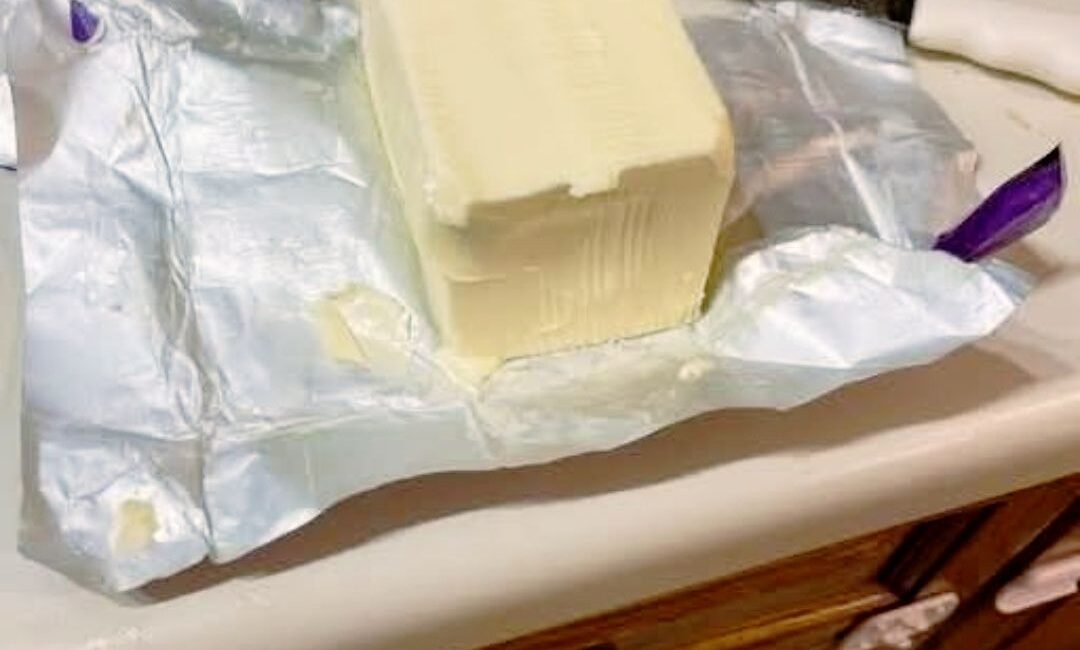
Two butters. Two storage methods. No commentary.
One stays on the counter.
One stays in the fridge.
Each person uses their own.
This solution respects autonomy, avoids power struggles, and removes emotional charge.
Trying to “convince” each other rarely works because the disagreement is rooted in comfort, not facts.
HOW LANGUAGE CAN DE-ESCALATE OR ESCALATE THE SITUATION
How you talk about the issue matters more than what you say.
Escalating language:
- “That’s unsafe”
- “That’s gross”
- “You’re wrong”
- “That’s not hygienic”
De-escalating language:
- “I know a lot of people do it that way”
- “I just feel more comfortable using refrigerated butter”
- “This is a personal preference for me”
The difference is subtle but powerful. One frames the issue as objective failure. The other frames it as personal choice.
WHY “TRADITION” AND “SCIENCE” OFTEN CLASH
Traditions form through experience, not data. Science forms through data, not habit.
Both are valid forms of knowledge—but they serve different purposes.
Tradition answers: “What worked for us?”
Science answers: “What minimizes risk under defined conditions?”
When these collide, conflict arises—not because one is wrong, but because they speak different languages.
WHAT THIS SITUATION REALLY REVEALS
At its core, this disagreement highlights:
- How deeply food habits are ingrained
- How safety is interpreted individually
- How shared spaces magnify small differences
- How boundaries are tested through everyday routines
Butter just happens to be the trigger.
A HEALTHY WAY FORWARD
You don’t need to win the argument.
You don’t need her to change.
You don’t need to justify your comfort level endlessly.
You need mutual respect.
Respect looks like:
- Acknowledging her habit without adopting it
- Maintaining your boundary without criticizing hers
- Finding practical coexistence instead of moral agreement
THE BOTTOM LINE
Yes, butter can be left out safely under specific conditions.
No, that does not mean everyone must be comfortable eating it.
And absolutely, refusing to use it is a valid personal boundary.
This is not a food safety exam.
It is a shared-living negotiation.
When handled with clarity and respect, it doesn’t need to damage the relationship. When framed as a personal comfort issue rather than a judgment, it usually resolves itself.
Because in the end, this isn’t about butter.
It’s about learning how to live together without forcing each other to swallow discomfort—literally or emotionally.