The Misleading Comparison: “Air Fryers Are Just Small Ovens”
This phrase appears frequently in advertising and casual conversation, but experts strongly disagree with its implications.
While both appliances use hot air, the scale, airflow patterns, thermal inertia, and moisture dynamics are fundamentally different.
An oven:
- Maintains stable ambient heat
- Allows food to equilibrate gradually
- Supports diverse cooking methods simultaneously
An air fryer:
- Creates turbulent airflow
- Exposes food to intense directional heat
- Prioritizes speed over internal transformation
Calling an air fryer a “small oven” oversimplifies its function and encourages misuse.
Safety Concerns When Overused or Misused
Appliance safety specialists highlight several risks when air fryers replace ovens entirely.
Overcrowding
Users often overload air fryer baskets to compensate for small capacity. This blocks airflow, leading to:
- Uneven cooking
- Localized overheating
- Increased smoke production
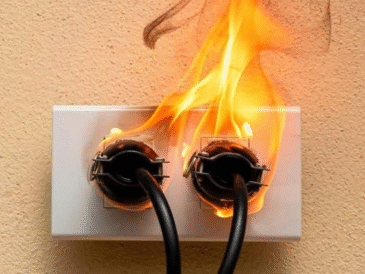
- Electrical strain
Improvised Cookware
Many people place unsuitable containers, foil shapes, or makeshift trays inside air fryers. Unlike ovens, air fryers are not forgiving of airflow obstruction or heat reflection.
Ventilation Issues
Air fryers release concentrated heat and aerosols quickly. Frequent use in small kitchens without proper ventilation can affect indoor air quality.
The Texture Problem Experts Rarely Mention
Crispiness is seductive. But not all foods benefit from it.
Ovens excel at:
- Bread structure development
- Moist interiors with firm exteriors
- Layered textures
- Slow caramelization
Air fryers tend to:
- Dry out interiors
- Harden surfaces prematurely
- Collapse delicate structures
Professional chefs caution that relying too heavily on air fryers can flatten culinary variety, pushing everything toward the same crunchy profile.
Psychological Convenience vs Culinary Skill
Another expert concern is skill erosion.
Ovens teach:
- Timing awareness
- Temperature control
- Batch planning
- Multi-step cooking
Air fryers automate many decisions. While this is convenient, it can reduce cooking literacy over time. People become dependent on preset buttons rather than understanding heat and food behavior.
This is not inherently bad—but it becomes limiting when the air fryer becomes the only tool.
Energy Efficiency: A Nuanced Reality
Air fryers are often promoted as more energy efficient than ovens. This is sometimes true for small tasks. But experts emphasize context.
Air fryers are efficient when:
- Cooking small portions
- Running short cycles
- Replacing preheating for minimal food
Ovens are more efficient when:
- Cooking multiple dishes
- Preparing meals for several people
- Baking or roasting for extended periods
Using an air fryer repeatedly throughout the day can consume more energy overall than one well-planned oven session.
What Experts Actually Recommend
Importantly, experts are not calling for the abandonment of air fryers. The caution is about replacement, not use.
Most agree on a balanced approach:
- Use air fryers for quick, surface-focused cooking
- Use ovens for depth, volume, and structural dishes
- Treat air fryers as tools, not shortcuts for everything
- Avoid defaulting to the air fryer out of habit alone
When each appliance is used within its design purpose, both can coexist productively.
Why the Warning Is Becoming Louder Now
The caution against replacing ovens with air fryers is growing because usage patterns have changed. What began as occasional convenience has turned into daily dependence for many households.
Experts tend to speak up when:
- Tools are used beyond their intended scope
- Short-term convenience masks long-term trade-offs
- Marketing narratives outpace practical understanding
This moment reflects a broader tension in modern life: efficiency versus depth, speed versus structure.
Final Perspective: The Kitchen Is a System, Not a Gadget
The oven is not obsolete. It is a foundational appliance designed for a wide range of cooking processes that unfold over time. The air fryer is a powerful specialist tool that excels at specific tasks.
Replacing one with the other flattens the kitchen ecosystem.
Experts caution not because air fryers are dangerous or useless, but because no single appliance can replace the complexity of heat, time, and transformation that cooking requires.
The healthiest kitchens are not the fastest ones. They are the most intentional ones.
Understanding what each tool does best allows convenience without compromise—and progress without forgetting why ovens existed long before the air fryer ever arrived.