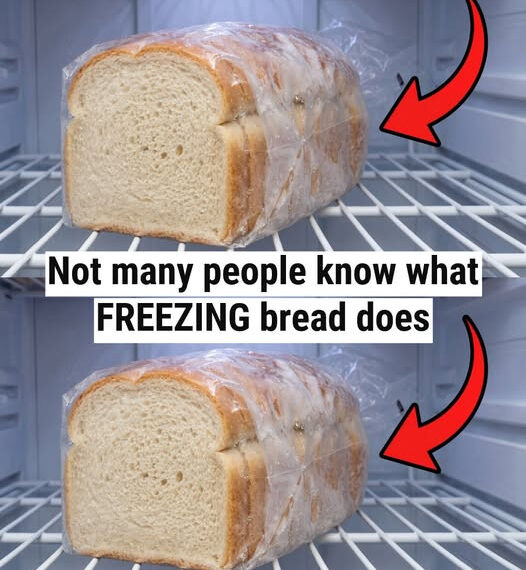
The Science, the Texture, the Nutrition, and the Truth Behind Freezing Bread
Bread is one of the most ordinary foods in human life—and at the same time, one of the most misunderstood. Almost everyone has frozen bread at least once. Some do it to prevent waste. Others do it because they buy in bulk. Many do it without thinking twice.
And yet, few people truly understand what actually happens to bread once it enters the freezer.
Does freezing ruin bread?
Does it destroy nutrients?
Does it change digestion?
Why does some bread come out perfect while other loaves emerge dry, crumbly, or oddly rubbery?
The freezer feels like a pause button, but bread is not an inert object. Even at freezing temperatures, complex physical and chemical changes take place. To understand frozen bread, we need to look beyond kitchen habits and into food science, structure, water behavior, and time.
This article takes a deep dive into what freezing really does to bread—inside and out—and why the results can vary so dramatically depending on how, when, and what you freeze.
Bread Is a Living Structure (Even After Baking)
To understand freezing, you must first understand what bread is.
Bread is not just flour and water baked together. It is a delicate network made of:
- Starch granules
- Gluten proteins
- Trapped air pockets
- Moisture bound in multiple forms
During baking, starch gelatinizes and gluten proteins form a stretchy framework that holds gas bubbles in place. This is what gives bread its crumb—the soft, spongy interior.
Once bread cools, this structure begins to change. Starch slowly crystallizes again in a process called retrogradation, which is the primary cause of bread going stale.
Freezing interrupts this process—but it doesn’t stop everything equally.
The Moment Bread Enters the Freezer
When bread goes into the freezer, several things happen almost immediately.
Temperature Drop and Moisture Migration
As the temperature falls, free water inside the bread begins to freeze into ice crystals. Water that was evenly distributed in the crumb starts migrating toward colder areas.
This movement is critical because water distribution determines texture.
Small, evenly formed ice crystals cause minimal damage. Large crystals rupture starch and gluten networks, which leads to dryness and crumbling after thawing.
This is why freezing speed matters.
Why Fresh Bread Freezes Better Than Old Bread
One of the most important—and overlooked—rules of freezing bread is timing.
Fresh Bread Has Stable Moisture
Fresh bread contains moisture that is still well integrated into the starch-protein matrix. The structure is elastic and resilient. When frozen at this stage, ice crystals tend to be smaller and less destructive.
Stale Bread Is Already Breaking Down
In stale bread, starch retrogradation has already begun. Water has migrated out of starch molecules and redistributed unevenly. Freezing bread at this stage locks in damage instead of preventing it.
That’s why frozen stale bread comes back worse than it started.
Freezing is a pause, not a repair.
What Freezing Does to Starch
Starch is the main component of bread, and it reacts dramatically to cold.
Starch Retrogradation Slows—but Doesn’t Reverse
Freezing slows the recrystallization of starch dramatically, which is why frozen bread doesn’t go stale in the freezer.
However, freezing does not reverse retrogradation. If bread is already stale, freezing simply preserves that state.
Thawing Reawakens the Process
Once bread is thawed, retrogradation resumes. This is why thawed bread has a shorter shelf life than fresh bread. It must be eaten quickly.
What Happens to Gluten in the Freezer
Gluten is the protein network that gives bread structure.
Freezing Weakens Gluten Elasticity
Ice crystal formation can tear gluten strands. This damage is subtle but cumulative. One freeze-thaw cycle causes minimal harm. Repeated cycles cause significant breakdown.
This is why refreezing bread is a bad idea. Each thaw allows water to move again, forming new crystals on refreezing and further damaging structure.
The Crust vs the Crumb: Two Very Different Stories
Bread crust and crumb respond differently to freezing.
Crust Loses Its Crunch
The crust is dry and brittle by nature. In the freezer, moisture migrates from the crumb toward the crust. This softens it.
After thawing, the crust often feels leathery or limp rather than crisp.
This is not spoilage—it’s moisture redistribution.
Crumb Suffers Structural Stress
Inside the bread, ice crystals can compress air pockets. When thawed, these pockets may collapse or feel denser.
This is why some frozen breads feel heavier or chewier after thawing.
Does Freezing Bread Change Nutrition?
This question sparks debate—and confusion.
Click page 2 to continue