Calories and Macronutrients Remain the Same
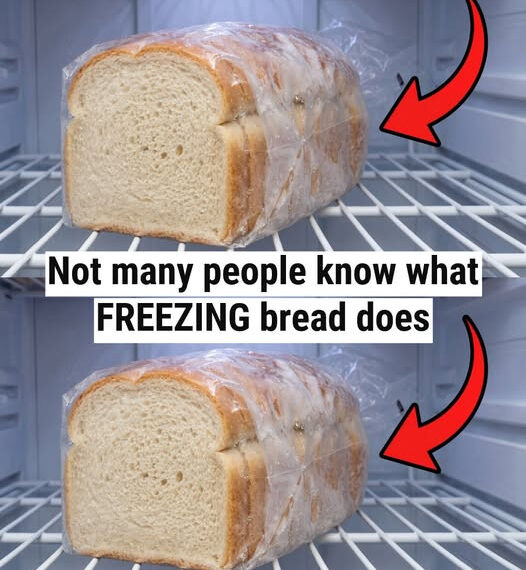
Freezing does not destroy carbohydrates, proteins, or fats. The calorie content of bread remains unchanged.
Resistant Starch Increases Slightly
Here’s where things get interesting.
When bread is frozen and then thawed, some starch becomes resistant starch—a form that resists digestion in the small intestine and behaves more like fiber.
This can:
- Slightly reduce blood sugar spikes
- Improve gut bacteria feeding
- Enhance satiety
The effect is modest but real, especially when bread is toasted after thawing.
Why Toasting Frozen Bread Feels Different
Many people toast bread directly from the freezer—and notice something strange.
Toasting Rebalances Moisture
Heat drives moisture out of the crumb and back toward the surface. This can restore some crispness to the crust and improve texture.
Flavor Compounds Reactivate
The Maillard reaction—the chemical process responsible for toasted flavor—reactivates aroma compounds that may have dulled during freezing.
This is why frozen bread often tastes better toasted than thawed at room temperature.
The Role of Packaging: Where Most Freezing Fails
Freezer burn is the enemy of frozen bread.
What Is Freezer Burn?
Freezer burn occurs when moisture sublimates—turns directly from ice to vapor—and escapes the bread. This leaves dry, oxidized patches.
It’s not dangerous, but it destroys texture and flavor.
Air Is the Culprit
Bread exposed to air in the freezer loses moisture rapidly. Poor packaging leads to:
- Dry crumb
- Tough crust
- Cardboard-like flavor
How Long Bread Can Stay Frozen (Realistically)
Technically, frozen bread is safe indefinitely. Practically, quality declines over time.
- 1–2 weeks: Minimal quality loss
- 1 month: Still very good if well wrapped
- 2–3 months: Noticeable texture changes
- Beyond 3 months: Dryness and flavor loss become obvious
The clock starts ticking the moment bread enters the freezer.
Different Types of Bread, Different Outcomes
Not all bread freezes equally.
White Sandwich Bread
Freezes well due to uniform crumb and lower moisture variation. Toasts beautifully from frozen.
Whole Grain Bread
Higher fiber and oil content can lead to faster oxidation. Needs tighter wrapping.
Artisan Crusty Loaves
Freeze poorly once sliced unless well protected. Large air pockets and thick crust complicate moisture balance.
Flatbreads and Pita
Freeze exceptionally well due to thin structure and low moisture gradient.
Common Freezing Mistakes People Make
Most disappointing frozen bread comes from a few predictable errors.
- Freezing bread unwrapped or loosely wrapped
- Freezing bread that is already stale
- Refreezing thawed bread
- Thawing at room temperature for too long
- Storing near strong-smelling foods (bread absorbs odors)
Each of these accelerates quality loss.
The Psychological Effect of Frozen Bread
Texture affects perception more than taste.
Even when frozen bread tastes fine, slight changes in mouthfeel can make it feel “off.” Humans are extremely sensitive to bread texture. This explains why frozen bread divides opinion so strongly.
Expectations shape experience.
Freezing vs Refrigeration: A Crucial Distinction
Refrigeration is worse than freezing for bread.
Cold (but not frozen) temperatures accelerate starch retrogradation. Bread stored in the fridge goes stale faster than bread stored at room temperature.
If you must choose between fridge and freezer, the freezer wins—always.
Is Freezing Bread a Good Idea?
Yes—but only if done intentionally.
Freezing bread:
- Prevents waste
- Preserves freshness if timed correctly
- Can slightly improve metabolic response
- Extends shelf life dramatically
But it requires understanding.
The Right Way to Freeze Bread (Scientifically Sound)
- Freeze bread while fresh
- Slice before freezing for flexibility
- Wrap tightly to exclude air
- Freeze quickly
- Thaw only what you need
- Toast instead of room-temperature thawing when possible
This turns freezing from a gamble into a reliable tool.
Final Thought: The Freezer Is Not a Time Machine
Freezing bread does not make it better than it was. It preserves a moment.
If that moment is fresh, warm, and balanced, freezing protects it.
If that moment is stale, dry, or neglected, freezing immortalizes the flaws.
Bread remembers its past.
And when you understand what happens inside it—how water moves, how starch behaves, how structure responds—you stop guessing and start controlling the outcome.
The freezer isn’t magic.
But used with knowledge, it comes very close.