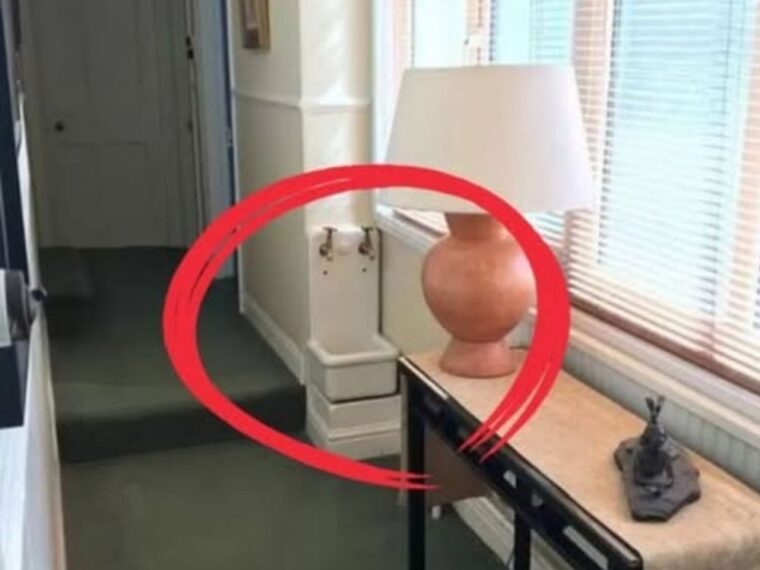
Buying a new house often feels like opening a time capsule. Beneath fresh paint and updated fixtures, older homes sometimes reveal surprising architectural details—features that once served an essential purpose but now seem unusual or even puzzling. One such feature is the small hallway sink.
At first glance, a sink placed in a corridor may seem completely out of place. Hallways are transitional spaces, not destinations. They connect rooms rather than serve a function of their own. So why would anyone intentionally install a sink there?
The answer lies in the history of indoor plumbing, hygiene habits, and evolving home design.
A Glimpse Into the Past: When Bathrooms Weren’t Standard
To understand the hallway sink, we need to go back to the late 19th and early 20th centuries. Indoor plumbing was not always as comprehensive as it is today. Many homes were built before fully equipped bathrooms became standard. Plumbing systems were often installed gradually, beginning with basic water access points.
In those transitional years, homeowners commonly added small wall-mounted washbasins in hallways near bedrooms. These basins provided a place for washing hands and faces without requiring a full bathroom.
They were practical, economical, and relatively easy to install compared to building an entire bathroom suite.
In short, what seems strange today was once a modern convenience.
The Hallway Sink as a Hygiene Station
Before daily showers became common and private en-suite bathrooms were standard, personal hygiene often involved simple routines. People would wash their face, hands, and sometimes brush their teeth using a basin of water.
In many homes, a hallway sink served as a shared washing station for family members whose bedrooms opened onto that corridor. It offered convenience, especially at night or early in the morning, without requiring trips to the kitchen or an outdoor pump.
This arrangement was especially useful in multi-bedroom homes where plumbing was centralized in one location.
The Evolution of Home Plumbing
The development of indoor plumbing did not happen overnight. In many older houses, water lines were added incrementally. Sometimes a small sink was installed first because it required fewer structural changes.
Over time, as plumbing systems expanded and bathrooms became more elaborate—with toilets, bathtubs, and later showers—the hallway basin sometimes remained.
Removing it would have required opening walls and floors to reroute plumbing, so many homeowners simply left it in place. What was once a necessity became a quiet historical artifact.
Other Possible Historical Uses
Although the washbasin explanation is the most common, hallway sinks also served other purposes depending on the era and type of home.
1. Grooming and Shaving Station
In earlier decades, it was common for men to shave at small wall-mounted basins rather than in full bathrooms. A hallway sink could serve as a simple grooming area.
2. Servant Facilities
In larger homes, hallway sinks sometimes provided household staff with a place to wash without entering private family spaces.
3. Sickroom Precaution
During periods when infectious diseases were a serious concern, having accessible washing stations near bedrooms helped reduce contamination risks.
4. Conversion Artifact
Sometimes a hallway sink indicates that a bathroom once existed in that location and was later reconfigured. The sink may be the only remnant of an earlier floor plan.
Why It Feels Strange Today
Modern home design emphasizes open spaces, visual cohesion, and clearly defined room purposes. Kitchens have sinks. Bathrooms have sinks. Hallways typically do not.
Our expectations shape our perception. Because we no longer associate hallways with hygiene tasks, a sink in that space feels misplaced—even though historically, it was entirely logical.
Click page 2 to continue