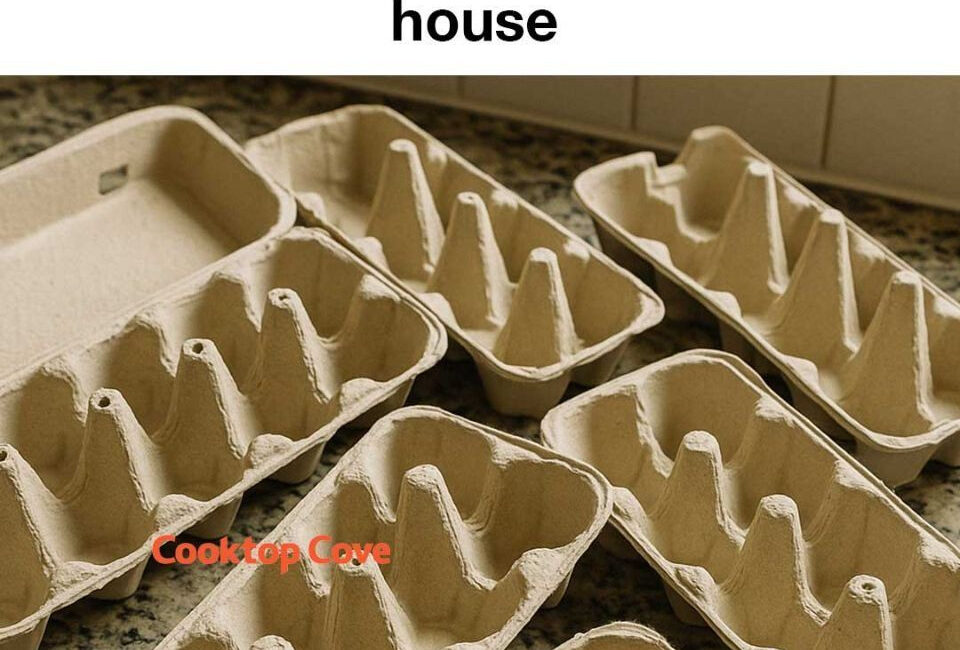
You’ve probably seen egg cartons on recording studio walls.
Now — let’s clarify something:
They don’t truly “soundproof” a room.
But they can:
- Reduce echo
- Diffuse sound waves
- Absorb minor reflections
For DIY podcast rooms or small creative spaces, they help soften acoustics.
Not professional-grade, but clever.
🔟 Kids’ Craft Base 🧸
Egg cartons are craft gold.
You can turn them into:
- Caterpillars
- Flowers
- Treasure chests
- Animal faces
- Mini dioramas
The rounded cups spark imagination.
Cut. Paint. Glue. Create.
Why Egg Cartons Are So Useful (The Science Behind It)
Egg cartons are built using:
- Pulped recycled paper
- Molded compression structure
- Impact-absorbing geometry
That geometric pattern distributes force evenly — meaning the structure is strong relative to its weight.
That’s engineering hiding in plain sight.
What About Plastic Egg Cartons?
Plastic versions are great for:
- Greenhouses for seedlings
- Storing beads
- Freezing small portions
- Holding screws and nails
They’re more durable and reusable long-term.
Sustainability Angle 🌍
Reusing egg cartons:
- Reduces landfill waste
- Cuts down on plastic organizers
- Encourages creative reuse
- Teaches kids resourcefulness
Small habits compound over time.
One carton reused 10 times = 10 fewer disposable products bought.
When You Shouldn’t Reuse Them
Important safety note:
Don’t reuse egg cartons for food storage if:
- They held raw eggs (risk of bacteria)
- They’re moldy or wet
- They’ve been stored in damp areas
Always keep food safety in mind.
The Bigger Lesson
Egg cartons are a reminder of something powerful:
Everyday objects often have hidden value.
We’ve been trained to consume and discard.
But when you pause and look at design — shape, structure, material — you realize most objects are multi-purpose waiting to be rediscovered.
It’s not just about saving money.
It’s about changing perspective.