Walk into any grocery store and stand in front of the poultry section.
You’ll notice something immediately.
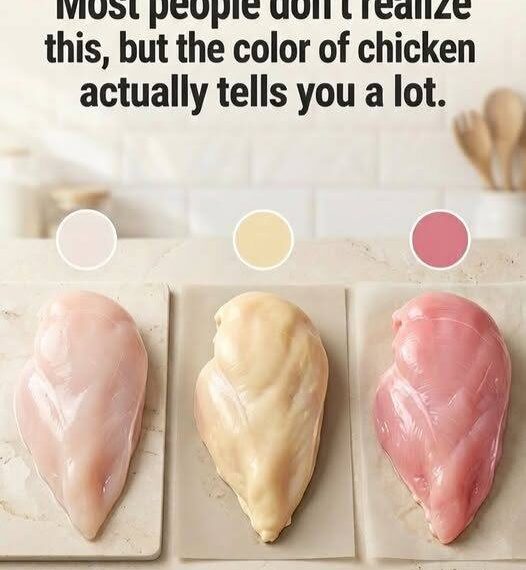
Some chicken looks pale pink.
Some looks deep yellow.
Some almost beige.
Some darker red in certain parts.
And every single time, someone asks:
“Which one is better?”
It’s surprising how much confusion still exists around chicken color — because color feels like it should tell us everything about quality.
But here’s the truth:
Color alone does not equal quality.
Let’s break down what chicken color really means — scientifically, practically, and culturally.
First: What Color Should Chicken Be?
Raw chicken is typically:
- Pale pink
- Slightly glossy
- Firm to the touch
- With white fat
If the chicken has skin, that skin can range from:
- Pale white
- Cream-colored
- Light yellow
- Deep yellow
And here’s the key:
Skin color has almost nothing to do with freshness.
It mostly reflects diet.
Why Some Chicken Is Yellow
When chicken skin appears yellow, it’s usually because the bird’s diet included carotenoids.
Carotenoids are natural pigments found in:
- Corn
- Marigold petals
- Alfalfa
- Grass
These pigments deposit into the fat and skin.
It’s the same reason:
- Carrots are orange
- Egg yolks vary in color
- Flamingos are pink
It’s dietary pigment accumulation.
It does not automatically mean:
- Healthier chicken
- More “natural” chicken
- Higher protein
- Better taste
It simply means pigment in feed.
Why Some Chicken Is Pale
Paler chicken often comes from birds fed:
- Wheat-based diets
- Soy-based diets
- Controlled commercial feed
Again — no direct link to quality.
In many countries, pale chicken is standard.
In others, yellow chicken is culturally preferred and perceived as more “farm-raised.”
Perception ≠ nutritional superiority.
What Actually Signals Freshness
Now let’s talk about what matters.
Fresh raw chicken should have:
- A mild smell (almost neutral)
- No sour or sulfur odor
- No slimy texture
- No grayish discoloration
If chicken looks gray, sticky, or smells sharp, it’s not about color preference anymore — it’s about spoilage.
Spoilage bacteria produce odor before dramatic color changes.
Your nose is a better indicator than pigment.
The Myth of “Darker Means Better”
Some people assume darker meat equals better meat.
But darker areas on chicken (especially thighs and drumsticks) are due to:
- Myoglobin content
Myoglobin is a protein that stores oxygen in muscle tissue.
Chickens use leg muscles more than breast muscles.
More use → more myoglobin → darker color.
This is why:
- Breast meat is pale
- Thigh meat is darker
It’s muscle biology.
Not quality grading.
What About Red Spots or Purple Areas?
Occasionally, you’ll see:
- Dark red patches
- Slight purple near bones
This is often:
- Residual blood
- Bone marrow leakage (especially in young chickens)
It’s not automatically a sign of poor quality.
However, if color changes are paired with bad odor or sliminess, that’s different.
Context matters.
The Psychology of Color in Food
Humans judge food visually first.
Color influences perceived:
- Freshness
- Flavor
- Nutritional value
A richer color often feels more “natural” or “organic.”
But poultry farming is highly controlled.
Two chickens raised in similar conditions can look different based solely on feed formulation.
Color is marketing-sensitive.
Click page 2 to continue