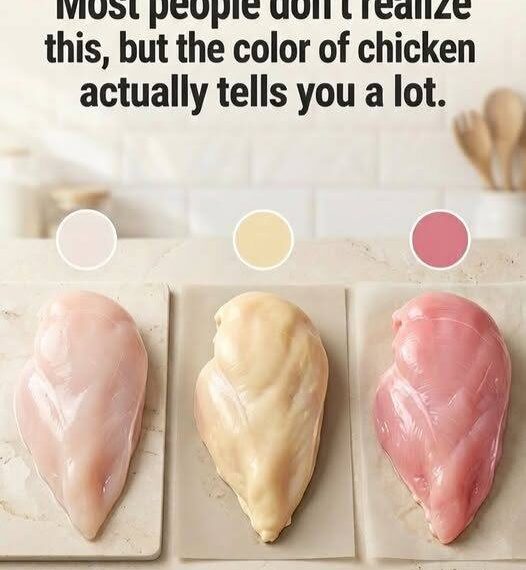
In some countries, producers intentionally adjust feed to produce yellow skin because consumers associate it with “home-raised” poultry.
Perception drives production.
Does Organic Chicken Look Different?
Not necessarily.
Organic standards regulate:
- Feed ingredients
- Antibiotic use
- Living conditions
They do not guarantee a specific skin color.
An organic chicken can be pale or yellow depending on diet.
What Really Determines Chicken Quality
Instead of focusing on color, focus on:
- Smell
- Texture
- Packaging date
- Storage temperature
- Source transparency
Also consider:
- Animal welfare standards
- Processing methods
- Refrigeration consistency
These factors influence quality far more than pigmentation.
Cooking Changes Everything
Once cooked, chicken should be:
- White in breast meat
- Brownish in thigh meat
- Juices running clear
Internal temperature should reach 165°F (74°C) for safety.
Cooking eliminates color differences caused by feed.
Texture and flavor become more important indicators.
Cultural Perceptions Matter
In some regions:
Yellow chicken = rustic, farm-raised, traditional.
In others:
Pale chicken = clean, commercial, modern.
Neither is inherently superior.
It’s preference shaped by culture and habit.
Food psychology is powerful.
Final Clarity
Here’s the simple takeaway:
- Yellow skin → diet-based pigment.
- Pale skin → different feed composition.
- Dark meat → muscle biology.
- Gray or slimy texture → spoilage.
Quality is about:
Freshness.
Handling.
Storage.
Hygiene.
Not color alone.
The next time you’re standing in front of the poultry section, don’t let color confuse you.
Use your senses.
Use logic.
And remember:
Nature isn’t always uniform — but that doesn’t mean it’s inferior.