A Deep, Science-Based Exploration of Ginger’s Benefits, Risks, Interactions, and Smart Use
Ginger is one of the most beloved roots in the world.
It warms tea.
It brightens stir-fries.
It calms unsettled stomachs.
It flavors soups, desserts, juices, and tonics.
For centuries, cultures across Asia, the Middle East, and Africa have used ginger not only as food — but as medicine.
Today, ginger is found in:
- Teas
- Capsules
- Powders
- Extracts
- Smoothies
- Candies
- Functional beverages
- Anti-nausea remedies
It feels natural. Familiar. Safe.
And in moderate amounts, for most healthy adults, it is.
But here’s the important truth:
Natural does not automatically mean universally safe.
Like any bioactive plant, ginger has pharmacological effects.
And those effects can interact with:
- Medications
- Hormonal systems
- Blood clotting
- Blood sugar
- Blood pressure
- Gallbladder function
Understanding how ginger works — and when to use caution — allows you to enjoy its benefits wisely.
This article will explore:
- What ginger actually does in the body
- The science behind its active compounds
- Benefits supported by research
- Situations where caution is essential
- Safe dosage ranges
- Differences between food and supplement forms
- Common myths
- Practical ways to use ginger safely
Let’s begin with what ginger really is.
🌱 What Is Ginger?
Ginger comes from the rhizome (underground stem) of the plant Zingiber officinale.
It has been used in:
- Traditional Chinese Medicine
- Ayurvedic medicine
- Middle Eastern herbal traditions
- African healing systems
Its therapeutic reputation centers around:
- Digestive support
- Anti-nausea effects
- Anti-inflammatory properties
- Circulatory stimulation
But these effects are not magical.
They are chemical.
🔬 The Active Compounds in Ginger
Ginger contains several bioactive molecules, including:
- Gingerol (primary fresh compound)
- Shogaol (formed when ginger is dried or heated)
- Zingerone
- Various essential oils
Gingerol is responsible for:
- Anti-inflammatory activity
- Antioxidant action
- Mild blood-thinning effects
- Digestive stimulation
When ginger is dried or cooked, gingerol converts into shogaol — which may have stronger biological effects.
This means:
Fresh ginger and powdered ginger are not identical.
Supplements may contain concentrated extracts, often standardized to specific gingerol levels.
This matters when considering safety.
🌿 Why Ginger Is So Popular
Let’s examine the benefits that make ginger a daily staple for many.
1️⃣ Digestive Support
Ginger stimulates saliva and digestive enzymes.
It promotes gastric emptying — helping food move through the stomach.
This can relieve:
- Bloating
- Nausea
- Mild indigestion
It’s widely used for motion sickness and pregnancy-related nausea (under medical guidance).
2️⃣ Anti-Inflammatory Effects
Gingerol inhibits inflammatory pathways similar to mild NSAIDs.
Some studies show ginger may reduce:
- Joint discomfort
- Muscle soreness
- Menstrual pain
However, effects are moderate — not a replacement for medical treatment.
3️⃣ Antioxidant Support
Ginger contains antioxidants that help neutralize oxidative stress.
Chronic oxidative stress contributes to:
- Aging
- Cardiovascular disease
- Metabolic disorders
4️⃣ Blood Sugar Influence
Some research suggests ginger may:
- Improve insulin sensitivity
- Slightly reduce fasting blood glucose
However, evidence is mixed and not universally conclusive.
⚖️ Moderate Intake vs High Intake
Most health authorities consider:
Up to 4 grams per day from food sources
Generally safe for healthy adults.
But high doses — especially from supplements — may exceed this.
And that’s where caution becomes important.
Let’s examine the situations where ginger requires extra care.
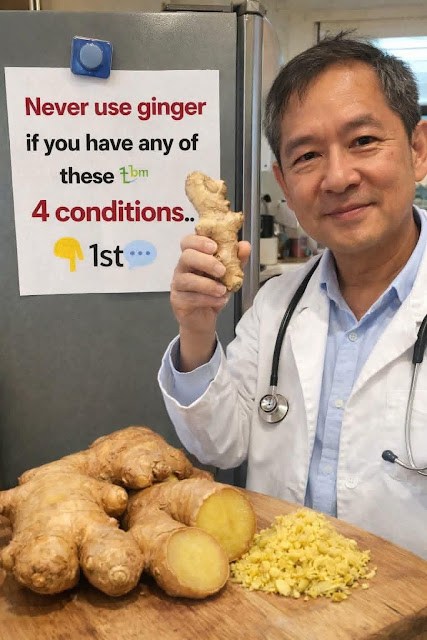
🚨 Situation 1: Bleeding Disorders or Blood-Thinning Medications
Ginger has mild antiplatelet properties.
This means it can slightly reduce blood clotting.
For most people eating small amounts in food, this is not a problem.
But if you:
- Take anticoagulants (e.g., warfarin)
- Take antiplatelet drugs (e.g., aspirin, clopidogrel)
- Have a bleeding disorder
- Have low platelet counts
- Are preparing for surgery
High ginger intake may increase bleeding risk.
This is particularly relevant with:
- Concentrated extracts
- High-dose capsules
- Herbal blends
Food-level ginger in tea or cooking is usually safe — but regular supplementation should be discussed with a healthcare provider.
🚨 Situation 2: Gallstones or Gallbladder Issues
Ginger stimulates bile production.
Bile helps digest fats.
But in people with:
- Gallstones
- Biliary obstruction
- Gallbladder inflammation
Increased bile stimulation may trigger discomfort.
Gallstones can shift when bile flow increases.
If you have a history of gallbladder disease:
Consult a healthcare professional before using ginger supplements regularly.
🚨 Situation 3: Diabetes and Blood Sugar Regulation
Ginger may lower blood glucose modestly.
For healthy individuals, this is rarely dangerous.
But if you:
- Use insulin
- Take oral glucose-lowering medications
- Experience hypoglycemia
Adding ginger supplements could enhance blood sugar lowering.
This may cause:
- Lightheadedness
- Sweating
- Weakness
- Shakiness
Moderate dietary ginger is usually safe.
But high-dose supplementation should be monitored.
🚨 Situation 4: Heart Conditions or Blood Pressure Sensitivity
Ginger may influence:
- Heart rate
- Blood vessel dilation
- Blood pressure
Some people experience:
- Mild heartburn
- Palpitations
- Lowered blood pressure
For individuals with:
- Arrhythmias
- Low blood pressure
- Cardiovascular medications
Large doses may not be ideal without supervision.
Again, context matters.
Tea ≠ high-dose extract.
🌿 Fresh vs Powder vs Supplements
Not all ginger forms are equal.
Click page 2 to continue