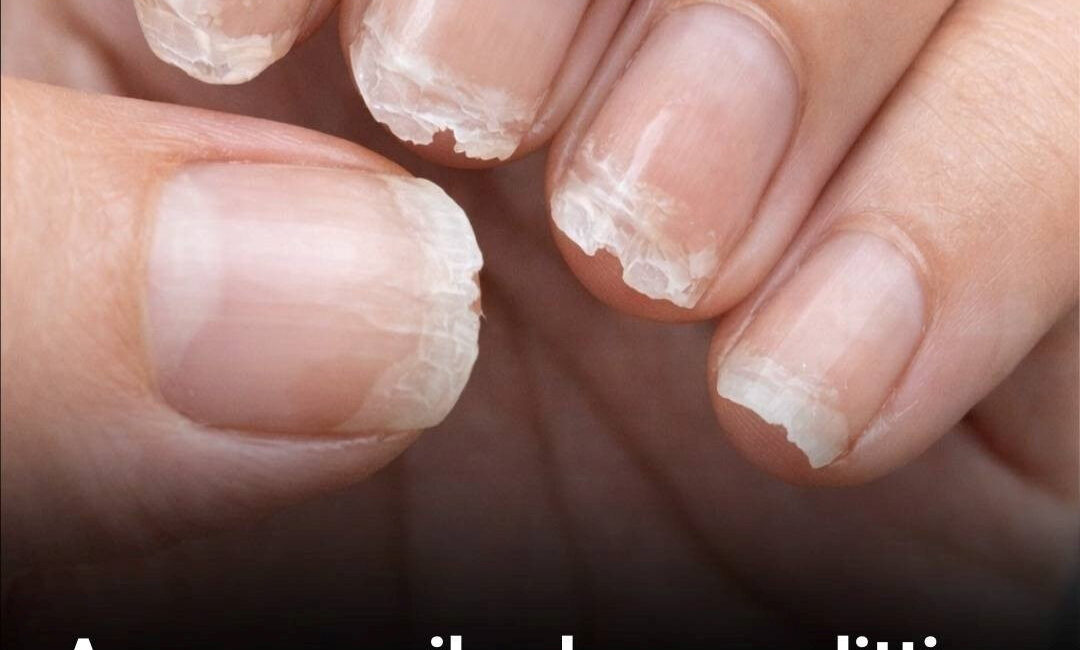
Not all brittle nails are internally driven.
Frequent exposure to water, detergents, solvents, and harsh chemicals weakens the nail plate. When nails repeatedly absorb and lose water, they expand and contract. Over time, this mechanical stress causes splitting.
Common external causes include:
- Excessive handwashing
- Cleaning products
- Acetone-based nail polish removers
- Gel polish removal
- Artificial nails
Hydration matters at both internal and external levels. Nails need internal water balance and external protection.
Moisturizing cuticles and using gloves during cleaning can significantly reduce brittleness caused by environmental damage.
Hormonal Fluctuations: Estrogen, Progesterone, and Nail Strength
Sex hormones influence collagen, hydration, and protein synthesis.
During pregnancy, higher estrogen levels often make nails grow faster and stronger. After childbirth, hormonal shifts can temporarily weaken nails.
Similarly, menstrual cycle fluctuations can subtly influence nail quality.
Polycystic ovarian syndrome (PCOS) and other hormonal imbalances may indirectly affect nail health through metabolic disruption.
Hormones do not operate in isolation. They communicate with metabolism, stress response, and nutrient absorption. Nail changes can be subtle clues in a broader endocrine pattern.
Aging and Nail Changes: Time as a Biological Sculptor
As we age, nail growth slows. The nail plate may become more ridged and brittle.
Vertical ridges are common and often benign. They are typically a normal part of aging.
With age, circulation decreases slightly, and keratinocyte turnover slows. This naturally affects nail texture.
Understanding what is normal versus pathological prevents unnecessary anxiety. Not every change is a warning.
Biology evolves over time.
Autoimmune Conditions and Systemic Disease
In some cases, brittle or abnormal nails can be linked to autoimmune or systemic conditions.
Psoriasis, for example, can cause pitting (small indentations), thickening, or crumbling of the nails.
Psoriasis is a chronic inflammatory condition that affects skin and sometimes nails. Nail involvement may precede skin lesions.
Lupus, another autoimmune condition, can cause fragile nails due to systemic inflammation.
Systemic lupus erythematosus can affect multiple organ systems, including skin and blood vessels, influencing nail health.
In severe cases, clubbing (bulbous enlargement of fingertips) can indicate chronic lung or heart disease. This is rare but medically significant.
These cases are uncommon, but persistent or unusual nail changes warrant medical evaluation.
Digestive Health and Absorption: The Hidden Root
Even if your diet is adequate, absorption may not be.
Conditions such as celiac disease, inflammatory bowel disease, or chronic gastritis can impair nutrient absorption.
Celiac disease damages the small intestine, reducing nutrient uptake.
Iron, zinc, and B vitamin deficiencies can result, affecting nail integrity.
The gut is not separate from the nails. It is upstream from them.
Psychological Patterns and Nail Behavior
There is also behavior.
Chronic nail biting (onychophagia) weakens the nail plate and surrounding skin. Anxiety-driven picking can create trauma that mimics medical fragility.
Habits reflect nervous system states. Sometimes what looks like structural weakness is mechanical damage.
The body is a loop. Mind affects behavior. Behavior affects tissue.
When Should You Be Concerned?
Mild brittleness alone is common and usually benign.
Medical evaluation is more urgent if brittle nails are accompanied by:
- Severe fatigue
- Hair loss
- Unexplained weight changes
- Pale skin
- Shortness of breath
- Nail discoloration
- Pain or inflammation
Patterns matter more than isolated features.
Supporting Stronger Nails: A Systemic Approach
Strengthening nails is not about surface polish. It is about system optimization.
Focus on:
Balanced protein intake. Include legumes, fish, poultry, dairy, or plant-based protein combinations.
Iron-rich foods. Red meat, lentils, spinach, pumpkin seeds.
Zinc sources. Nuts, seeds, seafood.
Omega-3 fatty acids. They support membrane integrity.
Hydration. Internal water balance matters.
Stress regulation. Sleep, nervous system calming practices.
Protection. Gloves during cleaning.
Gentle nail care. Avoid aggressive filing or acetone overuse.
Supplements should not replace diagnosis. If deficiencies are suspected, testing is wiser than guessing.
The Philosophical Layer: Nails as Slow Truth
Nails grow slowly. They do not dramatize. They reveal patterns quietly.
If brittle nails appear during a period of chronic stress, restricted eating, hormonal imbalance, or exhaustion, they are not random. They are the outermost echo of internal states.
The body whispers before it shouts.
Weak nails are rarely catastrophic. But they are informative.
Biology is not fragmented. It is integrated.
When you strengthen the system, nails follow.
And perhaps the deeper lesson is this: the smallest, quietest tissues often tell the most honest stories about how we are truly living.
Your nails are not complaining. They are reporting.
Listening is wisdom.