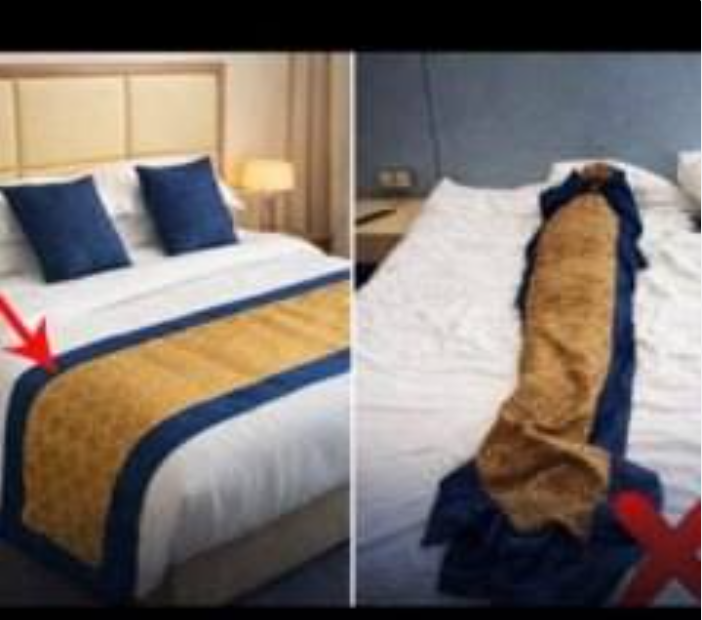
You walk into a hotel room after a long day of travel. Your shoulders are tight, your mind still buzzing from airports, taxis, or long hours on the road. You drop your suitcase, glance around, and your eyes land on the bed — crisp white sheets, fluffed pillows, and that narrow strip of fabric stretched neatly across the foot of the mattress.
At first glance, it looks purely decorative. A stylish accent. A finishing touch.
But that “simple” strip — often called a bed runner or bed scarf — is actually a masterclass in hospitality design. It represents the intersection of hygiene, psychology, durability, cost-efficiency, and subtle guest behavior engineering.
Yes. Behavior engineering.
What seems like a small detail is, in fact, a quiet solution to several practical problems that hotels must solve every single day. In this article, we will dissect — layer by layer — why hotel bed runners exist, how they function, what they protect against, and how they reflect the deeper intelligence of hospitality design.
You will never look at one the same way again.
What Is a Hotel Bed Runner?
A hotel bed runner is a long, narrow strip of fabric placed horizontally across the foot of a bed, typically about one-third from the bottom edge. It is usually made of a durable, darker fabric and contrasts with the white bedding underneath.
Though it may look like a decorative textile accessory, it serves multiple operational purposes.
In hospitality design, nothing is accidental. Every material, color, and placement decision solves a problem. The bed runner is a perfect example of this philosophy in action.
Let’s explore why.
The First Function: Protection Against Travel Reality
Hotels operate in a world of paradox.
They promise cleanliness, calm, and pristine comfort — yet they serve guests arriving from chaotic, messy, real-world environments. Airports, buses, trains, city streets, taxis, luggage carousels.
When guests enter a room, they are rarely in a perfectly clean state.
Shoes, Clothes, and Unintentional Contact
Many travelers sit at the foot of the bed to remove shoes. Some briefly rest their feet on the mattress while adjusting luggage. Others place jackets or bags down without thinking.
White sheets, while visually associated with cleanliness, are highly vulnerable to dirt transfer:
- Shoe soles carry bacteria, dust, and outdoor particles.
- Travel clothing accumulates oils and environmental grime.
- Suitcases roll across public floors before being placed on beds.
The bed runner acts as a buffer zone — a sacrificial layer that absorbs minor contact and prevents contamination of the sleeping area.
From a hygiene engineering perspective, this is strategic layering. Hotels protect their most important asset — the sleeping surface — by inserting a durable, replaceable intermediary.
The bed runner is the mattress’s bodyguard.
The Psychology of White Sheets and Dark Runners
White bedding in hotels is not an aesthetic coincidence. It signals purity and sanitation. Guests trust white sheets because stains are visible — and visibility builds confidence.
But white fabric stains easily.
This is where color contrast becomes strategic.
Bed runners are typically darker — burgundy, navy, charcoal, patterned gold. Dark fabrics conceal minor stains and wear better over time. They are also woven with thicker fibers designed to withstand friction.
There’s a subtle psychological dynamic at play:
- White communicates cleanliness.
- Dark communicates durability.
- Together, they create balance.
Guests subconsciously interpret the room as both clean and practical.
Hospitality design is often about emotional reassurance more than decoration.
The Second Function: A Landing Zone for Personal Items
After protection from shoes and clothing, the next major function of the bed runner is item management.
Guests place objects on beds constantly:
- Handbags
- Jackets
- Backpacks
- Laptops
- Room service trays
- Snack plates
- Makeup bags
- Phones and chargers
Hotels cannot realistically prevent guests from placing items on beds. Instead, they guide behavior subtly.
By positioning a contrasting fabric strip at the foot of the bed, designers create a visual cue:
“This is the safe placement zone.”
Humans respond to visual boundaries instinctively. The darker runner becomes the implied “utility area” of the bed.
It reduces:
- Food stains on white sheets
- Oil marks from leather bags
- Makeup transfer
- Spills from drinks
And here’s the brilliant part: guests rarely realize they are being guided.
The design works quietly.
The Third Function: Housekeeping Efficiency and Resource Management
Hotels operate under intense logistical constraints. Hundreds of rooms may need to be cleaned daily. Laundry costs are significant. Water, electricity, detergent, labor — all must be optimized.
Washing large comforters and duvet covers is expensive and time-consuming.
Bed runners, however:
- Are smaller.
- Dry faster.
- Require less detergent.
- Can be replaced independently.
Instead of laundering an entire bedspread due to minor staining at the foot of the bed, housekeeping can simply remove and wash the runner.
This modular system reduces operational costs while maintaining hygiene standards.
In other words, bed runners are part of a sustainability strategy.
They reduce waste and conserve resources without guests ever noticing the system behind the scenes.
The Fourth Function: Protection Against Spills and Moisture
Spills happen.
Coffee tips.
Water glasses leak.
Condensation forms on cold bottles.
Makeup remover drips.
A late-night glass of juice falls.
If liquid reaches the mattress or seeps into thick bedding layers, drying becomes difficult and replacement costly.
The bed runner acts as a moisture interception layer. Its fabric density slows absorption into deeper materials, buying housekeeping time to intervene.
In hospitality economics, preventing damage is more important than fixing it.
The runner is preventive design in textile form.
The Fifth Function: Durability and Wear Distribution
The foot of the bed experiences disproportionate stress.
People sit there.
They lean there.
They drag suitcases across it.
Children climb there.
Guests adjust shoes there.
If all that pressure were applied directly to sheets and duvets, fabric lifespan would shorten dramatically.
The bed runner absorbs friction.
Over time, it:
- Reduces fiber breakdown in the bedding underneath.
- Preserves the aesthetic crispness of white linens.
- Minimizes replacement cycles.
Hotels design for longevity. Even small textile decisions influence thousands of dollars in annual operational costs.
What looks decorative is actually a mechanical stress buffer.
Aesthetic Harmony and Brand Identity
Now let’s shift from function to identity.
Hotels are brands. Each brand has a visual signature. The bed runner is a powerful branding tool.
Luxury hotels often use rich textures — velvet, brocade, silk blends — with intricate patterns.
Business hotels prefer minimal, geometric designs.
Click page 2 to continue