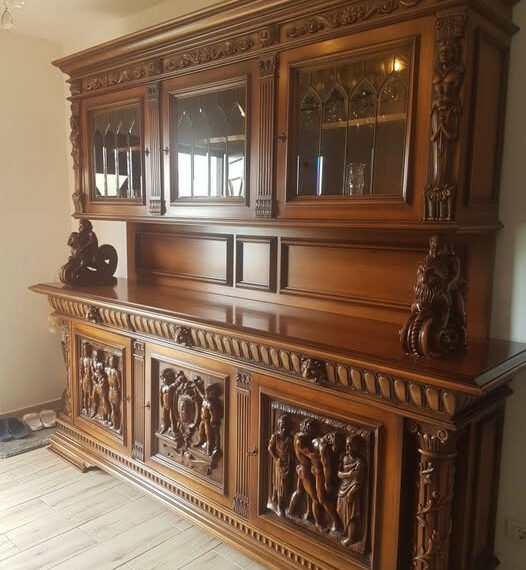
Should This Stunning Dresser Hutch Stay Natural… or Go Bold Red?
Every couple has that moment.
Not the big life decisions — the small ones that somehow carry enormous emotional weight. The ones that start with, “What do you think if we…” and end with laughter, debate, and calling in outside opinions for backup.
This dresser hutch is officially that moment for you and your husband.
And honestly? It’s understandable — because this is not just any piece of furniture.
First, Let’s Acknowledge the Reality: This Is a Serious Piece
Before we even talk about paint colors, we need to be clear about what you have.
This dresser hutch is:
- Solid wood
- Heavily carved
- Traditional and ornate
- Likely inspired by European or classical designs
- The kind of piece that was built to last generations
The detailing alone — the sculpted panels, the carved figures, the architectural top — tells us this was never meant to be disposable or trendy. It was designed to anchor a room, not blend into the background.
That’s why emotions are high. You’re not arguing about a side table. You’re negotiating with history.
Your Vision: Why Red Makes Sense (And It’s Not Crazy)
Let’s talk about your side — because it has real merit.
Red Is Not Just “Bright” — It’s Emotional
A deep, rich red is:
- Warm
- Grounding
- Bold without being chaotic
- Historically classic, not modern-fad
Think:
- Barn red in old farmhouses
- Oxblood in libraries
- Burgundy in traditional dining rooms
- Cherry tones in antique lacquered furniture
Red has been used for centuries in formal interiors because it adds presence without needing clutter.
You’re not imagining a neon firetruck red. You’re imagining character.
Paint Can Make a Piece Feel Intentional and Custom
Painting a piece like this doesn’t automatically mean “ruining” it.
When done thoughtfully, paint can:
- Highlight carvings instead of hiding them
- Turn a traditional piece into a statement
- Make the furniture feel curated rather than inherited
In many high-end interiors, designers intentionally paint ornate wood pieces to modernize them without erasing their soul.
So your instinct isn’t rebellion — it’s design intuition.
His Vision: Why Leaving It Natural Is a Valid Argument
Now let’s be fair to your husband — because his reaction also makes complete sense.
This Wood Is the Furniture’s Identity
From his perspective:
- The grain is part of the beauty
- The carvings were meant to be seen in wood, not paint
- Once painted, you can’t easily go back
To him, painting feels like covering up craftsmanship.
And he’s not wrong.
Original wood:
- Ages gracefully
- Holds value
- Feels timeless across decades
There’s a reason people restore antique furniture instead of repainting it. Wood carries history in a way paint never can.
Emotional Attachment Matters Too
Furniture isn’t just decor — it’s symbolism.
This piece represents:
- An investment
- A shared purchase
- Something meant to last
Click page 2 to continue