The Psychology Behind Viral Personality Tests and What Your Choice Really Reveals
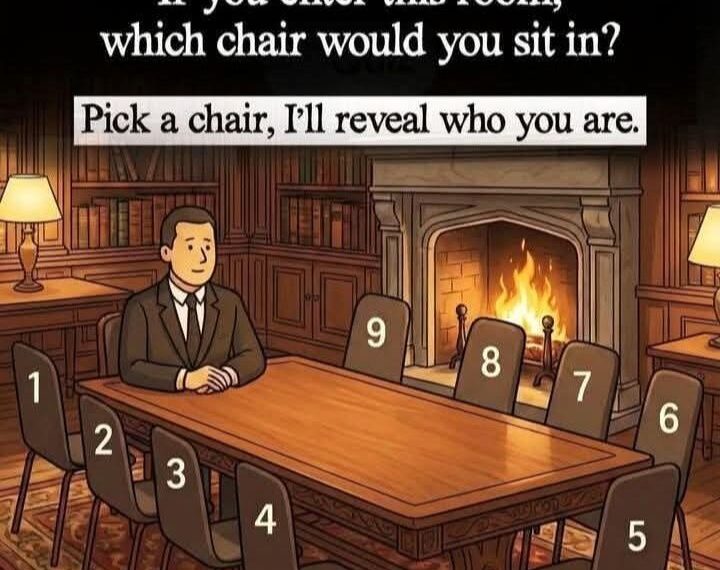
At first glance, the image looks simple, almost playful. A warmly lit room. A long wooden table. A fireplace burning quietly in the background. One person already seated. Nine numbered chairs waiting. The prompt is irresistible: “Pick a chair, I’ll reveal who you are.”
These kinds of personality images spread rapidly because they touch something deeply human. We are social creatures constantly scanning environments for safety, status, comfort, and meaning. Even when we know, intellectually, that a single image cannot truly define us, we still feel an impulse to choose. And once we choose, we want the choice to say something true.
But what is really happening when you instinctively pick a chair? Is it personality? Intuition? Projection? Or something else entirely?
To understand why this test feels so compelling—and why your choice feels revealing even if it isn’t scientifically diagnostic—we need to look at environmental psychology, social positioning, and the subtle cues your brain processes in milliseconds.
Why the Brain Can’t Ignore This Question
The human brain evolved to answer questions like this instantly. Entering a room and deciding where to sit is not neutral. It is a survival and social calculation, even in safe, modern settings.
Your brain automatically assesses:
- Who is already present
- Power dynamics
- Warmth and light
- Distance from others
- Visibility
- Ease of exit
- Comfort versus control
You are not choosing randomly. You are choosing based on patterns learned over a lifetime.
That is why these tests feel personal. They are not magic, but they are reflective.
The Room Itself Matters More Than the Chairs
Before analyzing any specific chair, it’s important to notice the environment.
This room signals:
- Formality (long table, structured seating)
- Authority (one man already seated, facing the table)
- Safety and warmth (fireplace, lamps)
- Order and hierarchy (numbered chairs)
This is not a casual café or a chaotic gathering. It feels like a meeting, perhaps even a judgment or interview. That emotional framing shapes every choice.
You are not just picking a chair. You are choosing how you relate to authority, proximity, attention, and vulnerability.
The Seated Man: The Silent Anchor of the Test
The man already sitting at the table is crucial. He is calm, centered, and placed at the head-side position. Even though he is not labeled as powerful, the composition implies he matters.
Your chair choice is largely a response to him:
- Do you want to sit close or far?
- Directly across or diagonally?
- In his line of sight or out of focus?
- Near warmth or near distance?
Your answer says less about your personality in general and more about how you tend to position yourself around others.
Chairs Near the Head (1, 2, 9): The Proximity Choice
Chairs closest to the seated man often attract people who are comfortable with presence and engagement.
Choosing one of these usually reflects:
- Ease with direct interaction
- Willingness to be seen and evaluated
- Comfort with conversation or authority figures
- A tendency toward involvement rather than observation
This does not automatically mean confidence in the loud sense. Many quietly confident people choose proximity because distance feels unnecessary.
At the same time, some people choose these chairs because they feel a need for validation or reassurance. The same action can arise from different internal motivations.
That ambiguity is important.
Chairs Along the Sides (3, 4, 7, 8): The Balanced Observers
Side positions are fascinating because they often feel like the safest compromise.
People drawn to these chairs tend to:
- Value awareness without confrontation
- Prefer participation without being the focal point
- Read the room before fully engaging
- Feel comfortable contributing selectively
Click page 2 to continue