✨ Introduction: A Small Detail With Big Meaning
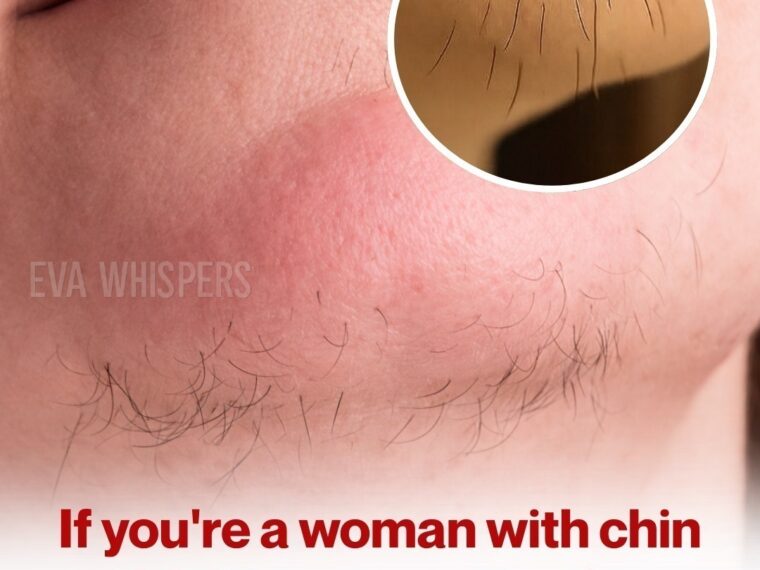
Most people don’t pay much attention to chin whiskers.
They may notice a few coarse hairs appearing occasionally, pluck them, and move on without thinking twice.
But what if these small, seemingly insignificant hairs are actually telling you something important about your body?
👉 The truth is: your body is constantly communicating with you.
And sometimes, the signals are subtle.
Chin whiskers — especially when they become more frequent, thicker, or darker — can be connected to deeper biological processes, including hormonal balance, metabolic health, and even stress levels.
This doesn’t mean something is wrong.
But it does mean:
👉 It’s worth understanding what your body is trying to say.
🧬 1. Understanding Chin Whiskers: What Are They?
Chin whiskers are coarse, often darker hairs that grow on the chin or jawline. Unlike the fine, light hair (called vellus hair) that covers most of the face, these hairs are:
- Thicker
- More visible
- Sometimes grow faster
These hairs are influenced by androgens, a group of hormones that includes testosterone.
Yes — even women naturally produce small amounts of testosterone.
👉 And this is where things get interesting.
⚖️ 2. Hormonal Balance: The Main Factor
The most common reason behind chin whiskers is hormonal fluctuation.
Your body maintains a delicate balance between different hormones:
- Estrogen
- Progesterone
- Testosterone
When this balance shifts — even slightly — it can lead to changes in hair growth.
🔍 What can cause this shift?
1. Natural aging
As you get older, especially after your mid-20s and beyond:
- Estrogen levels may decrease
- Androgens may become more noticeable
👉 Result: More visible facial hair
2. Hormonal sensitivity
Some people are simply more sensitive to androgens.
Even normal hormone levels can lead to:
- Stronger hair growth
- Thicker strands
👉 This is not a disease — it’s a biological variation.
🧠 3. Stress and Cortisol: The Hidden Connection
This is something most people completely overlook.
When you’re under constant stress, your body produces more cortisol (the stress hormone).
👉 And cortisol affects your hormonal system.
Chronic stress can:
- Disrupt hormone balance
- Increase androgen activity
- Affect hair growth patterns
⚠️ Signs stress may be involved:
- Fatigue
- Sleep problems
- Irritability
- Sudden changes in your body
👉 Your body is not separate systems — everything is connected.
🍬 4. Blood Sugar & Insulin: A Surprising Link
Your diet and metabolism can also influence chin whiskers.
When your body struggles with blood sugar regulation:
- Insulin levels increase
- This can stimulate androgen production
👉 Result: Increased facial hair growth
🧠 What this means:
If you notice:
- Frequent sugar cravings
- Energy crashes
- Weight changes
👉 Your body may be dealing with metabolic imbalance.
🩺 5. When It Might Be a Medical Signal
Sometimes, chin whiskers can be part of a broader pattern.
One condition often associated with this is:
⚠️ Polycystic Ovary Syndrome (PCOS)
This is a hormonal condition that can affect:
- Hair growth
- Menstrual cycles
- Skin (acne)
- Weight
🚨 Important:
Having a few chin hairs does NOT mean you have a condition.
👉 But if combined with:
- Irregular cycles
- Persistent acne
- Rapid hair growth
It may be worth paying attention.
🧬 6. Genetics: Your Body’s Blueprint
Click page 2 to continue