Honey is one of nature’s oldest sweeteners. It is prized for its flavor, aroma, nutritional value, and medicinal benefits. But as demand grows, the market is inundated with products that are diluted, processed, or even entirely fake. Knowing how to tell real honey from fake honey is crucial—for your health, your budget, and for ensuring you get true quality. This comprehensive guide will empower you with the knowledge to identify genuine honey reliably.
Why Authentic Honey Matters
Before diving into how to test honey, it helps to understand what is at stake.
- Health and nutrition: Pure honey contains enzymes, antioxidants, trace vitamins and minerals, pollen, and other beneficial compounds. Adulterated honey often lacks these and may be mixed with sugar syrups or additives that spike glycemic load.
- Quality and taste: Real honey has complex aroma, flavor nuances depending on floral source, region, season. Fake honey tends to be overly sweet, one‑dimensional, lacking in complexity.
- Cost and value: Pure honey is often more expensive. Buying fake or diluted honey robs you of value: you pay more for less.
- Safety: Adulterants may include substances that affect people with sensitive health conditions; also, storage or processing of fake honey may introduce contaminants.
- Ethical and environmental impact: Real beekeepers, sustainable agriculture, pollination, biodiversity—all are supported when you choose authentic honey. Fake or industrially produced “honey” often cuts corners.
What Is Fake or Adulterated Honey?
Fake honey is a general term for honey that is not what it claims to be. This might mean:
- It is watered down.
- It contains added sugar or syrup (corn syrup, cane sugar, rice syrup, glucose, fructose, etc.).
- Honey that is over‑processed: heavily filtered, overheated, nearly pasteurized to the point where many of its natural enzymes and trace compounds are lost.
- Blended honey: mixing honey from different regions, seasons, or floral sources without transparent labeling.
- Even substances that mimic honey using artificial flavors, sweeteners, or fillers.
What Real Honey Should Be Like
To know what to look for, here are the properties of genuine raw or minimally processed honey:
- Viscosity and Thickness: Genuine honey is thick, dense, flows slowly when poured. It doesn’t run off quickly or drip like water.
- Natural Crystallization: Over time, real honey (especially raw, unfiltered, or with normal glucose/fructose ratio) tends to crystallize—granules form, texture becomes grainy or cloudy. Crystallization is a sign of authenticity, not spoilage.
- Complex Aroma and Flavor: Floral, herbal, earthy, or fruity tones; sometimes hints of pollen, wildflowers, or the specific flowers bees visited. Aftertaste: a lingering sweetness, sometimes a slight tartness or a touch of bitterness depending on variety.
- Color Variation: Depending on floral source and region, colors can range from nearly clear pale gold to dark amber, even brownish. Darker honey often has stronger flavor and more minerals.
- Presence of Pollen / Tiny Particles: Tiny specks of pollen, beeswax, or propolis in raw or unfiltered honey can be normal. Very ultra‑filtered or heavily processed honey may lack these.
- Low Moisture Content: Genuine honey has a moisture content typically around 17‑20%. Too much moisture can lead to fermentation, a thinner consistency, or reduced shelf‑life.
Simple Home Tests to Identify Real Honey
Here are many tests that you can do at home (no fancy equipment) to separate real honey from the fake. Some are more reliable than others; combining several gives a more accurate picture.
| Test | What to Do | Real Honey Behavior | Adulterated / Fake Behavior | Caveats / Accuracy |
|---|---|---|---|---|
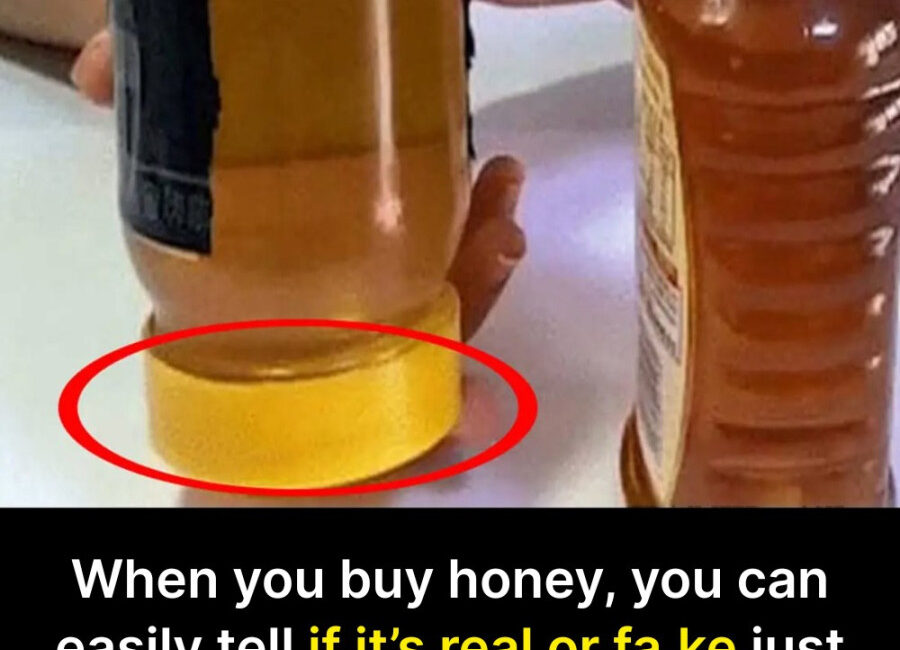
| Water Test | Fill a clear glass with room‑temperature water; drop a spoonful of honey into it. Observe whether it sinks, dissolves, or spreads. | The honey should sink to bottom as a lump; stay intact for a while; dissolve slowly only when stirred. | Fake honey dissolves quickly; spreads out; breaks apart immediately. | Very useful test; works well vs syrup adulteration; sometimes very thin real honeys might behave more fluidly. |
| Thumb Test | Place a drop of honey on your thumb. | Should stay in place; be quite sticky; not spread immediately. | If it flows or spreads quickly, likely diluted or adulterated. | Works well for quick check; temperature (warm hands) can affect spread. |
| Crystallization Test / Shelf‑Time | Let honey sit in a cool place (or in fridge) for some time. Observe whether crystals form. | Real honey (especially raw) crystallizes over weeks or months. | Fake honey may never crystallize; stays perfectly liquid or only crystallizes poorly or artificially. | Some true honeys (e.g. certain floral types, high in specific sugars) crystallize very slowly; lack of crystallization alone isn’t full proof. |
| Heat / Fire Test | Put some honey on a metal spoon. Apply gentle heat (over flame). Or dip matchstick in honey and try lighting. | Real honey caramelizes; may burn cleanly; matchstick might burn if honey is very dry; minimal bubbling. | Fake honey may foam, bubble, produce excessive steam; may burn badly or refuse to light (due to higher moisture or added substances). | Be safe with fire; heat can degrade real honey further; not always safe or practical. |
| Bread Test | Spread honey on a slice of bread; leave for some minutes. | Bread may become firm, dry, or stiff; less wetness; honey doesn’t soak into bread immediately. | Fake or diluted honey will moisten bread; make it soggy or sticky quickly. | Dependent on structure of bread; ambient humidity can affect. |
| Blot / Paper Test | Drop some honey onto blotting paper or absorbent paper. | Real honey won’t soak through quickly; stays thick; leaves less wet stain. | Fake honey may leave wet, damp stains or pass through. | Paper quality and thickness matter. |
| Taste and Aroma Test | Smell and taste a small amount. | Should have complex taste, floral notes, depth; maybe some tang or mild flavors; aroma may hint at flowers. | Fake honey often has a bland, one‑note sweetness; lack of aroma or artificial smell. | Requires familiar palate to floral types. Some honeys have mild flavors by nature. |
| Label and Price Check | Look at ingredient list, country of origin, “raw”, “unpasteurized” labels, price vs typical for region. | Genuine honey often sold raw, unfiltered; may list floral source; cost higher; transparent labeling. | Honey that mentions “blend,” “honey product,” “sweeteners,” or very low price may be suspect. | Some genuine honey is filtered or pasteurized but still real; labelling laws vary by region. |
| Aroma / Pollen / Tiny Particles | Inspect jar visually; smell. | Real honey may show fine particles; smell fresh, floral, maybe slightly waxy or earthy. | Processed/fake honey may lack all pollen, smell bland, overly sweet or artificial. | Filtering does remove particles; absence isn’t always definitive into fake, but combined with other tests it is useful. |
Advanced or Laboratory‑Based Indicators
For utmost certainty, beyond home tests, these more precise methods or scientific tests are used. They are more expensive or less accessible, but worth knowing if you buy in bulk or want authentic verification.
- Enzyme content: Testing for natural enzymes like diastase, invertase. Real honey has measurable levels; heavily processed or adulterated honey often shows degraded enzyme activity.
- Pollen analysis (Melissopalynology): Identifying the pollen types in honey to verify origin and floral source. Fake honey may lack authentic pollen or have pollen spiked from other sources.
- Spectroscopy / Chemical Profiling: Using tests like infrared spectroscopy, chromatography to detect sugar profiles, adulterants.
- Isotope analysis: Can detect weird sugar sources (e.g., cane sugar vs natural floral sugars) by examining isotopic ratios.
- Certifications and traceability: Where labs test honey batches and provide certificates of authenticity, or origin, and you can trace beekeeping methods, floral sources.
Common Myths & Misconceptions
There are many myths around honey purity tests. Some are only partially true; some are misleading. It helps to be aware:
- Myth: “If honey crystallizes, it has gone bad.” Reality: Crystallization is natural and often desirable; it does not mean spoilage. You can re-liquefy gently without harming quality.
- Myth: “Real honey never ferments or spoils.” Partially true, but if moisture is too high, or if honey is improperly stored, fermentation can occur.
- Myth: “Only expensive honey is real.” Not always. Some inexpensive raw honeys exist, but very low price usually correlates with low quality or adulteration.
- Myth: “If it passes one test, it is definitely pure.” Not true. No single home test is 100% reliable. Best to use multiple indicators together (viscosity, crystallization, label, taste, etc.).
Risks & Problems with Fake Honey
Understanding the downsides of fake honey helps you take purity seriously.
- Health risks: Added sweeteners may increase risk of metabolic syndrome, obesity, blood sugar spikes. Possible contamination with chemicals, pesticides, or adulterants of low safety.
- Loss of medicinal properties: Real honey is known for antibacterial, anti‑inflammatory, wound healing, antioxidant properties. Much of that potency is lost when processed or adulterated.
- Misleading nature claims: Many labels use words like “natural,” “pure,” “organic,” “raw” without standards backing them.
- Economic injustice: Real beekeepers often compete with cheaper, adulterated honey flooding the market; they lose out.
- Environmental impact: Overharvesting, shady sourcing, monocultural planting; bees may be exposed to pesticides if origin is unknown.
How to Buy Real Honey Wisely
To avoid fake honey in the first place, follow good buying practices.
- Buy local or from trusted beekeepers
When possible, buy honey directly from small beekeepers, farmers markets, or local producers. This often ensures transparency in processing, less chance of adulteration, fresher product. - Check for certifications or lab tests
Labels such as “100% pure,” “raw,” “unpasteurised,” “single floral source,” or organic certifications can help. But check credibility. Sometimes even certified products are filtered heavily or heat‑treated. - Inspect the label
- Ingredients: should ideally list just “honey.”
- Floral source: clover, wildflower, acacia, manuka, etc.
- Origin: country or region.
- Processing information: raw or pasteurized.
- Check packaging
Real honey is often sold in glass jars or thick food grade plastic; sometimes dark glass helps protect from light. Avoid containers that are translucent thin plastic if you are seeking high quality. - Beware of unusually low prices
If the price is far lower than typical in your region, it may signal adulteration or very heavy processing. - See whether honey crystallizes over time
If you buy a fresh jar, track whether it crystallizes naturally. If not, maybe it’s highly filtered or has additives. - Storage matters
Store honey in a cool, dry place, away from direct sunlight. Moisture, heat degrade honey; high humidity or frequent opening can introduce moisture which can promote fermentation.
Step‑by‑Step Checklist: Evaluate a Jar of Honey
Click page 2 for more