- Remove everything from pantry and cupboards. Inspect for droppings, chew marks, and nesting.
- Vacuum and disinfect thoroughly. Dispose of contaminated food.
- Replace torn packaging with sealable containers.
- Assess all rooms for chew marks and possible entry points.
Week 1: Seal and secure
- Buy steel wool, copper mesh, caulk, hardware cloth, and door sweeps. Seal all gaps from inside and out.
- Fix leaky pipes and eliminate standing water.
- Store food in rodent‑proof containers.
- Trim vegetation 12–18 inches from the house.
Weeks 2–4: Reinforce and monitor
- Replace insulation where contaminated.
- Install motion‑sensing lights around entry points.
- Place peppermint oil cotton balls in suspected zones, refreshed twice weekly.
- Use professional‑grade exclusion (metal mesh) for vents and larger openings.
Month 2 and beyond: Maintain and prevent
- Routine inspections every month.
- Keep food sealed and maintain tidy storage.
- Remove nesting materials from garages and attics.
- If you still observe activity after 4–6 weeks, consult a licensed pest control expert for humane exclusion plans.
Natural deterrents — what works, what’s hype
A lot of “home remedies” circulate online. Here’s an evidence‑based look at common ones.
Works reasonably well (as deterrents, combined with exclusion)
- Peppermint oil: Effective short‑term; rodents avoid strong mint scents.
- Cayenne pepper / chili powder: Some deterrence but messy and irritant to humans and pets.
- Used cat litter: Can deter rodents via predator scent (sanitary concerns).
- Steel wool + caulk: Physically effective at small gaps.
- Hardware cloth / metal mesh: Effective for vents and larger holes.
Mixed or unreliable
- Ultrasonic devices: Mixed evidence; habituation occurs. Best used as part of a package, not alone.
- Mothballs: Not recommended indoors due to toxicity; they evaporate and are hazardous to children and pets.
- Ammonia as predator scent: Can be dangerous indoors; strong, irritating fumes.
Avoid (dangerous or cruel)
- Poison inside homes: Dangerous to children, pets, and non-target wildlife; carcasses in walls cause odor problems.
- DIY poisons or homemade toxic mixtures: Dangerous and may violate local laws.
- Glue traps: Considered inhumane; they cause prolonged suffering. Avoid these.
How to use a biscuit (or food) strategically without traps or poison
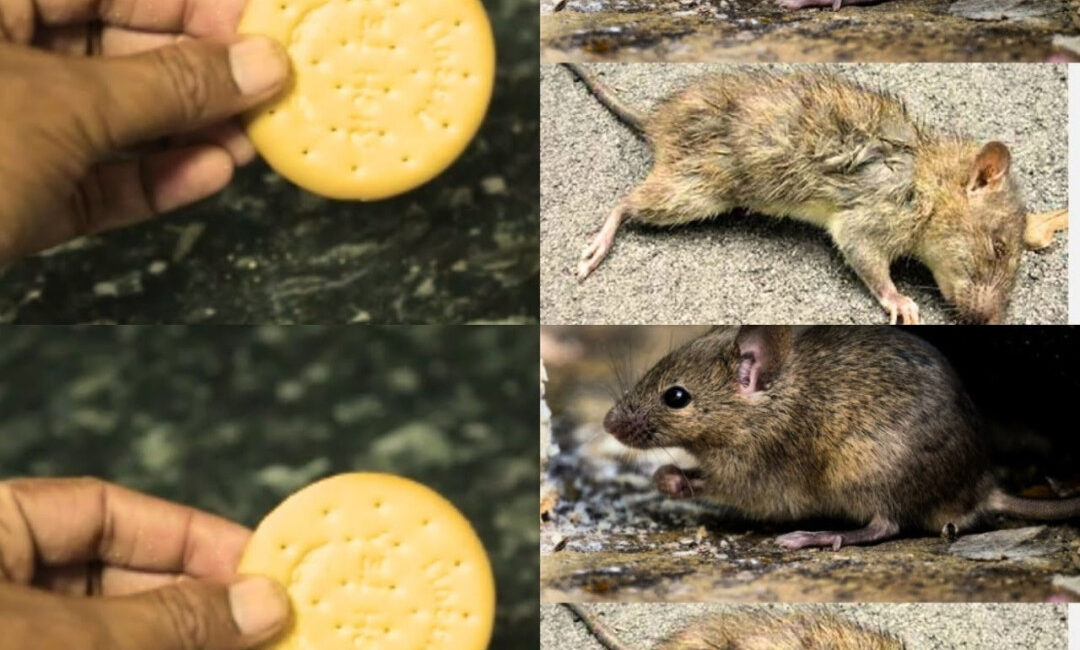
The user mentioned biscuits specifically. Instead of leaving a biscuit out (which invites rodents), use food strategically for monitoring and then remove it:
- Use a sealed bait station for monitoring: Place a small amount of biscuit in a transparent sealed container (with a small, checkable opening) to see if it’s being accessed — this helps determine activity times. Don’t create an inviting open food source.
- Remove access immediately after observation: If the biscuit is disturbed, follow up with sealing and exclusion steps.
- Use biscuit only for short‑term lures when paired with humane capture/release (if legal in your area) or to confirm activity for professionals. Don’t maintain it as a food source.
This method uses food as data, not as bait to sustain the population.
Safety for people and pets
- Never use poisons inside living spaces where children or pets can access them. Secondary poisoning (predators eating poisoned rodents) is a real wildlife concern.
- Essential oils and sprays can be hazardous to pets; consult a vet before using strong scents widely.
- Sanitization: Wear gloves when cleaning droppings. Rodent droppings can carry pathogens, so disinfect with a bleach solution or household disinfectant; don’t sweep or vacuum dry droppings (this aerosolizes particles). Spray with disinfectant, allow to soak, then wipe.
- If you have existing health conditions (asthma, immunocompromised), consider professional cleaning if droppings are widespread.
Cost considerations and value
Rodent exclusion and prevention are cost‑effective compared to repeated poisoning or dealing with property damage.
- Short-term supplies (steel wool, caulk, peppermint oil, containers): low cost (under $50–$150 depending on scale).
- Moderate exclusion work (door sweeps, hardware cloth installation, minor foundation patching): $200–$1,000 depending on size and materials.
- Professional pest control (inspection + exclusion + monitoring): varies widely; getting multiple quotes and asking for humane IPM (Integrated Pest Management) approaches is wise.
Remember: preventing infestation reduces long-term costs like chewed wiring, ruined insulation, or contamination of stored food.
When to call professionals
Call a licensed pest‑control professional if:
- You see multiple rodents or signs of a large infestation (many droppings, widespread gnaw marks).
- You can’t locate entry points despite searching.
- There is damage to wiring, insulation, or structural elements.
- DIY measures fail after a reasonable trial (2–4 weeks of good exclusion and sanitation).
- You need a permanent exclusion solution around foundations, vents, and utilities.
Ask potential service providers for humane, non‑poison options and written guarantees about exclusion work. Request references and proof of licensing/insurance.
Common mistakes and how to avoid them
- Leaving even intermittent food out: Even one biscuit left for a few hours encourages return. Store food immediately.
- Using single‑method fixes: Combining tactics (sanitation + sealing + deterrence) is required.
- Delaying seals and repairs: Quick patchwork often fails; use metal or cement for long-term fixes.
- Neglecting pet food and compost: These are strong attractants; secure them.
- Assuming a single sighting is solved after one scare tactic: Repeat sightings require thorough intervention.
FAQs (practical answers)
Q: Can I make mice disappear permanently in five minutes?
A: No. You can deter or scare them off in minutes, but permanent disappearance needs exclusion, sanitation, and maintenance.
Q: Is peppermint oil safe for my cat/dog?
A: Use with caution. Some essential oils are toxic to pets. Keep oils out of reach and consult a vet if unsure.
Q: How small a hole can a mouse use?
A: Mice can enter through a gap as small as a dime (about 6–8 mm). Rats require larger gaps but are still surprisingly small.
Q: Are ultrasonic repellents effective?
A: Evidence is mixed. Use them as part of a combined approach, not as sole protection.
Q: Can I use biscuit as bait to capture and release mice?
A: Only with a humane live trap and knowledge of local rules. Also, releasing rodents may be illegal or ecologically harmful in some areas. Check local regulations.
Final thoughts — turning crisis into long-term prevention
Biscuits are innocent treats — until crumbs become a roadmap for rodents. The right approach combines immediate action (the 5‑minute protocol), sensible deterrents, thorough exclusion, and ongoing maintenance. Be humane. Prioritize safety for family and pets. And remember: a small investment in sealing, storage, and inspection prevents larger headaches down the road.
If you’d like, I can now:
- Provide a printable 1‑page “emergency 5‑minute” checklist for your kitchen and pantry.
- Generate a room‑by‑room inspection checklist tailored to your home layout (apartment, townhouse, detached house).
- Draft an email template you can send to local pest‑control companies asking for humane exclusion quotes.