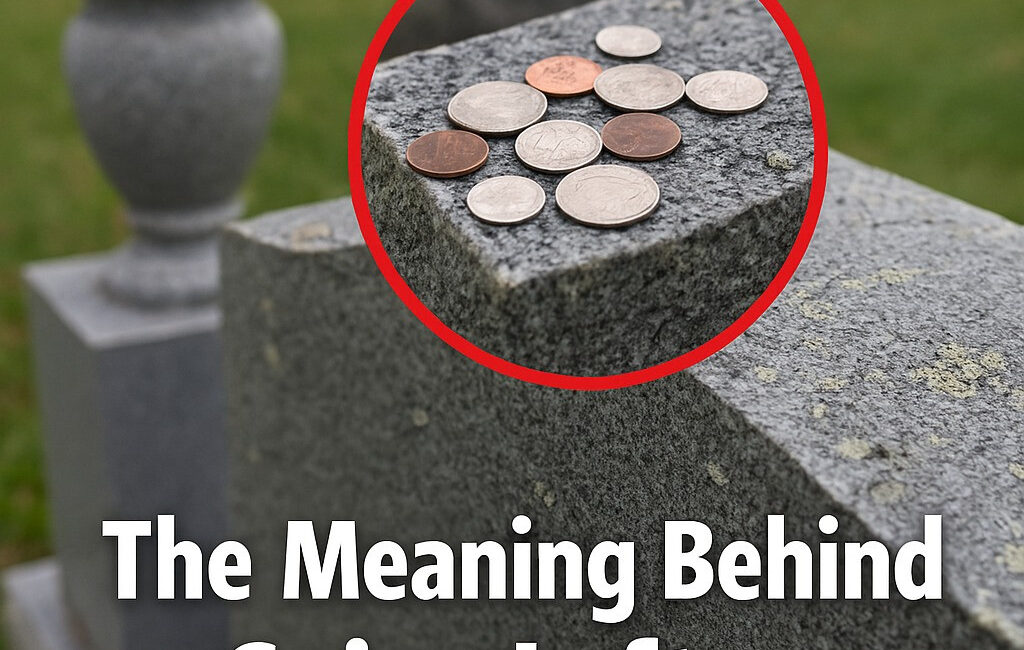
Walking through a cemetery can be a profoundly moving experience. The quiet rustle of leaves, the solemn rows of headstones, and the lingering whispers of memory all contribute to an atmosphere steeped in history, reverence, and reflection. Among the many rituals observed in these sacred spaces, one practice has long intrigued visitors: the placement of coins on gravestones.
At first glance, this may appear to be a simple act of respect—a token left for a departed loved one. But for those who look closer, it is far more intricate. Leaving coins on gravestones is a form of non-verbal communication, a coded message that connects visitors across time, conveys specific sentiments, and preserves traditions passed down through generations. Each coin carries its own meaning, turning a simple gesture into a silent dialogue between the living and the departed.
In this comprehensive exploration, we will delve deep into the origins, meanings, and symbolism behind this fascinating practice. We will explore why people leave coins, how different denominations convey distinct messages, and the broader cultural, emotional, and historical context that gives this ritual its enduring significance.
The Origins of Leaving Coins on Gravestones
The act of leaving coins on gravestones is not a recent invention—it has roots that stretch back centuries. While the specific origin is difficult to pinpoint, historians and anthropologists suggest that the practice evolved from ancient traditions of offering tribute to the dead.
Ancient Practices of Tribute
In many ancient civilizations, offerings were made to ensure the safe passage of souls into the afterlife. These offerings could include food, drink, flowers, and, in some cases, currency. Coins, in particular, were considered a symbolic passage fee, a means to provide the deceased with what they might need in the world beyond.
The concept of leaving coins may also have connections to mythology. In Greek and Roman traditions, coins were placed with the dead as payment for passage across the river Styx, ferried by Charon, the mythical boatman who transported souls to the underworld. Failing to leave a coin could leave the spirit stranded, a thought that created both reverence and a sense of obligation.
Cultural Evolution
Over time, the symbolic function of coins evolved from a literal toll to a more metaphorical gesture. Modern visitors leave coins not because the deceased needs money, but because the act signifies acknowledgment, remembrance, and connection. It is a way of saying, “I was here. I remember you.”
The Symbolism of Different Coins
One of the most intriguing aspects of this tradition is the specific meanings attached to different coins. The denomination and number of coins placed on a gravestone are not random—they convey coded messages that other visitors can interpret.
Pennies: Simple Remembrance
A penny is the most common coin left on gravestones and carries a straightforward message: the visitor has paid their respects. It signifies basic acknowledgment and remembrance without deeper personal or emotional connotations.
- Interpretation: “I visited and honored your memory.”
- Emotional Tone: Respectful and contemplative.
Nickels: Shared Connection
Leaving a nickel on a gravestone often indicates that the visitor had a personal connection with the deceased, such as being a friend or family member. It is a subtle way of signaling a closer relationship than that indicated by a penny.
- Interpretation: “I knew you personally.”
- Emotional Tone: Personal and affectionate.
Dimes: Long-Term Relationships
A dime is traditionally left by someone who served with the deceased in the military. It communicates solidarity, camaraderie, and shared experience. Veterans often understand this symbolism, making it a quiet but powerful acknowledgment of shared sacrifice and service.
- Interpretation: “I served alongside you.”
- Emotional Tone: Respectful and commemorative.
Quarters: Significant Sacrifice
Quarters are typically left to indicate a significant relationship or profound respect. In the context of military graves, leaving a quarter can signify that the visitor has paid a visit to the grave of a fellow service member who made a considerable sacrifice. It can also indicate admiration or recognition of extraordinary accomplishments in life.
- Interpretation: “I deeply respect your sacrifices.”
- Emotional Tone: Reverent and solemn.
Multiple Coins: Layered Messages
In some cases, visitors leave multiple coins to convey more complex sentiments. For example, leaving two or three pennies might signify that the visitor is remembering the deceased along with a shared family connection. A combination of different coins can also indicate multiple layers of acknowledgment, from personal connection to broader respect.
- Interpretation: Communicates multiple messages in a single gesture.
- Emotional Tone: Thoughtful and nuanced.
Psychological and Emotional Dimensions
Leaving coins on gravestones is more than a physical act—it has profound psychological and emotional significance. It serves as a tangible manifestation of grief, memory, and continuity.
Coping with Loss
For many, the act of leaving a coin is part of the grieving process. It provides a ritualized moment to connect with the deceased, allowing the visitor to express feelings that might otherwise remain unspoken. Psychologists note that such gestures can help individuals process emotions and maintain a sense of closeness with loved ones who have passed away.
Building a Sense of Connection
Cemeteries are spaces of solitude, yet rituals like leaving coins create invisible networks of communication. Each coin left by one visitor may be seen by another, creating a continuum of remembrance. It is a way for the living to communicate not only with the dead but also with each other, forming a shared experience that transcends time.
Affirming Memory
Memory is fragile, and symbols help anchor recollection. Coins act as physical reminders that someone cared enough to pause, reflect, and leave a token of acknowledgment. This reinforces the ongoing presence of the deceased in the lives of those left behind.
Cultural Variations and Practices
While the meanings of coins described above are common in certain traditions, the practice varies widely across cultures and communities.
Military Cemeteries
In military cemeteries, the coin tradition is particularly pronounced. Each coin represents a silent code of respect:
- A penny: basic acknowledgment
- A nickel: friendship or service connection
- A dime: military service alongside the deceased
- A quarter: significant respect or sacrifice
Visitors often learn these codes through word of mouth, personal experience, or guidance from veteran organizations.
International Practices
Globally, coins on graves are not restricted to one culture. For example:
- In some European countries, coins may be left as part of a seasonal ritual honoring ancestors.
- In parts of Asia, coins are sometimes used to ward off negative spirits, combining remembrance with spiritual protection.
- Indigenous communities may incorporate coins into larger ritual offerings alongside flowers, candles, and symbolic objects.
These variations demonstrate that the practice, while universal in its essence, is adaptable to local beliefs and customs, enriching its symbolic complexity.
The Practical Aspect of Coin Placement
Click page 2 for more