Beyond symbolism, there are practical considerations that have shaped the tradition:
Durability
Coins are durable, weather-resistant, and universally recognizable. Unlike flowers, which wilt, or handwritten notes, which degrade, coins remain visible for long periods, making them an ideal medium for long-lasting remembrance.
Accessibility
Coins are easily accessible and require no preparation, making the ritual inclusive. Anyone, regardless of age, economic status, or cultural background, can participate in this act of remembrance.
Visual Symbolism
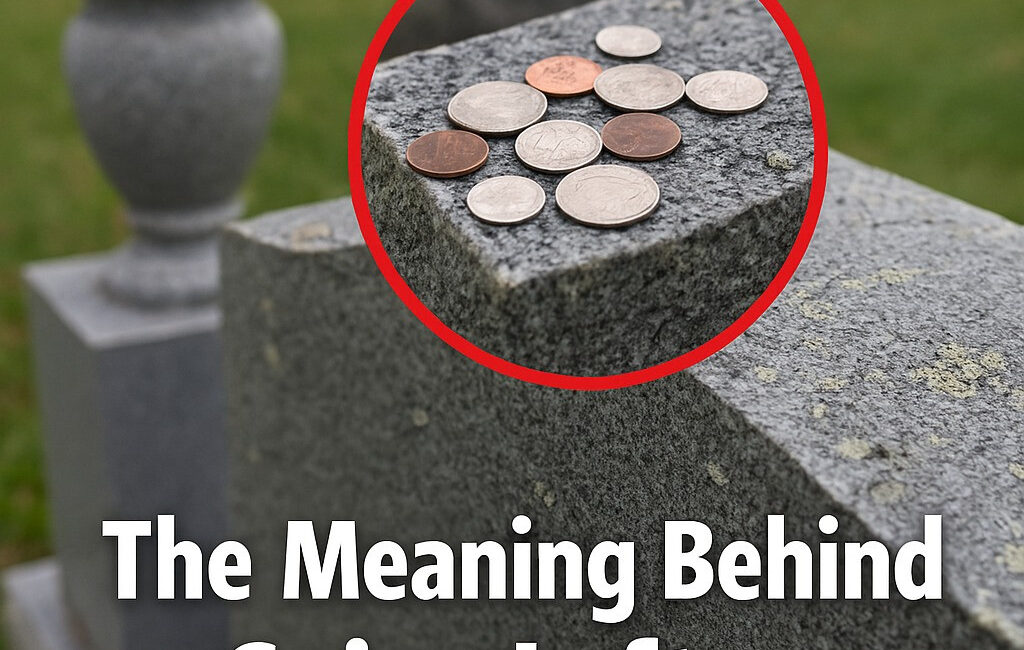
A gravestone dotted with coins creates a visual display of visitation and care, signaling to others that the deceased is remembered and respected. This communal display can inspire visitors to continue the practice, sustaining a tradition that spans generations.
Ethical Considerations
While the practice is widely accepted, it raises some ethical and practical questions:
Respect for Maintenance Crews
Cemeteries often employ maintenance staff to care for the grounds. Visitors leaving coins should ensure that their gestures do not impede landscaping efforts or create hazards. Coins scattered loosely may interfere with mowing equipment or create litter, so placing them intentionally and neatly is important.
Avoiding Exploitation
In some cases, unscrupulous individuals may remove coins left at gravesites. While the majority of visitors leave coins with good intentions, it is crucial to promote awareness and respect, discouraging opportunistic behavior.
Modern Interpretations
In contemporary times, the ritual of leaving coins has expanded beyond its original context. It now intersects with themes of social media memorialization, digital remembrance, and broader commemorative practices.
- Some families encourage leaving coins as part of organized memorial events.
- Coins have inspired artistic projects that document patterns of visitation and memory.
- Online discussions explore the hidden meanings of coins, educating younger generations about the symbolism embedded in this simple act.
These developments underscore that the tradition is dynamic, evolving to remain relevant in a modern, digital world while retaining its emotional and symbolic core.
Conclusion
Leaving coins on gravestones is a rich, multi-layered tradition that blends history, symbolism, and emotional expression. Far from being a trivial gesture, it is a silent, coded language connecting the living with the deceased and fostering a continuum of remembrance across generations. Each coin carries a story: a penny signals simple respect, a nickel indicates personal connection, a dime honors shared military service, and a quarter recognizes significant sacrifice.
This timeless practice speaks to the universal human need for connection, memory, and acknowledgment. It reminds us that even the smallest acts—a single coin placed with intention—can carry profound meaning, bridging the gap between life and death, past and present, memory and legacy.
Whether observed in a historic cemetery, a family plot, or a military memorial, the coins left behind are far more than metal—they are symbols of love, respect, and enduring remembrance.
Next time you visit a gravestone, take a moment to notice the coins. Behind each one lies a story, a silent conversation that has traveled across time, whispering that someone cared enough to remember.