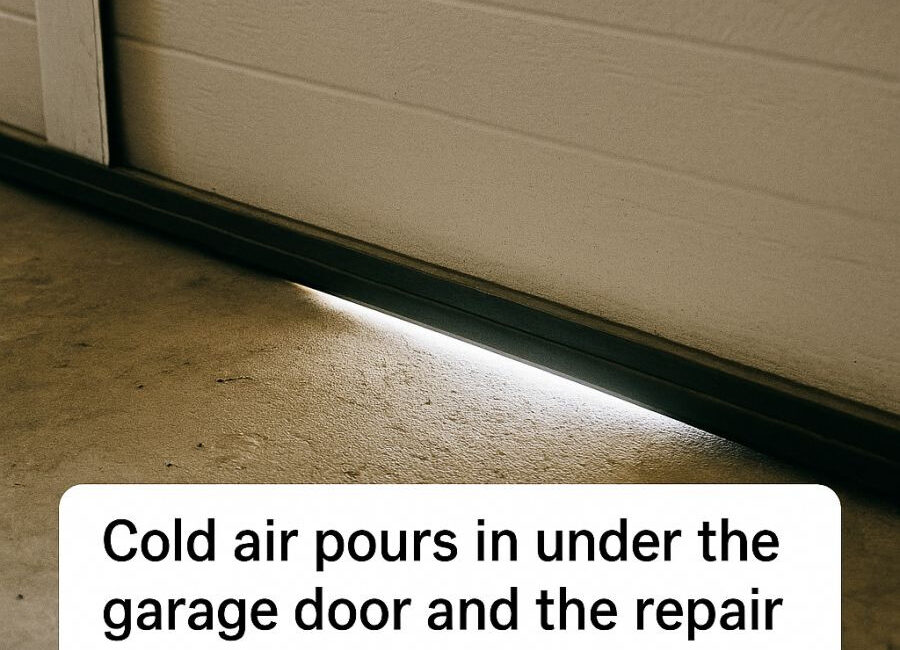
Painter’s tape and foam strips can be used to create a temporary seal. Apply foam strips along the frame where the door meets it when closed. Use painter’s tape to hold everything in place without damaging surfaces.
While this will not withstand heavy use for long, it can dramatically reduce drafts during periods when the door remains mostly closed.
INSULATING THE GARAGE DOOR PANELS THEMSELVES
If your garage door is uninsulated, it acts like a giant metal radiator for cold. Adding temporary insulation to the panels can improve temperature control significantly.
Foam board insulation or reflective wrap can be cut to fit inside each panel section. Secure it with double-sided tape or removable adhesive. This reduces heat transfer through the door itself and helps stabilize the interior temperature.
This solution not only blocks cold air but also makes the garage less susceptible to rapid temperature swings.
SPACE HEATERS: USE WITH EXTREME CAUTION
A space heater can help warm the garage temporarily, but safety must come first. Only use heaters designed for garage or workshop environments. Place them on stable, non-flammable surfaces and keep them far from fabric, cardboard, or plastic barriers.
Never leave a space heater unattended. Ensure it has an automatic shut-off feature and follow all manufacturer guidelines strictly. Heat can help, but it should never introduce risk.
PROTECTING YOUR HOME BY SEALING THE HOUSE-GARAGE DOOR
One of the most important steps is isolating the garage from the rest of your home. Close and seal the door connecting the garage to the house tightly.
Use a door draft stopper, rubber weatherstripping, or even a rolled towel at the base. Adding a heavy curtain or insulated blanket over the door can further reduce heat transfer.
This step protects your living space even if the garage remains cold.
TEMPORARY FIXES FOR DAMAGED BOTTOM SEALS
If the bottom seal itself is torn or crumbling, clean it thoroughly and apply duct tape or adhesive sealant as a patch. While not elegant, this can restore partial functionality.
If you have access to a replacement seal and basic tools, a DIY replacement may be possible. Sliding in a new seal can provide a more reliable temporary fix until professionals handle alignment or structural issues.
WHEN TO CALL A PROFESSIONAL AND HOW TO PREPARE
Temporary solutions are exactly that — temporary. Schedule professional repairs as soon as possible. When you call, ask about replacement seal options, alignment checks, insulation upgrades, and warranty coverage.
Document the problem with photos and measurements. This helps technicians diagnose issues quickly when they arrive and ensures you get the most effective long-term fix.
A FINAL WORD ON GETTING THROUGH THE WAIT
A cold garage in winter is stressful, but it does not have to be unbearable. With a combination of observation, creativity, and practical materials, you can dramatically reduce cold air intrusion and protect your home until repairs are completed.
The goal is not perfection. It is damage control, comfort, and efficiency — all achievable with temporary solutions that cost little but deliver real relief.
Cold air may be persistent, but it is not unbeatable.