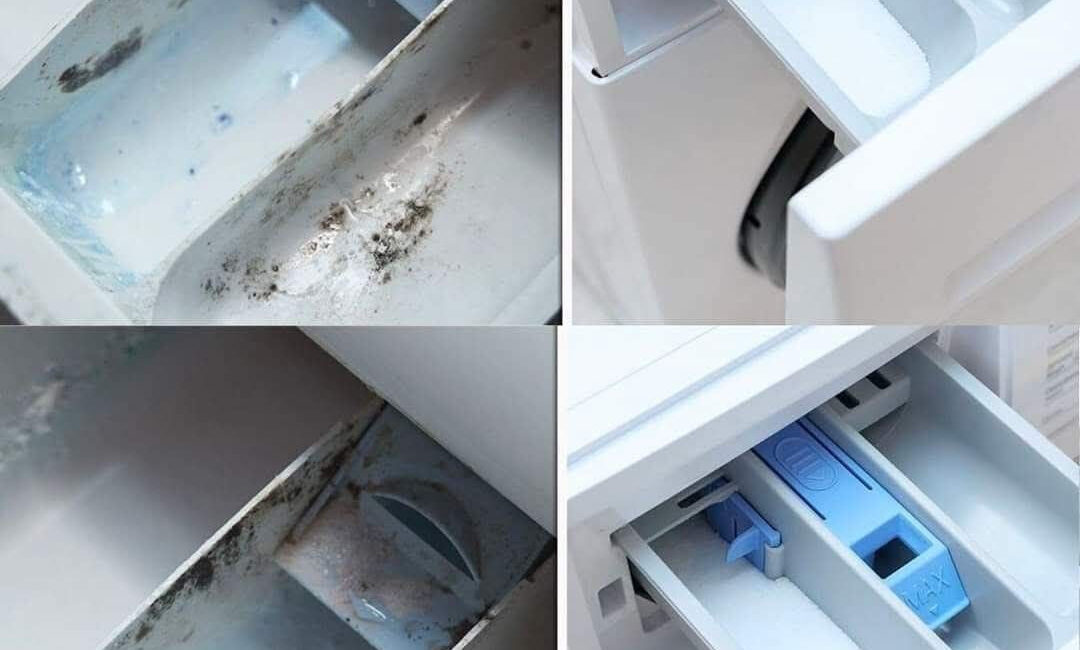
After soaking, even stubborn mould becomes significantly easier to remove. A soft brush or old toothbrush can now reach into corners, channels, and seams without force.
This stage is not about scrubbing hard—it’s about guiding loosened residue out of hiding. Areas that were once black or slimy often come clean with minimal effort.
Rinse thoroughly with warm water, and the difference is immediately visible. The drawer regains its original color, texture, and cleanliness.
The Forgotten Area: Cleaning Inside the Machine Housing
Cleaning the drawer alone is only half the solution. The compartment inside the washing machine—the cavity the drawer slides into—often harbors just as much mould.
Using a cloth wrapped around a utensil or narrow brush, clean inside this housing using the same principles: moisture control, residue removal, and mould elimination.
This step prevents immediate recontamination of the freshly cleaned drawer.
Why This Method Works When Others Fail
This approach succeeds because it addresses all contributing factors simultaneously.
Heat softens residue.
Soaking reaches hidden areas.
The cleaning agents break down grease and kill mould.
Rinsing removes spores instead of spreading them.
Most importantly, it removes the environment mould needs to return quickly.
The Immediate Benefits You’ll Notice
Once the drawer is truly clean, the effects extend beyond appearance.
Laundry smells fresher because contaminated water no longer flows through the drawer.
The washing machine interior stays cleaner for longer.
Detergent dispenses more efficiently without blockages.
Musty odors disappear from the laundry area.
Many people are surprised to find that recurring “mystery smells” vanish after cleaning the drawer properly.
How to Prevent Mould From Coming Back
Cleaning is only half the battle. Prevention ensures the drawer stays clean for months instead of days.
After each wash, leave the drawer slightly open. This allows airflow and prevents trapped moisture.
Reduce fabric softener use. Modern detergents clean effectively without it, and overuse is a major cause of buildup.
Periodically rinse the drawer with hot water. This prevents residue accumulation before mould can take hold.
Run occasional hot wash cycles. High temperatures help sanitize internal components and reduce bacterial growth.
These small habits dramatically extend the results of a deep clean.
Why This Matters More Than Most People Realize
A washing machine drawer may seem insignificant, but it directly affects household hygiene. Mould spores released into laundry can irritate skin, trigger allergies, and worsen respiratory conditions.
Keeping this area clean is not just about aesthetics—it’s about health, appliance longevity, and laundry quality.
Ignoring it allows contamination to cycle endlessly through clothes, towels, and bedding.
The Satisfaction of Seeing “Like New” Results
One of the most rewarding aspects of this trick is the visual transformation. What once looked permanently stained suddenly appears brand new. Plastic regains its original brightness. Channels run clear. Odors vanish.
It’s a reminder that many household problems persist not because they are difficult, but because they are misunderstood.
A Small Effort With a Big Impact
This ingenious trick proves that effective cleaning does not require expensive products or complicated routines. It requires understanding the problem and using the right method.
By fully removing, soaking, and properly cleaning the washing machine drawer, you eliminate mould at its source and restore one of the most overlooked parts of your home.
Once you see the result, it’s hard to believe how long such a simple fix was ignored.
A clean drawer means cleaner laundry, a healthier home, and a washing machine that truly does its job—from the inside out.