- Enamel thinning
- Tooth sensitivity
- Gum recession
- Increased long-term staining
The irony?
Aggressive whitening attempts often create more noticeable discoloration later.
What Actually Works for Whiter Teeth
If you want safe, visible results, focus on methods that are:
- Scientifically validated
- Enamel-safe
- Designed for dental use
Safe Options Include:
- Whitening toothpaste (low abrasive formulas)
- Dentist-approved whitening strips
- Professional bleaching treatments
- Regular professional cleanings
Professional cleanings alone can significantly brighten teeth by removing hardened plaque (tartar) that no home method can remove.
If You Still Want to Try Rice
If curiosity wins and you want to experiment:
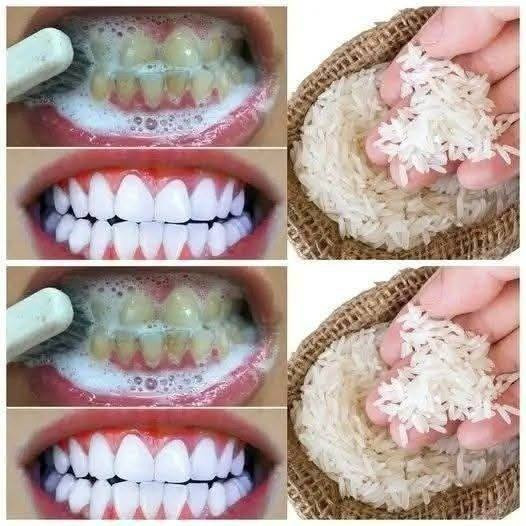
- Grind rice into an extremely fine powder (almost flour-like)
- Use very light pressure
- Limit use to occasional polishing, not daily
- Stop immediately if sensitivity appears
But understand: this is polishing, not true whitening.
And moderation matters.
The Psychology Behind “Secret Hacks”
There’s something appealing about:
- Simple solutions
- Hidden knowledge
- Kitchen ingredients outperforming professionals
It feels empowering.
But dental science is not a conspiracy.
Whitening requires either:
- Chemical oxidation (peroxide)
- Professional polishing tools
Rice cannot replicate that chemistry.
A Smarter 1-Minute Habit
If you want a fast improvement in appearance:
After brushing, floss carefully.
Flossing removes plaque between teeth that makes them appear darker or shadowed.
That simple step can visually brighten your smile more safely than abrasive scrubbing.
Final Thought
Rice is food.
It’s not a whitening treatment.
While it may mildly polish surface buildup, it cannot transform tooth color in one minute.
True whitening requires chemistry — not abrasion.
Your enamel is precious.
Protect it.
Because a healthy smile shines brighter than any viral hack ever could.