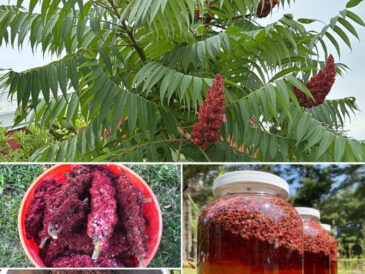
The Flower You Choose Reveals the Architecture of Your Character
Since the dawn of human awareness, flowers have been more than botanical structures. They have been mirrors. We have projected longing into roses, fidelity into lilies, mourning into chrysanthemums, rebirth into lotuses. Across continents and centuries, cultures have converged on a quiet truth: flowers are not merely decorative organisms — they are living metaphors.
The Victorian era formalized this symbolic instinct into floriography, the codified language of flowers. Lovers sent bouquets instead of letters. Political dissent hid inside petals. Entire emotional narratives unfolded through botanical arrangement. Yet this symbolic exchange was not invented in the nineteenth century. It merely crystallized something far older — the human tendency to recognize itself in nature.
When someone chooses a flower instinctively, they are not predicting their personality. They are revealing an internal alignment. This choice functions psychologically as a projective act. Much like inkblot tests in early psychological experiments, symbolic selections bypass conscious self-description and allow intuition to surface. The flower does not create the trait — it reflects it.
What follows is not a brief personality quiz. It is a comprehensive inquiry into six archetypal floral embodiments of character:
- The Orchid — Authenticity
- The Oak Rose (Oak Gall) — Integrity
- The Lotus — Resilience
- The Forget-Me-Not — Empathy
- The Violet — Humility
- The Thistle — Courage
Each section will explore botanical structure, philosophical grounding, psychological meaning, and the character architecture revealed by selection.
This is not entertainment. It is symbolic anthropology of the self.
Part I: The Orchid — The Architecture of Authenticity
Botanical Profile
Orchids (family Orchidaceae) represent one of the most diverse and evolutionarily specialized plant families on Earth. With over 25,000 species, orchids have adapted to nearly every climate except extreme deserts and polar tundra. Many are epiphytic, meaning they grow on trees rather than in soil. They extract moisture from air and debris rather than rooting in conventional earth.
Their floral structure is asymmetrical and intricate. The labellum (lip) often mimics insects or other forms to attract highly specific pollinators. Orchids demand precision in light, humidity, and care. Overwatering kills them. Standard gardening assumptions fail them.
Orchids do not survive by being ordinary.
Philosophical Foundation
Authenticity, in existential philosophy, refers to the alignment between internal conviction and external behavior. Søren Kierkegaard framed authenticity as choosing oneself deliberately rather than absorbing societal roles unconsciously. Martin Heidegger described inauthenticity as living according to “das Man” — the impersonal expectations of the collective.
To live authentically is to resist automatic conformity. It is to develop self-authorship.
Psychologist Carl Rogers later articulated authenticity as congruence — the harmony between one’s real self and presented self. When incongruence grows, anxiety grows.
Psychological Interpretation
The person drawn to the orchid values internal coherence. They often:
- Reject performative behavior
- Prefer depth over popularity
- Resist superficial social alignment
- Thrive in unconventional environments
They are often misunderstood, sometimes labeled intense or distant. But their core motivation is not rebellion — it is self-preservation of identity.
Authenticity requires courage because social systems reward conformity. The orchid thrives only when treated according to its nature.
Character Portrait
The Orchid individual:
- Possesses a rich internal life
- Maintains a small but deeply bonded circle
- Prioritizes meaning over status
- Experiences strong aversion to hypocrisy
Their greatest fear is self-erasure. Their defining strength is psychological congruence.
Part II: The Oak Rose (Oak Gall) — The Structure of Integrity
Botanical Profile
The oak gall, often called an oak apple, forms when a gall wasp deposits eggs into oak tissue. The tree responds by creating a spherical protective structure around the larvae. Within this structure, intricate fibrous forms develop — what some botanists poetically call the hidden “flower of the oak.”
The oak tree itself is globally symbolic of strength, endurance, and moral stability.
Unlike showy blooms, the oak gall’s significance lies inside. Its external appearance is modest.
Philosophical Foundation
Integrity stems from the Latin integer, meaning whole or undivided. Aristotle regarded moral character as a stable disposition to act in accordance with virtue. Immanuel Kant later framed integrity as acting only according to principles one could universalize.
Integrity is consistency between belief and action, especially under pressure.
Psychological Interpretation
The Oak individual:
- Maintains ethical consistency
- Values trustworthiness above approval
- Feels discomfort with moral compromise
- Experiences guilt strongly when misaligned
Integrity becomes visible only when tested. Just as the oak gall forms under intrusion, integrity strengthens under adversity.
Character Portrait
The Oak Rose chooser:
- Is reliable beyond convenience
- Often assumes responsibility naturally
- Serves as stabilizing force in groups
- Values long-term trust over short-term gain
Their greatest fear is moral failure. Their defining strength is unwavering ethical coherence.
Part III: The Lotus — The Dynamics of Resilience
Botanical Profile
The lotus (Nelumbo nucifera) roots in thick mud, extends through murky water, and blooms pristinely above the surface. Its leaves are hydrophobic — water beads and rolls off, carrying dirt with it.
In Eastern philosophy, the lotus symbolizes spiritual awakening emerging from suffering.
Philosophical Foundation
Friedrich Nietzsche wrote: “What does not kill me makes me stronger.” While simplistic when isolated, this concept reflects resilience as transformation through adversity.
Modern psychology defines resilience as adaptive recovery and growth following stress.
Resilience is not avoidance of hardship. It is productive integration of hardship.
Psychological Interpretation
The Lotus individual:
- Has experienced meaningful challenge
- Displays adaptive flexibility
- Converts setbacks into lessons
- Maintains cautious optimism
They do not deny pain. They metabolize it.
Character Portrait
The Lotus chooser:
- Radiates calm strength
- Inspires through survival stories
- Possesses emotional depth
- Values growth over comfort
Their greatest fear is stagnation. Their defining strength is transformative endurance.
Part IV: The Forget-Me-Not — The Depth of Empathy
Botanical Profile
Click page 2 to continue