The Complete Science, Psychology, and Practical Mastery Guide to Preventing the Starchy Volcano
There are few kitchen frustrations as universal, repeatable, and strangely infuriating as this:
You put rice on the stove.
You measure the water.
You turn the heat on.
Everything looks calm.
Then you walk away for 60 seconds.
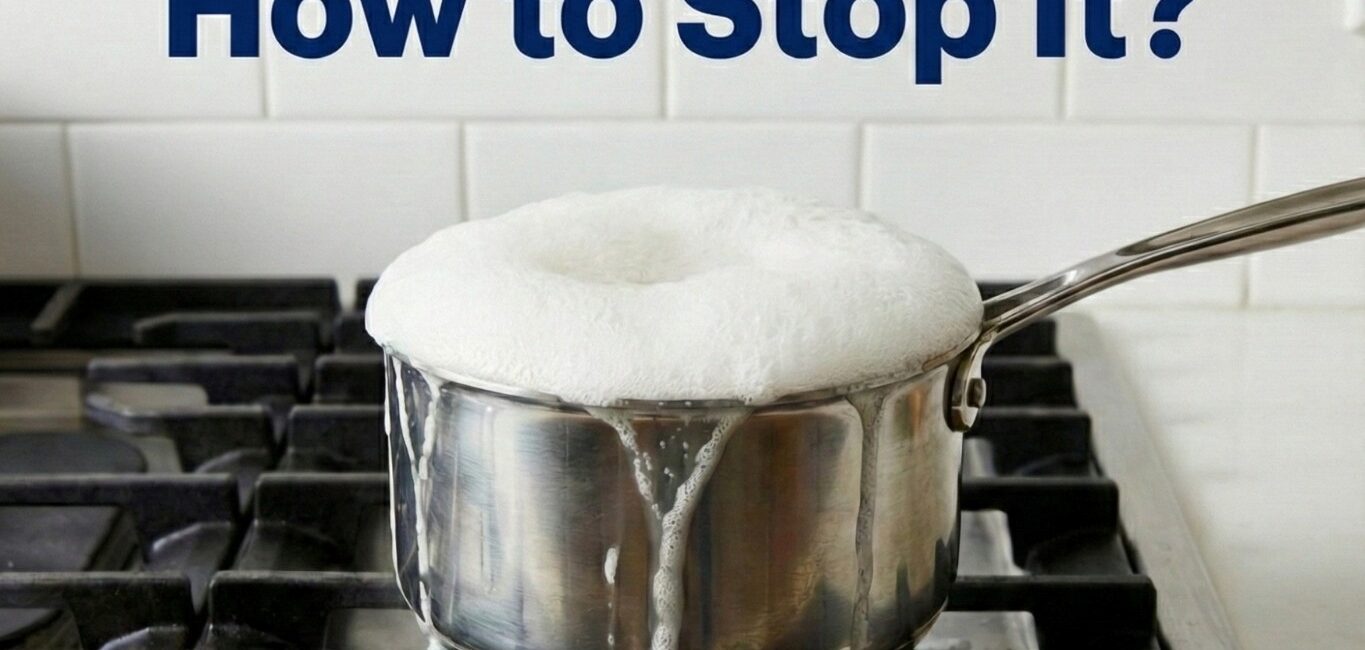
Suddenly—hissing, bubbling, white foam creeping upward, and before you can react—
Rice lava all over the stovetop.
The burner sizzles.
Starch burns.
Cleanup becomes your punishment.
Why does rice behave like a rebellious science experiment? Why does it boil over so aggressively? Why does it seem unpredictable? And most importantly:
How do you stop it permanently—without constant supervision?
This is not just a cooking issue. It’s fluid dynamics. It’s chemistry. It’s thermodynamics. It’s surface tension. It’s pressure mechanics. And yes—it’s human psychology.
Let’s go deep.
Part I: What’s Actually Happening Inside the Pot?
To stop rice from boiling over, you must first understand what rice becomes when heated.
Rice is composed mostly of:
- Starch (70–80%)
- Water (naturally contained)
- Protein (small amount)
- Fiber (especially in brown rice)
The troublemaker is starch.
There are two primary starch molecules in rice:
- Amylose
- Amylopectin
When rice is heated in water, something fascinating happens.
Stage 1: Hydration
Water begins penetrating the rice grains.
Temperature rises.
Starch granules begin absorbing water.
Stage 2: Gelatinization (The Turning Point)
At around 60–75°C (140–167°F), starch granules begin swelling.
At boiling temperature (100°C / 212°F):
- The granules rupture.
- Amylose leaks into the water.
- The water thickens.
Now you’re no longer boiling water.
You’re boiling a starch solution.
And that changes everything.
Part II: Why Plain Water Doesn’t Boil Over (But Rice Does)
Boiling water behaves predictably:
- Bubbles form.
- Steam rises.
- Bubbles pop.
- Steam escapes.
There’s no foam cap.
But when starch is present:
- The water becomes slightly viscous.
- Steam bubbles struggle to pop.
- Foam forms on the surface.
- Foam traps more steam.
- Pressure builds beneath it.
This foam becomes a semi-solid barrier.
Steam tries to escape.
It can’t.
So it lifts the entire foam layer upward.
That’s your overflow.
Rice doesn’t boil over because it’s chaotic.
It boils over because foam stabilizes steam bubbles.
Part III: The Foam Physics Explained Clearly
Let’s simplify the physics.
Steam expands approximately 1600 times its liquid volume.
When steam is trapped under foam:
- Expansion continues.
- Pressure increases.
- Foam inflates like a balloon.
- It reaches the rim.
- It spills.
The foam is essentially a steam trampoline.
Break the foam, and the problem disappears.
Part IV: The Real Culprit — Surface Starch
When you skip rinsing rice, you leave a layer of loose starch dust on the grains.
That dust dissolves immediately when heated.
Result:
High starch concentration.
Higher viscosity.
More stable foam.
Faster boil-over.
If you’ve ever noticed cloudy rice water when rinsing—that’s the excess starch.
Not rinsing is like intentionally adding a thickening agent to your boiling water.
Part V: The Psychological Trap — Why It Always Happens When You Walk Away
Rice boil-over has a tipping point.
The transition from calm simmer to aggressive overflow is sudden.
Your brain assumes:
“It’s fine.”
Then the internal foam threshold is reached.
And chaos erupts.
You underestimate how quickly phase transitions happen in fluid systems.
Rice doesn’t gradually boil over.
It crosses a threshold.
Part VI: The Master Prevention System (Step-by-Step)
Now we move from theory to permanent solutions.
Step 1: Rinse Like You Mean It
Put rice in a bowl.
Add cold water.
Swirl vigorously.
Drain.
Repeat 4–6 times.
Stop only when water becomes mostly clear.
This reduces foam formation dramatically.
No shortcut here.
Step 2: Use a Bigger Pot Than You Think You Need
Foam needs vertical space.
If water sits ½ inch below the rim, you’ve already lost.
Choose a pot with at least:
2–3 inches of empty vertical headroom.
Space equals safety margin.
Step 3: Bring to Boil Uncovered
Never start with a tight lid.
Let steam escape freely during the initial heating phase.
When vigorous bubbling begins:
Immediately reduce heat.
Step 4: Transition to Low Heat Early
Do not wait until foam forms.
The moment boiling becomes active:
Lower to lowest sustainable simmer.
High heat is the accelerant.
Step 5: Partial Lid Strategy
Fully sealed lid = pressure trap.
Instead:
- Tilt lid slightly.
- Use vented lid.
- Leave small steam gap.
You want steam release, not confinement.
Part VII: Does the Wooden Spoon Trick Actually Work?
Yes—but temporarily.
When foam rises and hits the wooden spoon:
- The wood disrupts bubble structure.
- Surface tension breaks.
- Steam escapes.
However:
If heat remains high, foam eventually overpowers the spoon.
Think of it as emergency intervention—not prevention.
Part VIII: Oil Trick — Myth or Science?
Adding a few drops of oil:
- Reduces surface tension.
- Weakens foam stability.
- Helps bubbles pop faster.
Click page 2 to continue