The Science, the Safety, the Myths — and a Complete, Flavorful Recipe Guide
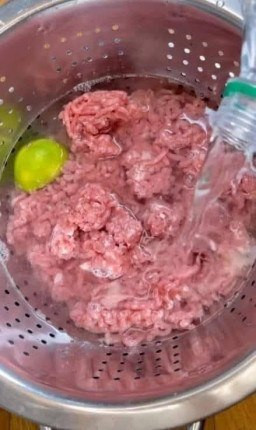
You open a package of minced beef.
It looks pink. Moist. Fresh.
And then the question appears:
“Should I rinse this before cooking?”
It seems logical at first.
We rinse vegetables.
We rinse rice.
We rinse lentils.
Some people even rinse chicken (though that has its own controversy).
So what about minced beef?
Short answer:
No — you should not wash minced beef before cooking it.
But that answer deserves a deep explanation.
Because this isn’t just about habit.
It’s about food safety, bacterial science, texture, flavor chemistry, and proper cooking technique.
And at the end, I’ll give you a complete, well-balanced minced beef recipe — done correctly, safely, and with maximum flavor.
Let’s begin.
🔬 Part 1: What Happens When You Wash Minced Beef?
When people wash minced beef, they usually do it for one of three reasons:
- To remove bacteria
- To remove “blood”
- To reduce fat
All three reasons sound sensible.
But all three are misunderstandings.
Let’s break them down scientifically.
🦠 Myth 1: Washing Removes Bacteria
Minced beef can contain bacteria such as:
- E. coli
- Salmonella
- Listeria
These bacteria are not just on the surface.
When beef is minced, the surface bacteria become mixed throughout the meat.
Unlike a steak (where bacteria mostly stay on the surface), minced beef distributes bacteria inside.
So washing it under water does NOT:
- Remove internal bacteria
- Sterilize the meat
- Make it safer
What it DOES do:
It spreads bacteria around your sink.
Tiny droplets splash onto:
- Countertops
- Utensils
- Sponges
- Dishcloths
This is called cross-contamination.
The bacteria you hoped to remove can now contaminate your kitchen.
The only reliable way to kill bacteria in minced beef is:
🔥 Cooking it to a safe internal temperature (about 70–75°C / 160°F).
Heat destroys pathogens.
Water does not.
🩸 Myth 2: The Red Liquid Is Blood
Many people rinse minced beef because they think the red liquid is blood.
It isn’t.
The red color comes from:
Myoglobin
Myoglobin is a protein in muscle that stores oxygen.
When exposed to air, it turns bright red.
When vacuum-sealed, it can look darker.
It is not blood.
Most blood is removed during slaughter.
So rinsing to “remove blood” is unnecessary.
🧈 Myth 3: Washing Reduces Fat
Some people rinse minced beef to reduce fat.
But:
Fat is embedded within the meat structure.
Running water over it will not dissolve or remove significant fat.
If you want leaner results:
Choose lean minced beef (e.g., 5–10% fat) or drain excess fat after cooking.
🧠 Why Washing Actually Makes the Meat Worse
Beyond safety concerns, washing affects:
1. Texture
Minced beef is delicate.
Water alters its surface proteins.
It becomes:
- Mushy
- Waterlogged
- Less cohesive
2. Browning (Maillard Reaction)
Flavor develops when proteins and sugars brown.
If meat is wet, it steams instead of browns.
You lose:
- Rich caramelized flavor
- Deep savory notes
Good browning requires:
Dry surface + high heat.
Washing prevents that.
🥩 Part 2: How to Handle Minced Beef Safely (Without Washing)
Here is the correct method.
✔ Keep It Cold
Store at 4°C (40°F) or below.
✔ Use Quickly
Minced beef spoils faster than whole cuts.
Use within 1–2 days.
✔ Avoid Cross-Contamination
Use separate cutting boards for raw meat.
✔ Cook Thoroughly
Internal temperature: 70–75°C (160°F).
✔ Clean Surfaces
Wash hands and utensils after handling.
That’s food safety.
Not rinsing.
🍳 Part 3: The Correct Way to Cook Minced Beef for Maximum Flavor
Let’s build a proper recipe from scratch.
No rinsing.
No flavor loss.
No unnecessary steps.
🍲 Full Recipe: Savory Garlic-Ginger Minced Beef with Vegetables
This recipe balances:
Protein.
Fiber.
Flavor.
Healthy fats.
It works for:
Rice bowls.
Wraps.
Stuffed vegetables.
Meal prep.
🛒 Ingredients (Serves 4)
- 500g (1 lb) minced beef (10–15% fat ideal)
- 1 tablespoon olive oil
- 1 small onion, finely chopped
- 2 cloves garlic, minced
- 1 teaspoon grated fresh ginger
- 1 carrot, finely diced
- 1 zucchini, finely diced
- 1 red bell pepper, chopped
- 2 tablespoons tomato paste
- 1 teaspoon ground cumin
- 1 teaspoon paprika
- ½ teaspoon black pepper
- Salt to taste
- ½ teaspoon dried oregano
- Optional: chili flakes
- Fresh parsley for garnish
Optional additions:
- Cooked brown rice
- Whole wheat wraps
- Steamed broccoli
🔥 Step-by-Step Instructions
Step 1: Prepare Ingredients First
Chop everything before turning on heat.
Click page 2 to continue