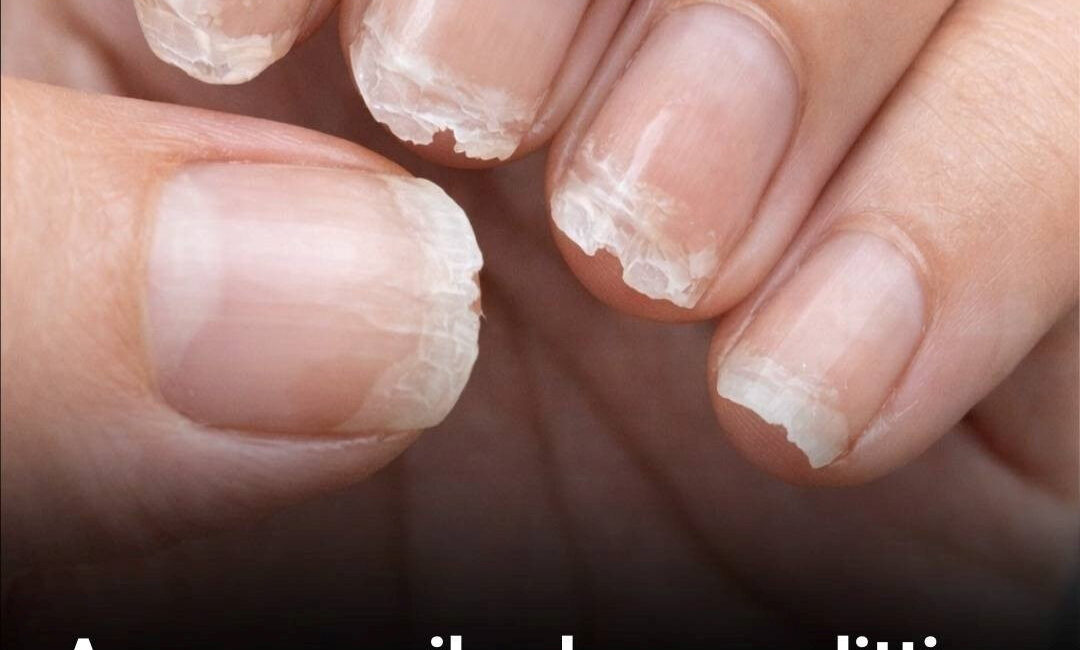
Your nails are not decorative extras attached to your fingers. They are living records. They grow slowly, silently, and honestly. Unlike your mood, your voice, or your posture, nails do not pretend. They reflect biology. They mirror metabolism. They expose nutritional gaps, hormonal shifts, stress patterns, and sometimes even deeper systemic disturbances.
When nails become brittle, weak, peeling, soft, ridged, or prone to splitting, many people assume it is a cosmetic issue. They change polish. They apply oil. They file them shorter. They move on.
But brittle or weak nails may signal something more profound.
To understand what they might be signaling, we must first understand what nails are, how they grow, and what biological systems influence them. Once we see nails not as decoration but as biological tissue, the clues become clearer.
This is not alarmism. Most brittle nails are benign. But the body is an integrated system, and nails are one of its visible surfaces. What happens inside often echoes outside.
Let’s explore what your nails might be trying to say.
The Biology of Nails: Structure, Growth, and Cellular Intelligence
Nails are composed primarily of keratin, a structural protein also found in hair and the outer layer of skin. Keratin is tough, flexible, and resilient when properly nourished. But it is not invincible.
Each nail grows from a region under the skin at its base called the nail matrix. This is where cells divide rapidly. As new cells form, older ones are pushed forward, hardening into the visible nail plate.
Fingernails typically grow about 3 millimeters per month. That means a full nail takes roughly six months to completely regenerate. Toenails grow even more slowly.
This timeline matters. It means nail changes reflect long-term patterns, not yesterday’s lunch. Brittle nails are not caused by one stressful day. They are the result of weeks or months of internal conditions.
The nail plate is influenced by:
- Nutritional status
- Hormonal balance
- Circulation
- Oxygenation
- Hydration
- Nervous system stress
- Environmental exposure
When nails become weak or brittle, something in this system has shifted.
Iron Deficiency and Anemia: When Nails Thin and Bend
One of the most common internal causes of brittle or weak nails is iron deficiency.
Iron is essential for hemoglobin, the molecule in red blood cells that carries oxygen. Without sufficient iron, tissues receive less oxygen. Nails, being at the periphery of circulation, are particularly sensitive to this.
A specific nail change associated with iron deficiency is called koilonychia. This is when nails become thin and develop a spoon-like shape, curving upward at the edges.
Iron deficiency anemia may also produce:
- Pale skin
- Fatigue
- Shortness of breath
- Hair shedding
- Cold hands and feet
Iron deficiency is particularly common in women of reproductive age due to menstrual blood loss. It can also occur due to dietary insufficiency, digestive absorption issues, or chronic inflammation.
The key concept here is oxygenation. Nails require oxygen for proper keratin formation. When oxygen delivery drops, structural integrity weakens.
Correcting iron deficiency often improves nail strength, but because nail growth is slow, improvement may take months.
Thyroid Dysfunction: Hormones That Shape Keratin
The thyroid gland regulates metabolism. It influences how quickly cells divide and how efficiently nutrients are used. When thyroid hormones are imbalanced, nails often reflect it.
Hypothyroidism
In hypothyroidism, the body slows down. Metabolism decreases. Nail growth becomes slower and more fragile. Nails may become:
- Dry
- Brittle
- Thickened
- Ridged
- Prone to splitting
Other symptoms include fatigue, weight gain, cold intolerance, and hair thinning.
Hyperthyroidism
In hyperthyroidism, metabolism accelerates. Nails may grow quickly but become soft and fragile. In some cases, the nail plate separates from the nail bed, a condition known as onycholysis.
Thyroid hormones influence protein synthesis and cellular turnover. Since nails are composed of protein, hormonal disruption affects their architecture.
This is an example of endocrine signaling expressing itself visibly. The body does not isolate systems. It integrates them.
Protein and Biotin Deficiency: Structural Building Blocks
Keratin is a protein. Without adequate protein intake, nail strength declines.
People following restrictive diets, crash diets, or very low-protein eating patterns may notice nail thinning and peeling.
Biotin, also known as vitamin B7, is involved in keratin production. Severe biotin deficiency is rare, but suboptimal intake may contribute to brittle nails.
Research suggests that biotin supplementation can improve nail thickness and reduce splitting in individuals with brittle nails, though it is not a universal cure.
The deeper principle here is structural supply. Nails require:
- Amino acids (protein building blocks)
- Zinc
- Iron
- B vitamins
- Essential fatty acids
When the body prioritizes vital organs during stress or nutrient scarcity, nails are not prioritized. They become secondary.
Chronic Stress and the Nervous System: The Invisible Sculptor
Stress is not abstract. It is biochemical.
When you experience chronic stress, your body releases cortisol and adrenaline. These hormones shift blood flow away from the extremities and toward vital organs. Over time, this reduces peripheral circulation.
Reduced circulation affects nail growth.
Chronic stress can also alter digestion and nutrient absorption. If you are anxious, sleep-deprived, or under emotional pressure, your body may not efficiently absorb the nutrients required for keratin production.
Stress also increases inflammatory signaling. Inflammation can impair microvascular circulation, further compromising nail health.
In this sense, brittle nails can reflect a nervous system that has been in survival mode for too long.
This is not mystical. It is physiological.
Dehydration and Environmental Damage: External Weakening
Click page 2 to continue