Another ingredient sometimes added to professional cleaning solutions is rubbing alcohol, also known as isopropyl alcohol.
Rubbing alcohol is widely used as a disinfectant because it rapidly kills many types of bacteria and viruses.
When used in small amounts in mop water, alcohol enhances the sanitizing effect of the cleaning mixture.
Alcohol also evaporates quickly, which helps floors dry faster and reduces streaks.
This rapid evaporation is particularly helpful when cleaning glossy surfaces such as tiles or polished stone.
However, only a small quantity is needed. Excessive alcohol may damage certain floor finishes or cause rapid drying before the mop spreads the solution evenly.
Baking Soda: The Natural Deodorizer
Another common household ingredient included in this cleaning mixture is baking soda.
Baking soda is well known for its ability to neutralize odors. Unlike perfumes that simply mask unpleasant smells, baking soda chemically neutralizes odor-producing compounds.
This property makes it especially useful for floors that may absorb odors from pets, cooking, or moisture.
Baking soda also acts as a gentle cleaning agent that helps loosen dirt without scratching most floor surfaces.
Because it is slightly alkaline, baking soda can also help balance acidic residues left by other cleaning agents.
Fabric Softener: The Secret Ingredient Against Dust
Perhaps the most surprising ingredient in this cleaning method is fabric softener.
Fabric softener is typically used during laundry to reduce static electricity in clothing. Static electricity occurs when friction causes an imbalance of electrical charges on surfaces.
Floors, especially synthetic materials like laminate or vinyl, can accumulate static charges as people walk across them. These charges attract tiny dust particles from the air.
Fabric softener contains compounds that neutralize static electricity. When a small amount is added to mop water, it creates a thin anti-static layer on the floor surface.
This layer helps prevent dust from sticking to the floor, allowing it to remain cleaner for longer.
In addition, fabric softener leaves a pleasant fragrance that contributes to a fresh-smelling home.
Essential Oils: Freshness and Natural Repellents
For an optional finishing touch, some people add a few drops of essential oils to the cleaning mixture.
Essential oils provide a natural fragrance that enhances the sensory experience of a freshly cleaned home.
Certain oils—such as eucalyptus, lavender, or citronella—also contain natural compounds that may discourage insects such as mosquitoes or flies.
While essential oils are not necessary for cleaning effectiveness, they can create a more enjoyable cleaning experience and contribute to a calming atmosphere.
Mixing the Ingredients Properly
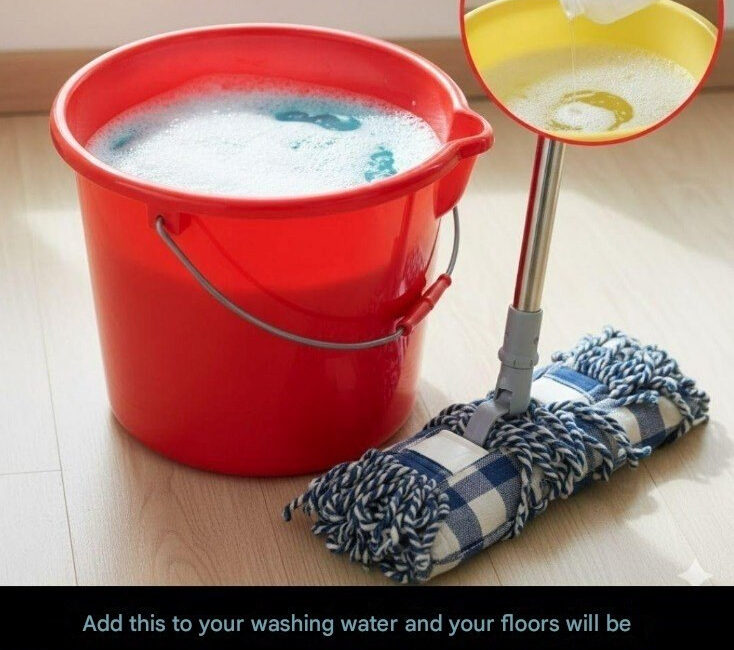
Once all ingredients are added to the bucket of warm water, they should be stirred gently to ensure even distribution.
A mop can then be soaked in the solution and wrung out before cleaning the floor.
The cleaning process should proceed systematically, moving from one side of the room to the other to avoid stepping on freshly cleaned areas.
Because the solution dries quickly and leaves minimal residue, many people notice an immediate improvement in floor appearance.
Why This Method Works So Well
The effectiveness of this cleaning technique comes from combining several complementary cleaning actions:
- grease removal from dish soap
- stain removal from vinegar or lemon
- disinfection from alcohol
- odor control from baking soda
- faster drying from salt
- static reduction from fabric softener
Together, these effects create a cleaning solution that addresses both visible dirt and invisible factors like bacteria and static electricity.
This multi-layered approach helps floors remain cleaner for longer periods.
Maintaining Clean Floors Between Mop Sessions
Even with an effective cleaning solution, maintaining clean floors requires consistent habits.
Removing shoes at the entrance can significantly reduce the amount of dirt entering the home.
Regular sweeping or vacuuming prevents dust from accumulating.
Using door mats traps outdoor debris before it spreads throughout the house.
These small practices complement the cleaning method and help maintain sparkling floors for longer periods.
The Satisfaction of a Well-Cleaned Home
A clean floor does more than improve the appearance of a home. It also contributes to a healthier indoor environment by reducing dust, allergens, and bacteria.
When floors remain shiny, fresh, and dust-free, the entire living space feels more comfortable and welcoming.
Sometimes the most effective cleaning solutions are not the expensive products sold in stores but simple techniques developed through years of practical experience.
By understanding how different household ingredients work together, anyone can create a cleaning routine that is both efficient and satisfying.
And sometimes, the secret to sparkling floors lies in nothing more than a well-mixed bucket of water and a few carefully chosen ingredients.