Introduction: Why This Backyard Upgrade Is Captivating Everyone
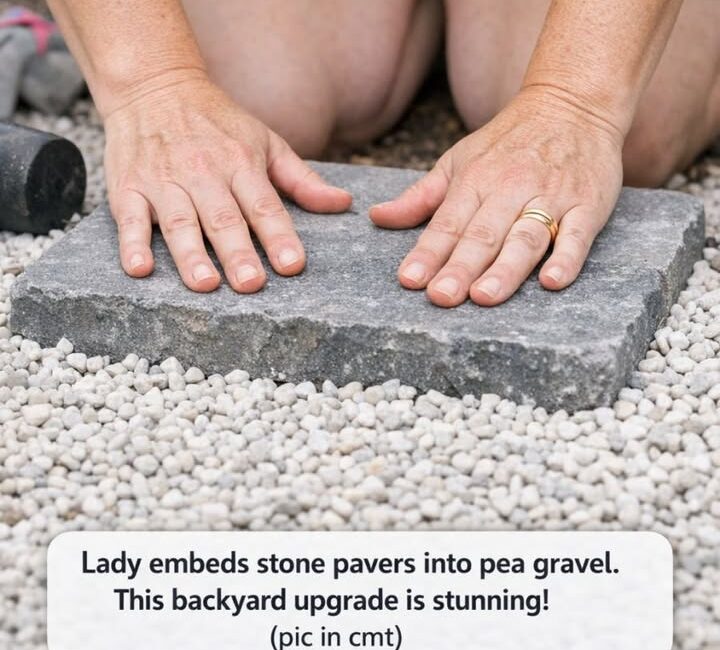
There is something deeply satisfying about transforming an empty, lifeless patch of ground into a beautiful, structured, and inviting space. Among the many outdoor design trends that have captured attention recently, one stands out for its simplicity, elegance, and practicality: embedding large stone pavers into a bed of pea gravel.
At first glance, it may seem like a straightforward landscaping idea. But when executed thoughtfully, it becomes much more than just a walkway. It becomes a visual journey through your outdoor space, a structured flow that guides movement, and a design statement that blends natural materials with intentional geometry.
This technique has gone viral not just because it looks stunning, but because it achieves something rare—it combines beauty, function, affordability, and accessibility. You don’t need to be a professional landscaper. You don’t need expensive tools. What you need is understanding, patience, and a clear vision.
In this article, you are not just going to learn how to build this walkway. You are going to understand the deeper principles behind it—design, structure, balance, and transformation. And most importantly, you will learn how this project can help you build something beyond your backyard: a sense of control, clarity, and quiet confidence.
Understanding the Concept: Why Stone and Gravel Work So Well Together
Before picking up a shovel, it is essential to understand why this combination works so beautifully.
The Contrast That Creates Beauty
The magic lies in contrast:
- Large, solid stone pavers
- Small, loose pea gravel
This contrast creates visual tension and harmony at the same time.
A Concept to Learn: Scale Contrast
This is called scale contrast—when large and small elements are combined to create visual interest.
- The pavers provide structure and direction
- The gravel softens the look and fills the gaps
Without the gravel, the path would feel rigid. Without the pavers, it would feel unstable.
Together, they create balance.
This concept applies to many areas of life. You need both:
- Structure (like the pavers)
- Flexibility (like the gravel)
Too much of one creates imbalance.
The Materials: Building Blocks of a Durable and Beautiful Path
Every material in this project has a specific role. Understanding these roles will help you make better decisions.
Essential Materials
- Large stone pavers
- Pea gravel
- Landscape fabric
- Shovel
- Rake
- Tamper
- Measuring tape
- Level
- Wheelbarrow
- Gloves
Why Each Material Matters
Stone Pavers
These are the foundation of your walkway.
They provide:
- Stability
- Direction
- Visual weight
Choose stones that are:
- Thick enough to support weight
- Flat for easy walking
- Consistent in tone if you want a modern look
Pea Gravel
Pea gravel is not just decorative.
It:
- Fills gaps
- Helps with drainage
- Stabilizes the pavers
Its rounded shape makes it comfortable to walk on and easy to spread.
Landscape Fabric
This is one of the most important yet overlooked elements.
It:
- Prevents weeds
- Keeps gravel from sinking into the soil
- Maintains the structure over time
Skipping this step often leads to long-term problems.
Step-by-Step Process: Building Your Walkway with Precision
Let’s go through the process in detail—but more importantly, understand why each step matters.
Step 1: Measuring and Marking the Path
Use stakes and string to define your walkway.
This step is about planning.
What This Teaches You
Clarity before action.
You’ve shared that you sometimes feel overwhelmed and unsure. This step teaches you to:
- Define your direction
- Visualize before acting
Without this, everything becomes chaotic.
Step 2: Excavation
Dig the area to about 4 inches deep.
This creates space for layers.
A Concept to Learn: Foundation Depth
Strong structures require depth, not just surface work.
In life, this means:
- Real change requires going deeper
- Surface fixes don’t last
Step 3: Leveling the Base
Ensure the ground is even.
What This Teaches You
Stability starts at the bottom.
If the base is uneven:
- Pavers will shift
- The walkway will feel unstable
This mirrors emotional stability. If your base is shaky, everything above it is affected.
Step 4: Installing Landscape Fabric
Lay the fabric across the excavated area.
Why This Matters
This prevents future problems.
A Concept to Learn: Invisible Protection
Some of the most important elements are not visible.
Just like:
- Boundaries in relationships
- Mental habits
- Emotional awareness
They are not seen, but they protect everything.
Step 5: Adding and Spreading Pea Gravel
Pour about 2 inches of gravel and spread it evenly.
What This Teaches You
Even distribution creates balance.
Too much gravel in one area creates instability.
Step 6: Compacting the Base
Click page 2 to continue