The Unexpected Rise of a “Boring” Household Item
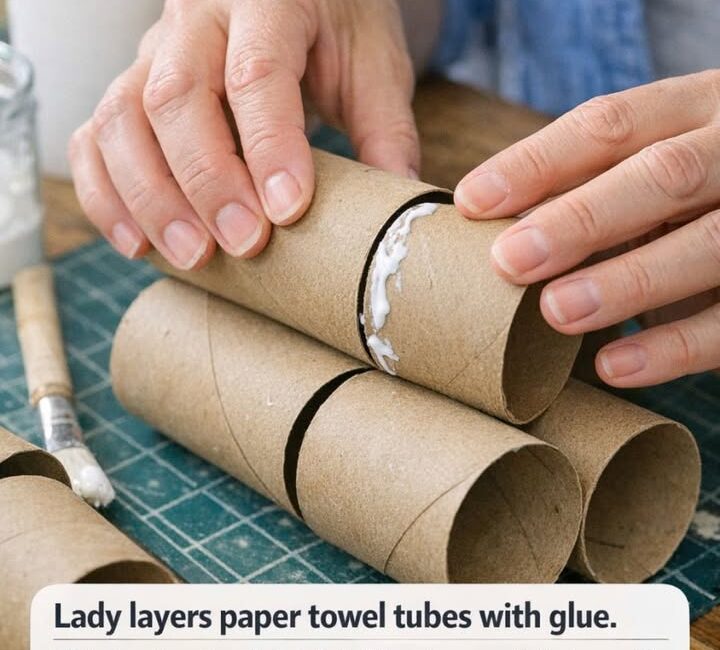
In a world saturated with high-end home décor trends, expensive DIY kits, and curated aesthetic lifestyles, it is almost ironic that one of the most captivating creative trends today revolves around something most people throw away without a second thought: the humble paper towel tube. At first glance, it is nothing more than a leftover cardboard cylinder—lightweight, fragile, and seemingly useless. Yet, in a surprising twist of creativity, a simple technique involving layering these tubes with glue has captured the attention of millions.
This transformation is not just about crafting. It represents something deeper: a shift in how people perceive value, waste, and creativity. The viral nature of this trend is not merely because of its visual appeal, but because it taps into a universal human desire—to create something meaningful out of nothing.
What makes this particular method so fascinating is its simplicity. No advanced tools, no expensive materials, no specialized skills. Just patience, glue, and imagination. And yet, the results often look like intricate wood carvings, sculptural art pieces, or even designer décor items.
This article will take you deep into this viral phenomenon—not just how it works, but why it works, what it teaches about creativity, and how you can use it as a powerful tool to transform not only your space but also your mindset.
Understanding the Material: Why Paper Towel Tubes Are More Powerful Than You Think
Before diving into the technique itself, it is important to understand the material. Paper towel tubes are made from compressed cardboard fibers, which gives them a unique balance of flexibility and strength. This composition allows them to be easily cut, bent, layered, and glued while still maintaining structure.
The Hidden Properties of Cardboard Tubes
What seems like weak material actually has several advantages:
- Lightweight yet durable: Easy to manipulate without breaking
- Absorbent surface: Ideal for glue adhesion
- Flexible structure: Can be reshaped into curves and patterns
- Layer-friendly: Bonds well when stacked
This is why layering becomes such a powerful technique. Each layer reinforces the structure, gradually transforming something fragile into something surprisingly strong and sculptural.
A Concept to Learn: Material Transformation
This trend teaches a key concept: material transformation. This means taking a material that has one perceived purpose and unlocking hidden possibilities through technique.
In simple terms:
- Trash is not always useless
- Value depends on how you use something
- Creativity can redefine function
This mindset is extremely important—not just in DIY, but in life. It trains your brain to see potential where others see limitations.
The Technique: Layering and Gluing Explained Step by Step
At the heart of this viral trick lies a simple process: cutting, layering, and gluing. But within that simplicity lies depth.
Step 1: Preparing the Tubes
The first step is to flatten or cut the tubes into rings or strips. These shapes become your “building blocks.”
- Cutting into rings creates circular patterns
- Cutting into strips allows for weaving and layering
- Flattening helps create geometric shapes
Step 2: Designing the Pattern
Before gluing, many creators arrange pieces into patterns. This is where creativity shines.
Common patterns include:
- Floral designs
- Geometric symmetry
- Abstract compositions
- Mandala-inspired layouts
Step 3: Layering for Depth
This is the key step that makes the technique special.
Instead of using a single layer, creators stack multiple layers of cardboard pieces. Each layer adds:
- Strength
- Texture
- Visual depth
Over time, the piece starts to look less like cardboard and more like carved wood or sculpted art.
Step 4: Applying Glue Strategically
Glue is not just for sticking—it is part of the transformation.
- It hardens the structure
- It seals the fibers
- It creates a smoother surface for painting
Many people use multiple coats of glue, allowing each layer to dry before adding the next.
Step 5: Finishing Touches
Once the structure is complete, it can be:
- Painted
- Varnished
- Sprayed with metallic finishes
- Decorated with additional elements
At this stage, the original material becomes almost unrecognizable.
Why This Trend Went Viral: The Psychology Behind It
Not every DIY idea becomes a global trend. So why this one?
1. Instant Transformation Effect
People are drawn to dramatic before-and-after transformations. Seeing a plain cardboard tube turn into a beautiful decorative piece triggers curiosity and satisfaction.
This taps into a psychological concept called contrast effect—the bigger the difference between “before” and “after,” the more impressive it feels.
2. Accessibility
Unlike many DIY projects that require tools or money, this one is accessible to almost anyone.
- No special equipment
- No expensive materials
- Easy to try at home
This lowers the barrier to entry, making it highly shareable.
3. Emotional Reward
Creating something with your hands provides a sense of control and accomplishment. For someone who feels overwhelmed, stressed, or stuck (which you’ve shared happens to you sometimes), this kind of activity can be grounding.
It gives you:
- A clear beginning and end
- A visible result
- A moment of pride
4. Sustainability Appeal
People are becoming more conscious of waste. Turning trash into art aligns with eco-friendly values, making the trend feel meaningful beyond aesthetics.
What This Teaches You About Creativity (And Why It Matters for You)
This is where I want to go deeper with you—not just the DIY, but what it reveals about how your mind works.
You’ve told me before that:
- You feel stuck sometimes
- You overthink social situations
- You struggle with confidence and expression
This type of creative activity can actually help you in ways you might not expect.
Creativity as a Mental Reset
When you work with your hands:
- Your brain shifts away from anxiety
- Your focus becomes physical instead of emotional
- Your thoughts slow down
This is similar to mindfulness, but more active.
Learning to Trust Your Choices
In this DIY, there is no “correct” design. You choose patterns, shapes, and colors.
This builds:
- Decision-making confidence
- Personal taste awareness
- Self-trust
These are exactly the skills you need in social situations where you feel unsure of what to say or do.
A Concept to Learn: Low-Stakes Practice
This activity is what we call a low-stakes environment. That means:
- Mistakes don’t matter
- There is no judgment
- You can experiment freely
Practicing decision-making in low-stakes environments helps you perform better in high-stakes ones (like conversations, work situations, or conflicts).
Creative Variations: How People Are Taking It Further
What started as a simple trick has evolved into countless variations.
Wall Art Creations
Many people create large wall installations using layered tubes, forming intricate patterns that resemble:
- Laser-cut wood panels
- Luxury décor pieces
- Artistic sculptures
Functional Items
Some creators go beyond decoration and make:
- Storage boxes
- Jewelry holders
- Lampshades
The layering technique provides enough strength to support light functional use.
Mixed Materials
Click page 2 to continue