Introduction: The Hidden Power Beneath Your Feet
At the end of a long day, your mind is tired, your body feels heavy, and your energy is scattered. You may think the solution lies in complex routines, supplements, or drastic changes. But sometimes, the most powerful transformation begins with something incredibly simple—your feet.
Yes, your feet.
They carry you all day. They absorb pressure, tension, and stress without complaint. And yet, they are often the most neglected part of your body.
Now imagine this:
You sit down at night. The lights are softer. The world is quieter. You take a few minutes to massage your feet slowly, intentionally. No rush. No distractions.
Something shifts.
Your breathing slows. Your thoughts soften. Your body begins to let go.
This is not just a relaxing habit. It is a powerful physiological and psychological tool that can reshape the way you sleep, recover, and experience your evenings.
This article will take you far beyond the surface. You will understand why foot massage works, what it does inside your body, how it affects your nervous system, hormones, circulation, and even your emotional state. You will also learn how to apply it correctly and integrate it into your life in a meaningful way.
The Foundation: Why Your Feet Are More Important Than You Think
Your feet are not just structural supports. They are incredibly complex systems.
Each foot contains:
- Over 7,000 nerve endings
- Dozens of muscles
- Multiple joints and ligaments
- A dense network of blood vessels
This makes them one of the most sensitive and responsive areas of your body.
The Concept of Sensory Input
Your feet constantly send information to your brain:
- Pressure
- Temperature
- Movement
- Balance
This continuous feedback is part of your nervous system regulation.
When you stimulate your feet through massage, you are not just touching skin—you are communicating directly with your brain.
Reflexology: Myth, Reality, and What Actually Matters
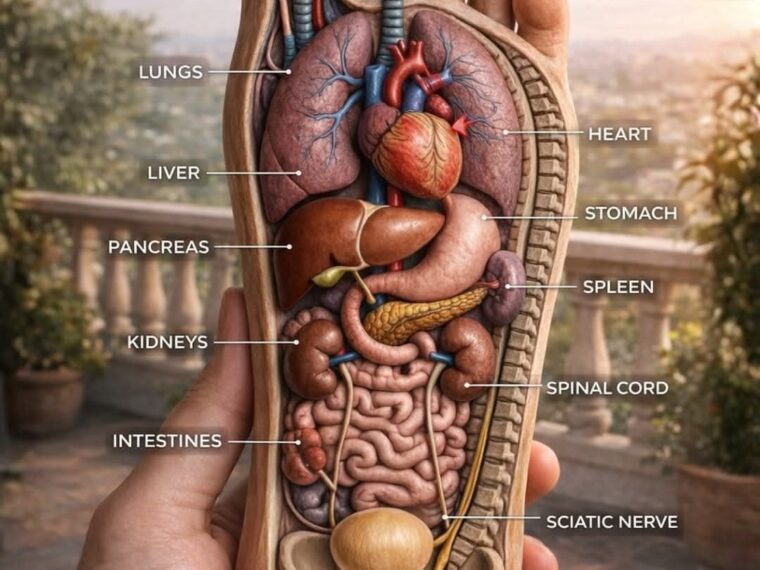
You may have seen charts suggesting that different areas of the foot correspond to organs like:
- The heart
- The liver
- The lungs
- The brain
This concept is known as reflexology.
What Science Says
Let’s be clear and honest:
- There is limited scientific evidence that pressing specific foot points directly heals internal organs
- Reflexology maps are not medically proven treatments
However—this does not mean foot massage is ineffective.
What Actually Happens
Foot massage works through:
- Nervous system activation
- Muscle relaxation
- Improved blood flow
- Hormonal regulation
So while the “maps” may not be literal, the effects are real and measurable.
How Foot Massage Improves Sleep: The Nervous System Connection
Sleep is not just about being tired. It is about switching your body into the right mode.
Two Systems Control Your State
Your body operates under two main nervous systems:
- Sympathetic Nervous System (Fight or Flight)
- Active during stress
- Keeps you alert
- Parasympathetic Nervous System (Rest and Digest)
- Promotes relaxation
- Prepares your body for sleep
The Problem in Modern Life
Most people stay stuck in sympathetic mode even at night:
- Overthinking
- Phone usage
- Stress from work
- Emotional tension
This makes falling asleep difficult.
How Foot Massage Helps
When you massage your feet:
- Nerve endings send calming signals to the brain
- Muscle tension decreases
- Heart rate slows
- Breathing becomes deeper
This activates the parasympathetic system, signaling:
“It’s safe. You can rest now.”
Hormonal Effects: The Invisible Shift Inside Your Body
Your body’s ability to sleep depends heavily on hormones.
Key Hormones Affected
1. Cortisol (Stress Hormone)
- High levels keep you awake
- Foot massage helps reduce cortisol levels
2. Serotonin (Mood Stabilizer)
Click page 2 to continue