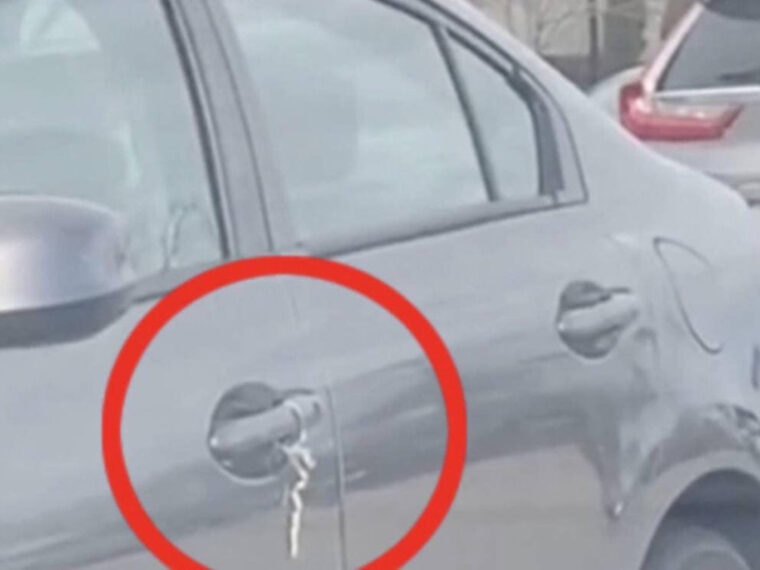
Imagine walking back to your car after a long day, pausing to fumble through your keys, and noticing—just for a second—a small loop of wire or string hooked around the exterior door handle. It seems harmless. Maybe it’s a prank. Maybe it’s trash. But that tiny piece of metal could be a warning sign, and how you react could keep you safe… or put you at risk.
This article walks you through everything a responsible driver should know: what a wire on a door handle might mean, the range of possible dangers (and why you shouldn’t panic), how to safely check and respond, things you can do to reduce the risk, and practical everyday habits that turn your car into a far less attractive target. No fear-mongering. No sensationalism. Just clear, practical guidance you can use right away.
1. Why people should care about a wire on a door handle
A small piece of wire wrapped or tied around a car door handle is, at the very least, unusual. Most parked cars won’t have anything around the handle. Because it’s out of place, it’s worth paying attention to. There are several reasons someone might have put wire there:
- Innocent reasons: It could be trash blown there by the wind, something accidentally snagged when moving, or a pet’s tag accidentally left behind. Kids sometimes loop string or wire onto objects as a prank.
- Malicious reasons: Criminals use small markers or devices to identify, test, or facilitate access to vehicles. In some cases, the wire could be a crude sensor, a method to check whether a car is frequently used, or a way to bypass certain handle mechanisms.
- Tactical reasons unrelated to theft: Sometimes people attach reminders, makeshift key-holders, or temporary fixes (a broken latch temporarily tied). These are less common but possible.
Because the meaning is ambiguous, the safest approach is cautious assessment and appropriate action. Treat it as a prompt to be alert—not as automatic proof of crime.
2. Common scenarios and what the wire might indicate
Below are realistic scenarios you might encounter and the likely explanation in each case.
Scenario A — A single wire loop attached to the outside handle
- Possible explanation: A prank or trash. Still, it could be someone testing whether you notice. It’s an easy way to observe a reaction: do you remove it, report it, ignore it? That observation alone could inform a criminal about your vigilance.
Scenario B — Multiple vehicles in a row have similar markers
- Possible explanation: This is more suspicious. Patterns across several cars could mean neighborhood surveillance by someone looking for abandoned or infrequently used vehicles—or selecting a target.
Scenario C — The wire is connected to something else (string into a bush, taped down)
- Possible explanation: Potentially deliberate—used to detect when a door opens, or to hang a device. This deserves immediate caution.
Scenario D — A wire that looks like a tampering tool (hooked inside handle gap)
- Possible explanation: Possibly a failed attempt to manipulate the latch or a prior break-in. Leave it alone and report it.
Scenario E — Wire used as a temporary repair (inside, attached to interior mechanism)
- Possible explanation: The car owner might have used the wire as a shortcut repair. If the wire is on the inside and clearly connected to the latch, it’s likely benign.
The bottom line: context matters. Look around. Are you in a high-crime area? Are other cars similarly marked? Is there a person loitering nearby? Each detail helps you decide whether to treat the wire as trash or a potential threat.
3. What not to do (very important)
When you encounter something suspicious, adrenaline kicks in. That can lead to unsafe choices. Don’t:
- Do not confront strangers or potential suspects. If you see someone nearby behaving oddly, don’t approach them. Confrontation can escalate quickly.
- Do not attempt to remove or dismantle suspicious devices that look like they might be wired to something. You might trigger a more dangerous situation or unknowingly destroy evidence.
- Do not try to “test” complicated devices if you aren’t trained. Pulling at something could activate it, or it might be evidence police want to see intact.
- Do not assume it’s harmless just because nothing obvious happened before. Some tactics are slow: they mark vehicles and wait days before acting.
Instead, focus on safe, non-confrontational actions described below.
4. Immediate, safe actions if you find a wire on your door handle
If you notice a wire tied around your car door handle, follow these steps:
- Pause and assess from a safe distance. Don’t stand directly next to the car. Look around for unusual people, vehicles, or evidence of similar markings on nearby cars.
- Use your phone to take clear photos and videos. This documents the situation and is helpful to law enforcement. Capture wide shots showing the car’s location and nearby context, plus close-ups of the wire and how it’s attached.
- Avoid touching the wire if it appears connected to something else or looks like a device. If it’s clearly just trash, you can consider removing it—but only after you’ve documented it and ensured no suspicious persons are nearby.
- If you feel unsafe, get to a public place. Don’t stay near the car. Move to a well-lit, populated area (store, café, gas station) and call the police.
- Call local law enforcement and report what you found. Provide your exact location, vehicle description, and what you observed. If urgent or you believe someone is currently attempting to tamper with your car, call emergency services immediately.
- If you decide to remove the wire, do so carefully and photograph evidence before disposing. But again, if it looks like part of a device or is attached in a way that might be more than trash, wait for police.
- If you believe you’ve been followed to your car or see someone watching from a distance, drive to a police station or public place—do not go home. Your home is a private target; public locations are safer.
These actions prioritize your personal safety and preserve evidence for authorities.
5. Real risks behind the wire — what criminals might be trying to accomplish
There are several criminal uses (and attempted uses) of small markers or attachments on car handles. Being aware of them helps you interpret what you see:
Marker for monitoring vehicle usage
Criminals may mark cars to track their activity. A small piece of wire or tape can reveal whether you use your car daily or leave it parked often—useful information if they’re looking for unoccupied cars or homes.
Sign that a vehicle holds something attractive
Organized thieves may mark cars that hold valuables (electronics, tools, packages). The marker acts as a way to communicate to other thieves: “this one’s worth visiting.”
Method to defeat some manual locks or latches
On older cars or damaged handles, some crude tools can be used to manipulate latches. We will not describe how to perform these methods. It is enough to know that some tactics exist, and that visible signs of tampering (scuffed paint, forced gaskets, misaligned handles) mean you should not try the handle and should report it.
Trigger for a device (rare but possible)
In extremely rare cases, a wire could be attached to a mechanism intended to alert an accomplice when the vehicle is opened, or even to deploy a device. These scenarios are uncommon but justify caution.
Simple intimidation or harassment
Sometimes it’s not about theft at all—just a prank meant to unsettle. Still, the effect on the targeted person can be serious, and reporting helps authorities keep track.
Knowing these possibilities helps you choose a cautious, evidence-preserving response.
6. Preventive measures — make your car and routine less inviting
Prevention is the best defense. Adopt habits and security upgrades that reduce the chance a wire or other marker becomes part of a successful criminal plan.
Daily habits
- Lock your doors and close all windows. Simple, but effective.
- Don’t leave valuables in plain sight. Put electronics, bags, and packages in the trunk or take them with you.
- Vary your routine when possible. If you go to the same places at the same times every day, you’re easier to surveil.
- Check around your car before you get in. A quick 10–20 second sweep can reveal something out of place—wire included.
- Park in well-lit, busy areas. Prefer spaces with foot traffic, nearby shops, or security presence.
Security upgrades
- Install a dashcam with parking mode. Many dashcams detect motion and will record someone approaching your car when you’re away.
- Use a visible car alarm or steering wheel lock. Conspicuous security measures can deter opportunistic thieves. (They won’t stop determined criminals, but they reduce risk.)
- Consider a motion-sensor light near where you park at home. Light deters many would-be criminals.
- Maintain door handles and locks. A solid, well-maintained handle is less likely to be vulnerable to crude manipulation.
Community and tech
- Join or start a neighborhood watch or community group. Sharing info about suspicious activity increases collective safety.
- Use community apps to report suspicious behavior. Many areas have local groups or apps where neighbors can post alerts.
- Register valuable items. For example, bike or tool registration services help police recover items and track patterns.
7. Legal and reporting considerations
If the wire appears to be more than trash or you suspect criminal intent, do the following:
- File a police report. Even if nothing was stolen, reporting suspicious items helps law enforcement recognize patterns.
- Provide police with photos and timestamps. Your documentation helps later investigations.
- If you find evidence of a past break-in, don’t touch anything. Call police to process the scene.
- Keep records of repeated incidents. If your car or neighborhood experiences repeated oddities, compile a log with dates, photos, and any witnesses.
Reporting isn’t about making big waves—it’s about creating a record. Law enforcement can only respond to trends and threats if they know about them.
8. Common myths and misunderstandings — what to stop believing
click page 2 to continue