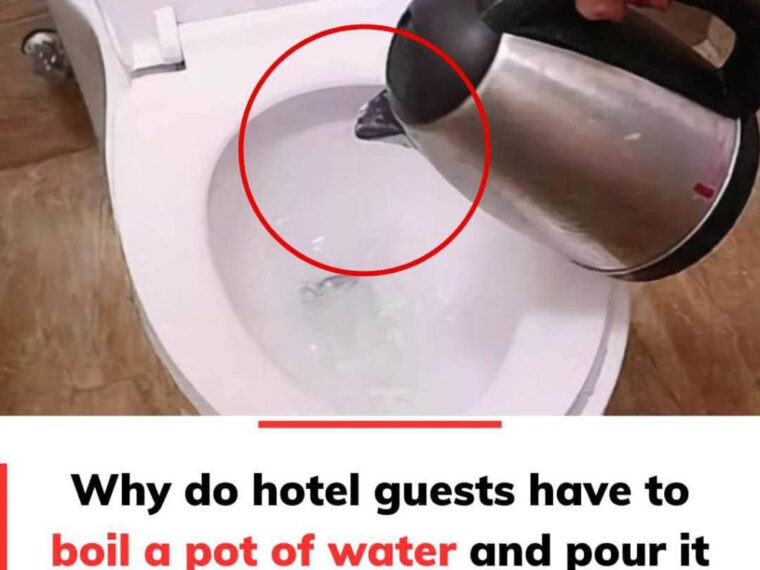
Every culture has its travel rituals. Some people refuse to stay in room number 13, others knock on wood before opening their suitcase, and many instinctively check under the bed — just in case. But one of the strangest and most viral travel habits to circulate in recent years is this: boiling a pot of water and pouring it into the toilet upon checking into a hotel room.
At first glance, it sounds absurd. Why would anyone pour boiling water into a perfectly clean toilet? Is it a superstition, a cleaning hack, or an old cultural tradition? Surprisingly, it’s a bit of all three — a fascinating blend of folk belief, hygiene habit, and psychology that reveals how people navigate unfamiliar spaces and unseen fears.
In this in-depth exploration, we’ll uncover the cultural origins, symbolic meanings, scientific realities, and psychological comfort behind this unusual practice — and what it says about our relationship with cleanliness, spirituality, and control.
The Viral Phenomenon: How the “Boiling Water Trick” Spread
This ritual gained global attention after short videos from East and Southeast Asia began trending on social media platforms like TikTok, Weibo, and YouTube. In these clips, travelers would check into a hotel, fill the room’s electric kettle, boil water, and then deliberately pour it into the toilet bowl. Some called it a “spiritual cleansing.” Others claimed it was a cleaning secret that hotel workers use but never reveal.
In the comments, people asked: “Is this really necessary?” or “What happens if you don’t do it?”
What began as a local folk custom quickly transformed into a viral “travel hack,” spreading across borders — with each culture layering its own interpretation. To some, it’s superstition; to others, a safety precaution; to others still, a deeply symbolic ritual of purification.
But to truly understand it, we need to trace its roots.
Ancient Roots: Fire, Water, and the Cleansing of Space
Humans have always believed that spaces can carry energy — positive or negative. This belief transcends geography and religion. From East Asia to Africa to the Mediterranean, homes and objects used by others are thought to retain a trace of their presence — an invisible residue of emotion, luck, or misfortune.
In such beliefs, fire and water are the universal elements of purification. Fire transforms, while water washes away. When combined — boiling water — they become a double force of cleansing: symbolic fire within water.
So, when someone moves into a new home or room, they might:
- Light incense or sage (fire element) to purify air and ward off negativity.
- Sprinkle salt water (water element) to cleanse corners and doorways.
- Pour hot water down drains and toilets, the modern descendants of ancient purification acts, symbolizing washing away stagnant or “unwanted” energy.
In feng shui — the traditional Chinese philosophy of spatial energy balance — the toilet represents one of the most important yet problematic areas of the home. It’s a “drain point,” a place through which energy (or chi) can literally escape. That’s why even simple rules like closing the toilet lid before flushing or avoiding mirrors facing the toilet exist — to prevent energy loss.
Pouring boiling water into the toilet, in this context, is a powerful act: it purges the old energy left by previous occupants and resets the space.
The Practical Layer: Hygiene and Cleanliness
Beyond spiritual beliefs, there’s an undeniably practical reason behind this custom — hygiene.
Let’s be honest: not all hotel cleaning standards are equal. Even in reputable hotels, time-pressured cleaning staff may miss hidden spots. The toilet, though appearing spotless, can harbor bacteria, mold, or residue under the rim and within the bowl.
Boiling Water as a Natural Disinfectant
Boiling water, when poured safely, is one of the simplest and most eco-friendly disinfectants. At around 100°C (212°F), it kills most common bacteria and viruses on contact, including E. coli, staphylococcus, and salmonella.
Travelers in tropical or humid countries also use it to eliminate:
- Mold spores forming under the seat or tank.
- Insects like cockroaches that sometimes crawl up through pipes.
- Odors caused by damp air or infrequently flushed drains.
It’s the kind of low-tech solution that generations of travelers discovered long before antibacterial sprays and disposable wipes existed.
Still, there’s a caveat: modern porcelain toilets aren’t built for thermal shock. Pouring boiling water directly into a cold ceramic bowl can cause cracks. Experienced travelers let the water cool slightly or pour it gently in stages to avoid damaging hotel property.
In other words, it’s not about boiling — it’s about cleansing heat.
The Psychological Element: Control in an Unfamiliar Space
At its core, this practice satisfies something deeply human: the need to feel safe and in control.
Checking into a hotel means temporarily inhabiting a space that countless strangers have occupied. Their skin cells, scents, emotions, even arguments — all might have brushed the same air you’re breathing. You know it’s been cleaned, yet it’s still not yours.
Performing a ritual — however small — gives you a sense of ownership. It’s a personal declaration:
“This room belongs to me now.”
Pouring hot water into the toilet isn’t just about germs or energy. It’s an act of psychological purification — a tangible way of resetting the environment.
Studies in environmental psychology show that rituals, even non-religious ones, reduce anxiety by giving the mind structure and predictability. Whether you’re lighting incense, unpacking in a particular order, or pouring boiling water into the toilet, the effect is the same: you’re grounding yourself in the unfamiliar.
Regional Variations: How the Ritual Changes Around the World
This peculiar habit takes different forms depending on where you are.
In China and Hong Kong:
New tenants or hotel guests sometimes pour boiling water into toilets and sinks upon arrival to “flush away” old energy and misfortune. It’s often paired with airing the room, turning on all lights, and making noise to welcome prosperity.
In Southeast Asia:
In Thailand, Vietnam, and Malaysia, pouring hot water into drains and toilets is both spiritual and hygienic. Locals believe that unclean drains attract bad luck — and, more concretely, insects.
In the Caribbean:
Some island traditions teach that pouring hot water into a toilet or sink cleanses the home spiritually and prevents misfortune. Often, salt or herbal infusions are added for extra “blessing power.”
In Eastern Europe:
Old Slavic households used to pour boiling water down wells, drains, and outhouses after funerals or when guests departed, symbolizing purification and closure.
Despite regional differences, the essence remains identical: heat + water = renewal.
Symbolism: Fire in the Heart of Water
Click page 2 for more