Every few months, a new “secret” teeth-whitening hack goes viral.
This time, it’s rice.
The promise sounds irresistible:
Whiten your teeth in just one minute — with something already in your kitchen.
No dentist visits.
No whitening strips.
No expensive treatments.
Just rice.
But before you rush to grind grains and scrub your smile, let’s slow down and examine this carefully — scientifically, realistically, and safely.
Because when it comes to your teeth, quick fixes can sometimes do more harm than good.
First: Where Did the Rice Whitening Idea Come From?
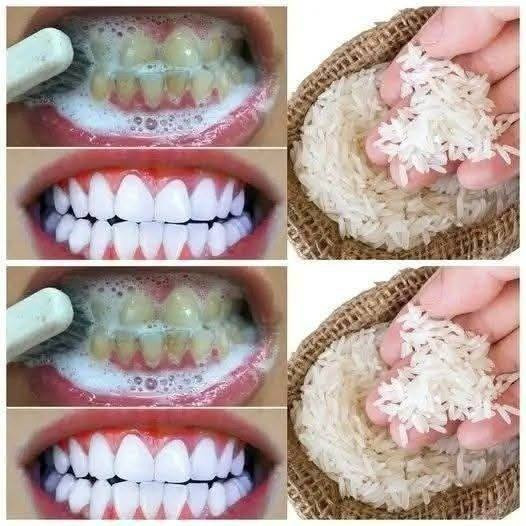
The rice method typically involves:
- Grinding uncooked rice into a fine powder
- Mixing it with a small amount of water (or sometimes baking soda)
- Brushing teeth gently with the paste for about a minute
The claim is that rice acts as a natural abrasive, removing surface stains and instantly brightening teeth.
There’s a small grain of truth in this idea — but not in the dramatic way it’s often advertised.
How Teeth Actually Get Stained
To understand whitening, you need to understand discoloration.
Teeth stain in two main ways:
1. Extrinsic Stains (Surface Stains)
These sit on the enamel and are caused by:
- Coffee
- Tea
- Red wine
- Smoking
- Colored foods
Surface stains can sometimes be reduced with polishing or mild abrasion.
2. Intrinsic Stains (Deeper Stains)
These are inside the tooth structure and caused by:
- Aging
- Medication
- Trauma
- Genetics
No amount of scrubbing will remove intrinsic discoloration.
Professional whitening works by using peroxide-based agents that penetrate enamel and chemically break down stain molecules.
Rice does not do this.
What Rice Can Actually Do
Finely ground rice has mild abrasive properties.
That means:
It may help polish away some surface buildup.
But here’s the key word: mild.
If the rice is not ground extremely finely, it becomes coarse — and coarse particles can scratch enamel.
Enamel does not regenerate.
Once scratched or thinned, it’s permanent.
And ironically, thinning enamel can make teeth look more yellow over time because the darker dentin underneath becomes more visible.
The One-Minute Myth
The idea that teeth can become dramatically whiter in 60 seconds is unrealistic.
Surface polishing may temporarily remove:
- Plaque film
- Minor discoloration
But it does not change the internal color of your teeth.
If your teeth appear brighter after brushing with rice, it’s likely because:
- You removed some surface residue
- You increased shine
- You stimulated saliva flow
Shine can create the illusion of whiteness.
But it’s cosmetic and temporary.
Why Dentists Don’t Recommend It
It’s not because they’re hiding secrets.
It’s because:
- Abrasives can damage enamel if misused
- Home grinding produces inconsistent particle sizes
- There’s no controlled evidence showing rice is effective for whitening
Dentists measure toothpaste abrasiveness using something called RDA (Relative Dentin Abrasivity).
Rice powder has no standardized RDA rating.
That unpredictability is risky.
The Real Risks of DIY Whitening
Many viral whitening hacks rely on abrasives:
- Charcoal
- Salt
- Baking soda
- Lemon juice
- Rice
Repeated abrasive brushing can cause:
Click page 2 to continue