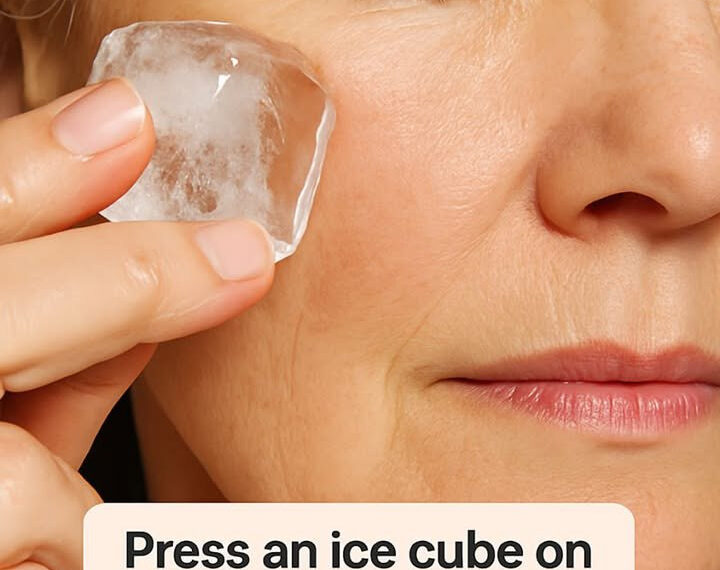
The Cold Beauty Trick That Actually Has Science Behind It
It sounds too simple to be real.
No expensive serum.
No high-tech tool.
No complicated routine.
Just… an ice cube.
Press it gently on your face before applying makeup, and people claim:
✨ Smaller pores
✨ Smoother skin
✨ Longer-lasting foundation
✨ Less redness
✨ A natural glow
But is this just another internet beauty myth?
Or is there real physiology behind the chill?
Let’s break this down carefully — scientifically, practically, and realistically — so you understand exactly what ice does to your skin and how to use it safely.
🧊 What Happens to Your Skin When You Apply Ice?
When cold touches your skin, several immediate biological reactions occur:
- Blood vessels constrict (vasoconstriction)
- Swelling temporarily reduces
- Nerve signals slow slightly
- Oil secretion briefly decreases
- Surface tightness increases
This combination creates the “smooth, firm” look people love.
But let’s go deeper.
🧬 The Science of Cold and Blood Flow
Your skin contains tiny blood vessels called capillaries.
When exposed to cold:
- These vessels narrow.
- Blood flow temporarily decreases.
- Redness reduces.
- Puffiness shrinks.
This is why ice packs are used on injuries.
On the face, that same mechanism can:
- Calm inflamed acne
- Reduce under-eye swelling
- Minimize redness
- Temporarily tighten skin appearance
Notice the word: temporarily.
Ice does not permanently shrink pores.
But it can make them look smaller for a short time.
🪞 Why Makeup Looks Better After Icing
Makeup performs best on:
- Calm skin
- Less oily surfaces
- Smooth texture
Here’s how icing helps:
1️⃣ Reduces Excess Oil
Cold slows sebaceous gland activity briefly.
Less oil = better foundation grip.
2️⃣ Tightens Surface
Cold causes slight skin contraction.
Foundation sits more evenly.
3️⃣ Reduces Puffiness
Especially under eyes and around cheeks.
Less puffiness = smoother blending.
4️⃣ Calms Inflammation
If you have acne-prone or sensitive skin, ice can reduce redness before applying concealer.
🧊 Does Ice Actually Shrink Pores?
Here’s the honest truth:
Pores do not open and close like doors.
They are fixed-size structures determined by:
- Genetics
- Skin type
- Age
- Oil production
However:
Cold can tighten surrounding tissue, making pores appear smaller temporarily.
So the visual effect is real — but not structural change.
💄 How to Use Ice Safely Before Makeup
Never place bare ice directly on your face for extended periods.
Extreme cold can cause:
- Broken capillaries
- Irritation
- Redness
- Ice burn (yes, that’s real)
Here’s the safe method:
Step 1: Wrap It
Wrap the ice cube in:
- Thin cloth
- Clean cotton pad
- Soft towel
Step 2: Short Contact
Gently glide over skin for:
30–60 seconds per area.
Do not hold it in one spot too long.
Step 3: Focus Areas
- T-zone (oil control)
- Under eyes (puffiness)
- Jawline (inflammation)
Step 4: Pat Dry
Let skin air dry slightly before applying primer.
🌿 Who Benefits Most From This Trick?
✔ Oily skin types
✔ Acne-prone skin
✔ Puffy mornings
✔ Redness-prone complexions
✔ Before special events
People with:
- Rosacea
- Very sensitive skin
- Broken capillaries
Should be cautious and consult a dermatologist first.
🧊 Ice vs Expensive Cooling Tools
You’ve seen:
- Ice globes
- Cryo sticks
- Cooling rollers
- Metal face tools
They all rely on the same principle:
Controlled cold exposure.
Ice is the simplest, cheapest version.
The difference is:
❄️ Press an Ice Cube on Your Face Before Makeup
The Cold Beauty Trick That Actually Has Science Behind It
It sounds too simple to be real.
No expensive serum.
No high-tech tool.
No complicated routine.
Just… an ice cube.
Press it gently on your face before applying makeup, and people claim:
✨ Smaller pores
✨ Smoother skin
✨ Longer-lasting foundation
✨ Less redness
✨ A natural glow
But is this just another internet beauty myth?
Or is there real physiology behind the chill?
Let’s break this down carefully — scientifically, practically, and realistically — so you understand exactly what ice does to your skin and how to use it safely.
🧊 What Happens to Your Skin When You Apply Ice?
When cold touches your skin, several immediate biological reactions occur:
- Blood vessels constrict (vasoconstriction)
- Swelling temporarily reduces
- Nerve signals slow slightly
- Oil secretion briefly decreases
- Surface tightness increases
This combination creates the “smooth, firm” look people love.
But let’s go deeper.
🧬 The Science of Cold and Blood Flow
Your skin contains tiny blood vessels called capillaries.
When exposed to cold:
- These vessels narrow.
- Blood flow temporarily decreases.
- Redness reduces.
- Puffiness shrinks.
This is why ice packs are used on injuries.
On the face, that same mechanism can:
- Calm inflamed acne
- Reduce under-eye swelling
- Minimize redness
- Temporarily tighten skin appearance
Notice the word: temporarily.
Ice does not permanently shrink pores.
But it can make them look smaller for a short time.
🪞 Why Makeup Looks Better After Icing
Makeup performs best on:
- Calm skin
- Less oily surfaces
- Smooth texture
Here’s how icing helps:
1️⃣ Reduces Excess Oil
Cold slows sebaceous gland activity briefly.
Less oil = better foundation grip.
2️⃣ Tightens Surface
Cold causes slight skin contraction.
Foundation sits more evenly.
3️⃣ Reduces Puffiness
Especially under eyes and around cheeks.
Less puffiness = smoother blending.
4️⃣ Calms Inflammation
If you have acne-prone or sensitive skin, ice can reduce redness before applying concealer.
🧊 Does Ice Actually Shrink Pores?
Here’s the honest truth:
Pores do not open and close like doors.
They are fixed-size structures determined by:
- Genetics
- Skin type
- Age
- Oil production
However:
Cold can tighten surrounding tissue, making pores appear smaller temporarily.
So the visual effect is real — but not structural change.
💄 How to Use Ice Safely Before Makeup
Never place bare ice directly on your face for extended periods.
Extreme cold can cause:
- Broken capillaries
- Irritation
- Redness
- Ice burn (yes, that’s real)
Here’s the safe method:
Step 1: Wrap It
Wrap the ice cube in:
- Thin cloth
- Clean cotton pad
- Soft towel
Step 2: Short Contact
Gently glide over skin for:
30–60 seconds per area.
Do not hold it in one spot too long.
Step 3: Focus Areas
- T-zone (oil control)
- Under eyes (puffiness)
- Jawline (inflammation)
Step 4: Pat Dry
Let skin air dry slightly before applying primer.
🌿 Who Benefits Most From This Trick?
✔ Oily skin types
✔ Acne-prone skin
✔ Puffy mornings
✔ Redness-prone complexions
✔ Before special events
People with:
- Rosacea
- Very sensitive skin
- Broken capillaries
Should be cautious and consult a dermatologist first.
🧊 Ice vs Expensive Cooling Tools
You’ve seen:
- Ice globes
- Cryo sticks
- Cooling rollers
- Metal face tools
They all rely on the same principle:
Controlled cold exposure.
Ice is the simplest, cheapest version.
The difference is:
Temperature control and comfort.
🌡️ The Cryotherapy Trend
Modern skincare has embraced:
Cryotherapy facials.
Professional treatments use controlled cold to:
- Stimulate circulation
- Tighten temporarily
- Reduce inflammation
Home icing is a low-tech version.
But professional cryotherapy uses controlled temperatures to avoid damage.
🧠 Why Cold Feels So Refreshing
Cold stimulates sensory nerves.
It increases alertness.
It reduces inflammation signals.
That “tight and awake” feeling is neurological as much as cosmetic.
🧊 Can Ice Reduce Acne?
Ice does not cure acne.
But it can:
- Reduce swelling of inflamed pimples
- Temporarily reduce redness
- Soothe irritation
It works best for:
Inflamed cystic spots.
Not blackheads or whiteheads.
🧊 Ice and Lymphatic Drainage
Cold can assist mild lymphatic movement.
This reduces:
- Morning puffiness
- Fluid retention
Especially useful after:
- Poor sleep
- Salty meals
- Crying
⚠️ When Ice Is NOT a Good Idea
Avoid icing if you have:
- Active rosacea flare
- Broken blood vessels
- Severe cold sensitivity
- Very thin skin
- Nerve sensitivity
Too much cold can stress delicate skin.
Moderation matters.
🧴 Should You Ice Before or After Skincare?
Best sequence:
Cleanse
Ice
Light moisturizer
Primer
Makeup
Icing after heavy creams may reduce product absorption.
Keep it early in the routine.
🧪 Does Ice Boost Collagen?
Short-term cold does not stimulate collagen significantly.
Long-term cold therapy research is ongoing.
But ice alone is not an anti-aging miracle.
It’s a cosmetic enhancer.
💡 The Psychological Effect
There’s something powerful about ritual.
Starting makeup with ice feels intentional.
That sensation primes you for a “fresh start.”
Confidence increases.
And confidence improves how makeup appears — perception matters.
🧊 Creative Variations
You can freeze:
- Green tea (antioxidants)
- Chamomile tea (soothing)
- Cucumber water (hydrating)
- Rose water (calming)
But always test for sensitivity first.
🌍 Why This Trick Became Popular
It’s:
Cheap
Immediate
Visible
Simple
And in a beauty world filled with complexity, simplicity feels magical.
🧘 The Balanced Truth
Pressing an ice cube on your face before makeup can:
✔ Reduce puffiness
✔ Calm redness
✔ Improve makeup texture
✔ Temporarily tighten skin
It will NOT:
✖ Permanently shrink pores
✖ Cure acne
✖ Replace skincare
✖ Reverse aging
It’s a supportive step — not a miracle.
🏁 Final Thoughts
Sometimes the simplest tools are surprisingly effective.
Ice works because:
Your skin responds instantly to temperature.
It’s not mystical.
It’s vascular biology.
If used gently and correctly, icing can:
Enhance your makeup base.
Create a smoother canvas.
Help you feel refreshed.
And sometimes that small ritual is enough to make you feel like a believer.
Just remember:
Cold is powerful.
Use it wisely.
Click page 2 to continue