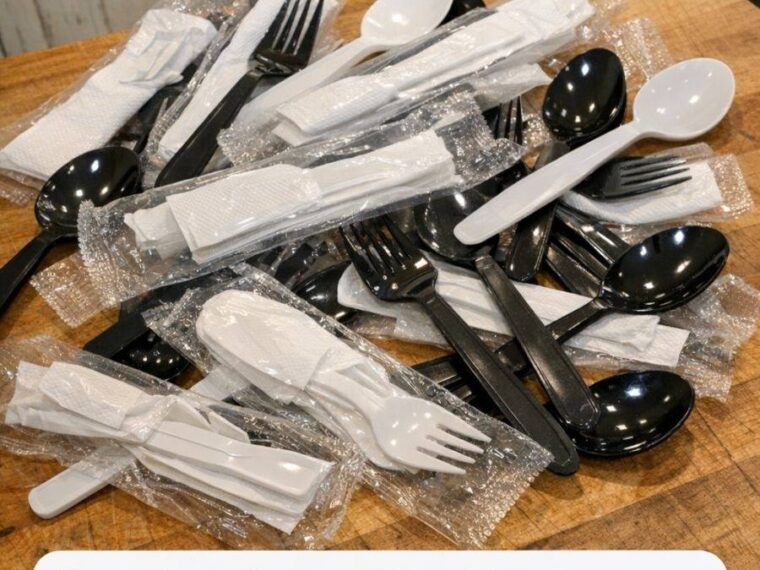
In today’s fast-paced world, convenience often comes wrapped in plastic. Food delivery and takeout culture have quietly reshaped how people eat, socialize, and manage their time. But alongside this convenience lies an often-overlooked byproduct: the growing pile of disposable plastic utensils. Forks, spoons, and knives arrive with nearly every order, frequently unused and quickly discarded. What seems like a small, harmless habit accumulates into a significant environmental concern over time.
Yet within this issue lies an opportunity—an opportunity to rethink waste, to practice intentional living, and to transform something disposable into something meaningful. Instead of viewing plastic takeout utensils as trash, we can begin to see them as tools with extended potential. This shift in mindset is not just about reducing waste; it is about developing awareness, creativity, and responsibility in everyday life.
The ideas explored in this article are inspired by practical approaches to reusing plastic utensils in meaningful ways , but they go far beyond simple reuse. This is a deeper journey into sustainability, habit formation, environmental consciousness, and creative thinking. By the end, you will not only know what to do with your extra utensils—you will understand why these small actions matter, and how they can reshape your relationship with consumption itself.
Understanding the Real Problem: Why Plastic Utensils Matter More Than You Think
Before diving into solutions, it is essential to understand the scale and impact of the issue. Plastic utensils are often categorized as single-use plastics. Unlike bottles or containers, they are rarely recycled due to their size, composition, and contamination with food residue. This means most of them end up in landfills or, worse, in natural ecosystems.
Plastic does not biodegrade in the traditional sense. Instead, it breaks down into microplastics—tiny particles that infiltrate soil, water, and even the food chain. Over time, these particles can affect wildlife, ecosystems, and human health.
But here is where awareness becomes powerful: each plastic utensil you reuse is one less item contributing to that cycle. When multiplied across households, communities, and cities, these small decisions begin to matter in a very real way.
There is also a psychological dimension. When we stop treating items as disposable, we begin to value them differently. We become more mindful of what we consume, how we consume it, and what happens afterward. This awareness is the foundation of sustainable living.
Building a Reusable Takeout Cutlery Kit: A Small Habit with Big Impact
One of the simplest yet most transformative steps is creating a personal reusable cutlery kit. This idea may seem basic, but its impact is surprisingly powerful.
A reusable kit is not just about convenience—it is about preparation. When you have your own utensils readily available, you naturally begin to decline disposable ones. Over time, this becomes a habit, and habits shape behavior.
To build your kit, gather a few clean plastic utensils that are still in good condition. Place them in a compact pouch or container. Keep this kit in places where you are most likely to need it: your bag, your car, or your workspace.
The key lesson here is this: sustainability becomes easier when it is convenient. If something requires too much effort, it will not last as a habit. But when it fits seamlessly into your routine, it becomes second nature.
This approach also teaches an important life principle: preparation reduces waste—not just environmental waste, but wasted time, energy, and money.
Emergency Utensils: The Power of Being Ready
There is something deeply practical about having backup utensils available when you need them. Whether it is an unexpected lunch break, a spontaneous outing, or a last-minute meal, being prepared eliminates the need for additional waste.
This idea goes beyond utensils. It reflects a broader concept in life: preparedness reduces dependency. When you rely less on external resources, you gain more control over your environment and your choices.
Keeping utensils in your car, desk, or bag is not just about convenience—it is about autonomy. It means you are no longer dependent on disposable solutions. You are choosing a more intentional way of living.
And interestingly, this habit can influence other areas of your life. When you start preparing in small ways, you may begin to prepare better in larger ways—planning your meals, organizing your time, and managing your responsibilities more effectively.
Turning Everyday Items into Event Essentials
Plastic utensils are often purchased specifically for parties, picnics, and gatherings. Yet many people already have a supply of these items sitting unused in their homes.
By organizing your existing utensils into a designated set for events, you reduce the need to buy new ones. This not only saves money but also reinforces a mindset of resourcefulness.
There is a deeper lesson here: you often already have what you need. The challenge is not always a lack of resources—it is a lack of awareness of those resources.
When you begin to use what you already own, you develop creativity. You learn to adapt, to improvise, and to find solutions within your environment. This mindset is valuable far beyond sustainability—it is a life skill.
Kitchen Utility: Redefining the Purpose of Everyday Objects
Plastic spoons, often overlooked, can serve multiple roles in the kitchen. From scooping ingredients to stirring beverages, their usefulness extends far beyond their original purpose.
This idea introduces an important concept: function is flexible. An object is not limited to the purpose it was designed for. With creativity, it can serve multiple roles.
This way of thinking encourages innovation. When you stop seeing objects as fixed, you begin to explore possibilities. This mindset can influence how you approach problems, challenges, and even personal growth.
For example, just as a spoon can become a measuring tool, a difficulty in your life can become a learning opportunity. The principle is the same: redefine the function, and you change the outcome.
Gardening with Plastic Utensils: Connecting Sustainability with Nature
Using plastic utensils in gardening is not only practical but also symbolic. It represents a cycle—taking something artificial and using it to support something natural.
Forks can aerate soil, knives can assist with planting, and handles can serve as plant labels. These small actions create a bridge between consumption and creation.
Gardening itself teaches patience, care, and responsibility. When combined with reuse, it becomes a powerful practice of sustainability.
There is also a deeper emotional aspect. Working with plants can reduce stress, improve mood, and create a sense of connection with the environment. When you integrate reused materials into this process, you strengthen that connection.
You are no longer just consuming—you are participating in a cycle of growth.
Creative Expression: Turning Waste into Art
One of the most inspiring ways to reuse plastic utensils is through creativity. Crafting and DIY projects transform ordinary objects into something unique and meaningful.
This process is not just about decoration—it is about expression. When you create something with your hands, you engage your imagination, your focus, and your sense of identity.
Art also changes how you perceive objects. Instead of seeing waste, you begin to see potential. This shift in perception is powerful. It affects not only how you view materials but also how you view challenges in your life.
When you learn to create beauty from what is considered useless, you develop resilience. You become someone who can find value where others see none.
Practical Uses in Cleaning and Maintenance
Click page 2 to continue