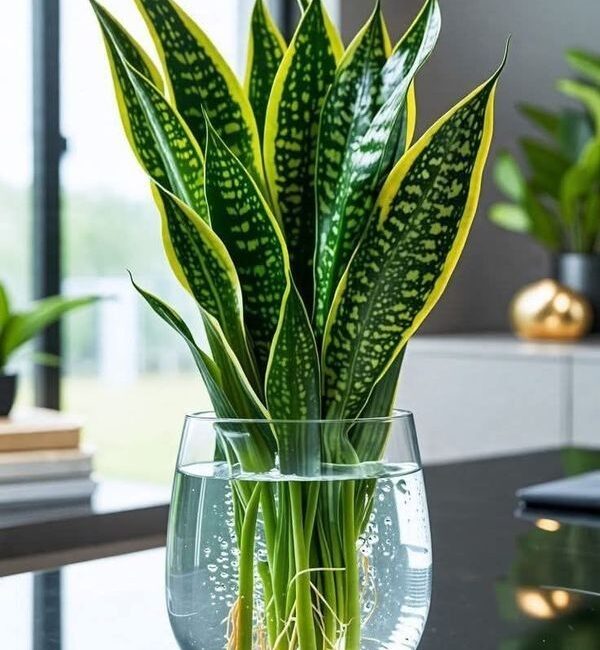
- Trim leaning or unusually tall leaves to maintain a nice symmetrical rosette or upright shape.
- If a leaf becomes floppy or weak, remove it fully rather than letting it drag.
Removing Pups or Offshoots
- Snake plants often produce pups (baby shoots or “pups”) around base. Removing and re‑potting them not only helps your propagation but also frees up energy for parent plant, which may help bloom.
9. Triggering Bloom: What Makes a Snake Plant Flower
Blooming is the holy grail for many snake plant owners. While it’s not guaranteed, here are the conditions and cues that often lead to flowering.
Key Bloom‑Triggers
- Maturity: The plant must be well established with a good root system and multiple leaves. Young plants seldom bloom.
- Mild Stress: Not lethal stress, but mild, controlled stress—slight drying between waterings, slight exposure to cooler nights (but not too cold)—can trigger bloom.
- Shorter Daylight Period or Light Change: Sometimes transitioning into autumn or winter with reduced light or shorter days can prompt a bloom.
- Stable Environment: Avoid moving plant too much, no drastic shock (temperature, water, repotting) right before potential flowering.
- Good Nutrition & Light: Earlier feeding, bright indirect light, and letting soil dry a bit between waterings.
What to Expect
- Snake plant blooms are usually on a spiky stalk rising between leaves. Flowers are often tubular, often cream, white, pale green—sometimes perfumed.
- Blooming may occur rarely and unpredictably, and often only one or two spikes. But when it happens, it’s rewarding.
10. Propagation: Increasing Your Number Of Plants
Multiplying snake plants not only gives you more plants for your space or gifts, but also helps you get stronger adult plants that may bloom. Here are common propagation methods.
Division
- Remove the plant from its pot, gently separate the root ball into sections each with leaf fan and roots, replant.
- Do this in spring or early summer.
Leaf Cuttings
- Cut a healthy leaf into sections, allow cut ends to callus, then place in soil or water until roots form.
- Keep cuttings in warm, humid, light location.
Pups
- Identify pups at the base. Once they’re some size and have their own roots, you can cut them out and pot separately.
Propagation encourages vigor—plants that come from pups or divisions often flower better once mature.
11. Handling Common Problems: Pests, Rot, Leaf Issues
Even though Mother‑in‑Law’s Tongue is tough, some issues may arise. Solving them promptly helps ensure strong growth and possibly bloom.
Root Rot
- Caused by overwatering or waterlogging.
- Solution: stop watering, let soil dry, repot if soil smell bad, remove rotten roots.
Pests
- Mealybugs, spider mites, scale insects occasionally appear.
- Wipe leaves, isolate plant, use gentle insect soap or oil.
Leaf Browning or Tips
- Could be underwatering, low humidity, or too much direct sun.
- Adjust watering; reduce sun; increase humidity.
Leaf Stretching or Weak Upright
- If plant gets too little light, leaves may become long, floppy, or weak.
- Move to better light.
12. Seasonal Care: Adapting Year‑Round
To maintain beauty and bloom potential, adjust care with seasons.
- Spring/Summer (Growth Season): More light, more feeding, more water—but still allow soil to dry between waterings.
- Autumn: Reduce water, reduce feeding, prepare for cooler nights. Let plant settle.
- Winter: Minimal watering; protect from cold; ensure no frost or draft; light should still be adequate. Bloom sometimes triggered during periods of stable, cooler nights.
13. Display Ideas & Aesthetic Presentation
How you present your Mother‑in‑Law’s Tongue can enhance its beauty and your pleasure in it.
- Use decorative pots that allow for good drainage. Perhaps terracotta or matte ceramic.
- Group several plants of different varieties together for visual contrast: tall upright leaf, short compact, wide variegation.
- Use supportive stakes if tall leaves are floppy.
- Place in corners, entryways, or near windows where leaves catch light but aren’t scorched.
- Use leaf fans or leaf alignment (rotate pot occasionally) to ensure even growth.
14. Final Tips for Beautiful, Blooming Plants
Here are distilled tips to ensure your snake plant not only grows well but may also reward you with flowers.
- Start with a healthy, moderately mature plant.
- Light: bright, indirect is best.
- Roofing: well‑draining soil, smallish pot to encourage maturity.
- Water with balance, avoid overwatering. Let soil dry somewhat.
- Feed during growth phase; reduce feed during dormancy.
- Mild stress and stability are sometimes triggers for bloom.
- Prune, clean, remove old leaves and pups to keep plant neat and energy directed.
- Keep away from cold drafts, frost, sudden temperature changes.
Conclusion
Mother‑in‑Law’s Tongue is more than just a tough, low-maintenance houseplant. With thoughtful care, it can become a showstopper—upright, bold, with deep vibrant leaves, and, in good cases, even flowering. While blooms are rare indoors, they are possible under favorable conditions when the plant feels established, well‑nourished, well‑lit, and stable.
By following these steps—choosing the right variety and pot, giving good light, regulating water, feeding properly, keeping temperature stable, pruning and propagating—you maximize your chances for beauty and bloom. Your snake plant may surprise you with elegant blossoms that many people never see.
Happy growing, and may your Mother‑in‑Law’s Tongue become a proud centerpiece of your home—lush, strong, beautiful, and possibly in bloom!