There’s something deeply satisfying about walking into a bathroom that looks and smells fresh — gleaming tiles, sparkling mirrors, and most importantly, a spotless toilet bowl. Yet, for many of us, one problem stubbornly persists: those yellow stains that seem to cling to the toilet no matter how often you clean.
Scrubbing, chemical sprays, and endless rinsing can make you feel like you’re fighting a losing battle. But long before store shelves overflowed with expensive detergents and industrial cleaners, our grandmothers had already solved this problem — with simple, natural, and surprisingly effective methods.
And one of their favorite weapons? A simple bar of soap.
It might sound too easy to be true, but this trick — passed down through generations — works like magic when done right. Today, we’re diving into how and why it works, what kind of soap to use, and how you can restore your toilet’s original shine without resorting to harsh chemicals or hours of scrubbing.
The Problem: Why Toilets Turn Yellow Over Time
Before revealing the remedy, it helps to understand why those stains appear in the first place. Contrary to popular belief, it’s not just about poor cleaning — there’s a bit of chemistry behind it.
The main culprits are:
- Hard Water Deposits
In many homes, tap water contains high levels of minerals such as calcium, magnesium, and iron. When this mineral-rich water sits in your toilet bowl for long periods, it leaves behind deposits known as limescale. Over time, limescale combines with organic matter, giving it a yellow or brown tint. - Iron Oxidation
If your plumbing system uses iron pipes or your water contains trace amounts of iron, oxidation (exposure to air) turns it into rust — those orange-yellow streaks that never seem to wash away. - Urine Residue
Even trace amounts of urine left on the surface or beneath the rim can react with minerals in the water. This combination produces a stubborn, yellowish buildup that adheres to porcelain like glue. - Cleaning Neglect or Wrong Products
Many people use bleach thinking it’s the ultimate solution. Ironically, bleach can worsen yellow stains by oxidizing minerals further and creating a dull film over the porcelain.
Our grandmothers, without access to fancy chemicals, understood these natural processes — and found gentle, effective ways to break them down using everyday materials.
The Secret Ingredient: The Humble Soap Bar
The star of this remedy is a simple, classic bar of savon de Marseille — or any natural soap made with vegetable oils and no artificial additives. This soap, traditionally composed of olive oil, water, and sodium hydroxide, has been used for centuries not only for laundry but also for home cleaning.
Its power lies in its chemistry. The fatty acids in soap bind to grease, dirt, and mineral particles, helping to loosen them from surfaces without damaging porcelain. Unlike harsh cleaners that strip and scratch, soap cleans by encapsulation — surrounding and lifting away unwanted residues.
But when paired with a few household allies, its cleaning potential becomes unstoppable.
Grandmother’s Remedy: The Soap Trick That Works Every Time
Here’s the step-by-step method passed down through generations — simple, natural, and astonishingly effective:
What You’ll Need:
- 1 bar of natural soap (ideally savon de Marseille or any vegetable-based soap)
- ½ cup of baking soda
- ½ cup of white vinegar
- 1 liter of hot water
- A toilet brush or old sponge
Instructions:
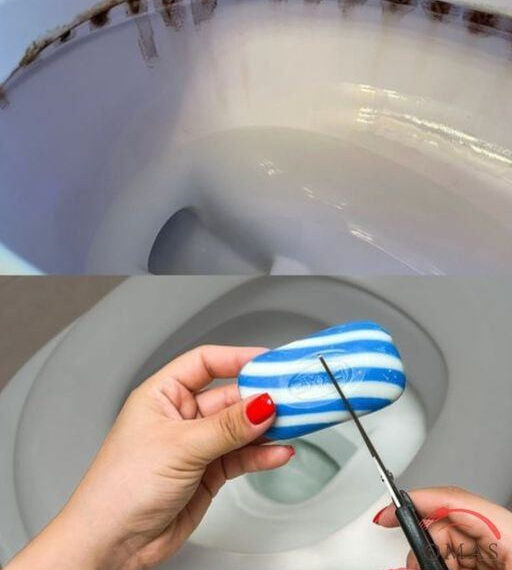
- Grate the Soap
Take your bar of soap and grate about 2–3 tablespoons of it into fine shavings. The smaller the pieces, the more easily they’ll dissolve. - Mix Your Cleaning Paste
In a small bowl, combine the grated soap with the baking soda. Add just enough hot water to create a creamy paste — thick enough to coat surfaces but soft enough to spread. - Apply Generously to Stained Areas
Using a brush or sponge, spread the paste inside the toilet bowl, focusing on yellow-stained areas and the under-rim edges. Let it sit for at least 15–20 minutes. During this time, the soap and baking soda will soften mineral deposits, while their mild alkalinity starts breaking down organic residues. - Add Vinegar for a Foaming Reaction
Pour the vinegar directly into the bowl. You’ll see a satisfying fizz — that’s the natural reaction between the vinegar’s acidity and baking soda’s alkalinity. This helps lift stubborn stains and disinfect the surface at the same time. - Scrub and Flush
After another 10 minutes, scrub the bowl using a toilet brush. The soap’s slickness makes this much easier — it reduces friction while the natural oils leave behind a faint shine. - Rinse with Hot Water
Pour a final liter of hot (not boiling) water into the bowl and flush. You’ll immediately notice the difference — the stains dissolve, and the porcelain gleams like new.
Why This Remedy Works So Well
This recipe might seem too simple, but its effectiveness comes from chemistry and synergy:
- Soap: Acts as a surfactant, lifting and dissolving residues. Its fatty acids bind to both grease and minerals, allowing them to rinse away easily.
- Baking Soda: A natural deodorizer and mild abrasive. It gently scrubs without scratching delicate porcelain.
- Vinegar: A natural acid that dissolves limescale and mineral deposits, and kills odor-causing bacteria.
- Hot Water: Softens grime and activates the soap’s emulsifying properties.
Combined, these four create a powerhouse cleaning effect — without harsh chemicals, fumes, or surface damage.
Alternative Soap-Based Variations
If you prefer to experiment, here are two variations our grandmothers also used:
1. Soap and Lemon Juice Paste
Click page 2 for more