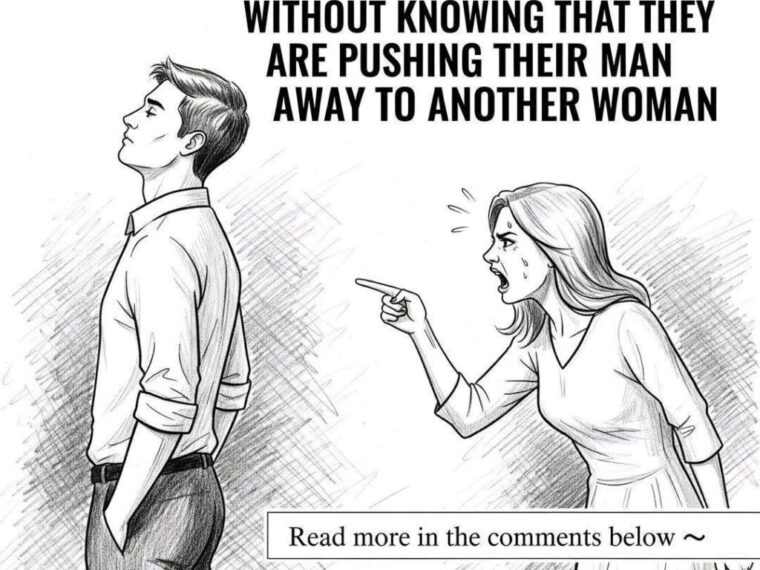
Relationships rarely fall apart because of one dramatic event. Much more often, distance grows quietly through small habits repeated every day. A comment said in frustration. A moment of neglect. A pattern of communication that slowly replaces warmth with tension.
Love is not destroyed by one mistake — it erodes through patterns.
Many women deeply love their partners and want a strong relationship, yet certain behaviors can unintentionally create emotional distance. These behaviors are rarely malicious. In fact, they usually come from stress, insecurity, misunderstanding, or simple habit.
Psychology teaches an important truth:
relationships are emotional ecosystems. Every action sends signals of appreciation, rejection, safety, admiration, or criticism. Over time, these signals shape how a partner feels inside the relationship.
When someone consistently feels appreciated and understood, they naturally move closer. When they feel criticized, ignored, or emotionally drained, they unconsciously pull away.
Understanding these dynamics is powerful because it means something hopeful:
Most relationship problems are not permanent — they are behavioral patterns that can be changed.
In this deep exploration, we will look at eight subtle mistakes that often push partners away, why they affect men psychologically, and most importantly how to transform them into habits that strengthen attraction, trust, and emotional intimacy.
This is not about blaming women. Relationships are always a two-way system. But self-awareness is one of the most powerful tools for creating the love life you want.
Let’s explore the hidden patterns that shape relationship dynamics.
Understanding the Psychology of Emotional Distance
Before discussing the specific mistakes, it helps to understand how emotional distance actually forms.
Human beings have a deep psychological need for three things inside relationships:
1. Appreciation – feeling valued and respected.
2. Emotional safety – feeling accepted without constant judgment.
3. Connection – feeling understood and emotionally close.
When these needs are satisfied, the brain releases bonding hormones like oxytocin and dopamine, which strengthen attachment and attraction.
But when a partner consistently experiences criticism, neglect, comparison, or emotional stress, the brain begins associating the relationship with tension instead of comfort.
Over time, the partner may begin to:
• withdraw emotionally
• avoid communication
• spend more time outside the relationship
• feel less romantic attraction
This shift often happens gradually and silently.
The good news is that small behavioral changes can reverse the process and rebuild connection.
Let’s examine the first subtle mistake.
Mistake 1: Constant Criticism Instead of Appreciation
One of the fastest ways to damage emotional attraction in a relationship is constant criticism.
Criticism differs from simple feedback. It attacks the person rather than the behavior.
For example:
Instead of saying
“Could you help me with the dishes tonight?”
Criticism sounds like
“You never help with anything.”
Psychologically, repeated criticism triggers defensiveness and emotional shutdown. Over time, a partner may begin to feel like nothing they do is good enough.
This is especially powerful because many men connect their sense of self-worth to competence and respect.
When criticism becomes the dominant tone of communication, the relationship starts to feel like a place of judgment rather than support.
Why This Happens
Many women criticize because they feel unheard, overwhelmed, or unsupported. The criticism is often an emotional reaction rather than a calculated attack.
But repeated criticism has a cumulative effect.
Relationship researcher John Gottman found that stable couples maintain approximately a 5:1 ratio of positive interactions to negative ones.
In other words, healthy relationships contain far more appreciation than correction.
How to Fix It
Start by consciously increasing expressions of appreciation.
Instead of focusing only on what your partner forgot to do, notice what they did do.
Examples:
“I really appreciate you fixing that yesterday.”
“Thank you for helping me earlier.”
“I love how thoughtful you were.”
Appreciation feeds emotional connection. When people feel valued, they naturally want to do more.
Criticism closes doors. Appreciation opens them.
Mistake 2: Neglecting Emotional Intimacy
Many couples share physical space but slowly lose emotional closeness.
Conversations become practical rather than personal.
Instead of sharing feelings, dreams, and reflections, discussions revolve around logistics:
• bills
• work
• errands
• responsibilities
While these topics are necessary, relationships need something deeper: emotional intimacy.
Emotional intimacy means feeling known and understood.
It is created through conversations like:
• discussing hopes for the future
• sharing worries or fears
• celebrating personal victories
• expressing vulnerability
Without this layer of connection, partners may begin to feel like roommates rather than romantic partners.
Why Emotional Intimacy Matters
Psychologically, emotional intimacy creates attachment security.
It reassures the brain that the relationship is a safe place for openness and trust.
When emotional conversations disappear, loneliness can appear even while living together.
How to Fix It
Create intentional moments for emotional connection.
One effective practice is setting aside daily distraction-free conversation time.
Even 15 minutes without phones can rebuild closeness.
Ask meaningful questions like:
“What was the best moment of your day?”
“What has been stressing you lately?”
“What are you excited about this month?”
These conversations nourish the emotional bond that keeps relationships strong.
Mistake 3: Taking Your Partner for Granted
Familiarity is one of the quiet dangers of long-term relationships.
At the beginning of love, partners express gratitude constantly. Every small gesture feels meaningful.
But over time, routine can create a dangerous assumption:
“Of course they will always be here.”
When appreciation disappears, partners may begin to feel invisible.
Humans have a deep psychological need to feel recognized and valued by the people closest to them.
When everyday efforts go unnoticed — working hard, helping around the house, supporting emotionally — motivation to continue those efforts can decline.
The Invisible Effort Problem
Many actions in relationships become invisible over time.
Cooking dinner.
Driving somewhere.
Fixing something broken.
Listening to a stressful story.
These actions require effort, but when they become expected rather than appreciated, emotional resentment can slowly grow.
How to Fix It
Reintroduce gratitude into daily interactions.
Small acknowledgments have powerful emotional effects.
Examples include:
“Thank you for doing that.”
“I noticed you helped earlier.”
“I appreciate what you did today.”
Gratitude transforms routine into recognition.
It reminds your partner that they are seen and valued.
Mistake 4: Comparing Your Partner to Other Men
Few things damage confidence faster than comparison.
Statements like:
“Why can’t you be more like him?”
“My friend’s husband does this.”
“My ex used to…”
create an emotional message that says:
“You are not enough.”
Comparison shifts the relationship from partnership to competition.
Instead of feeling admired for who they are, the partner feels evaluated against an impossible standard.
Why Comparison Hurts So Much
Human psychology is extremely sensitive to social comparison.
When someone feels constantly compared to others, the brain interprets it as rejection.
This often leads to:
• resentment
• defensiveness
• emotional withdrawal
How to Fix It
Focus on the qualities that make your partner unique.
Instead of comparing them to others, highlight the characteristics you genuinely admire.
Examples include:
“I love how patient you are.”
“You’re really thoughtful in ways that surprise me.”
“I admire your dedication.”
When admiration replaces comparison, partners feel valued for who they truly are.
And admiration is one of the strongest fuels of romantic attraction.
Mistake 5: Turning the Relationship Into a Complaint Zone
Click page 2 to continue