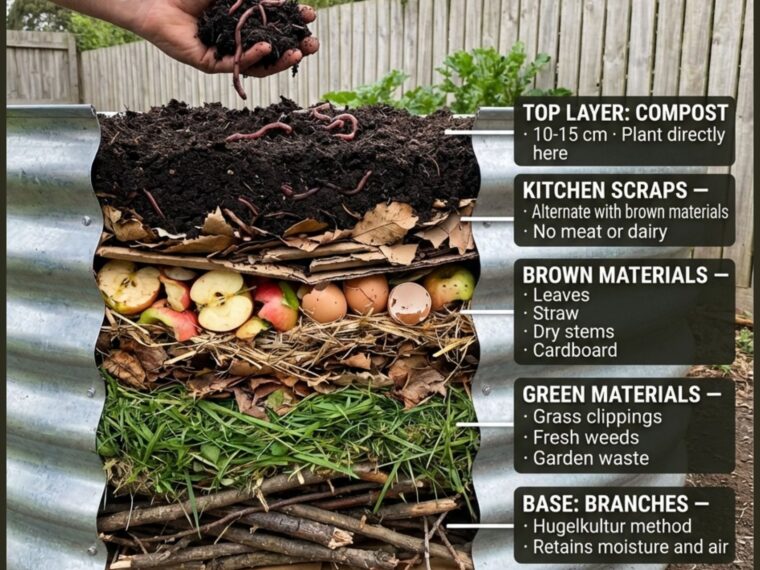
To balance the nitrogen-rich green materials, gardeners add a layer of carbon-rich brown materials. These include dry leaves, straw, dried plant stems, and shredded cardboard.
The ideal ratio for decomposition is roughly two parts brown material to one part green material. This balance ensures that microorganisms have both the nitrogen and carbon they need to function efficiently.
Brown materials play several important roles. They absorb excess moisture, preventing the bed from becoming waterlogged. They also introduce structure and airflow, which supports healthy microbial populations.
If too much green material is added without enough brown material, the bed may begin to ferment rather than decompose. This can produce unpleasant odors and slow the composting process.
By maintaining the proper ratio, gardeners create conditions that encourage steady and balanced decomposition.
Layer Five: Kitchen Scraps
Kitchen scraps add another valuable source of nutrients to the raised bed. Fruit and vegetable peelings, coffee grounds, eggshells, and tea bags can all be incorporated into this layer.
These materials break down relatively quickly and contribute important nutrients to the soil.
Coffee grounds provide nitrogen and organic matter, while eggshells add calcium—a mineral essential for plant cell structure.
However, certain materials should never be included in the bed. Meat, dairy products, and oily cooked foods can attract pests and create unpleasant smells as they decompose.
Keeping kitchen scraps limited to plant-based materials ensures that decomposition remains efficient and odor-free.
To prevent scraps from compacting or attracting insects, they should be mixed with brown materials such as dry leaves or shredded cardboard.
The Final Layer: Compost
The top layer of the raised bed is composed of finished compost, typically about ten to fifteen centimeters deep. This is the layer into which plants are initially planted.
Compost provides immediate nutrients and a stable growing medium for young roots. Because the lower layers are still decomposing, the compost acts as a buffer between the fresh organic materials below and the plants above.
Over time, plant roots naturally grow downward as the layers beneath break down. The gradual release of nutrients from the decomposing materials feeds the plants throughout the growing season.
Using compost as the top layer allows gardeners to begin planting immediately while the rest of the bed continues to mature.
The Importance of Water During Construction
Water is essential at every stage of building a layered raised bed. Microorganisms responsible for decomposition require moisture to survive and function.
As each layer is added, it should be watered thoroughly. The goal is to achieve moisture levels similar to a wrung-out sponge—damp but not dripping.
Dry materials decompose very slowly. Without sufficient moisture, microbial activity decreases and the entire system may stagnate.
Proper watering ensures that decomposition begins immediately and continues efficiently.
Why Raised Beds Settle Over Time
One of the most common surprises for gardeners using this method is how much the bed settles during the first year. As organic materials decompose, they shrink and compress.
It is normal for a newly built raised bed to lose 30 to 40 percent of its original height within the first year.
This settling process is a sign that decomposition is occurring successfully. As materials break down, they transform into dense, nutrient-rich soil.
To maintain the desired bed height, gardeners simply add additional compost or organic material to the surface each season.
The Long-Term Benefits of the Layering Method
Although the layering technique requires patience, it offers several long-term advantages.
First, it dramatically reduces the cost of building raised beds. Most of the materials—cardboard, branches, leaves, and kitchen scraps—are readily available and often considered waste.
Second, the resulting soil becomes increasingly fertile over time. As organic matter accumulates and decomposes, the soil develops a rich structure filled with beneficial microorganisms.
Third, the bed becomes more resilient to drought. The buried wood and organic materials store water and release it gradually, reducing the need for frequent irrigation.
Finally, this method supports sustainable gardening practices. Instead of sending organic waste to landfills, gardeners recycle it directly into the soil.
A Garden Built from Nature’s Recycling System
The layering method for raised beds demonstrates an important ecological principle: nothing in nature truly goes to waste. Fallen leaves, broken branches, and kitchen scraps all contain valuable nutrients that can return to the soil.
By mimicking the natural processes of forests and ecosystems, gardeners create a self-sustaining system that becomes richer with each passing season.
Within two years, the layers of cardboard, wood, plant matter, and compost transform into deep, dark soil teeming with life. Earthworms move through the bed, microorganisms break down organic matter, and plant roots explore a fertile environment filled with nutrients.
The result is more than just a productive garden bed. It is a living system that reflects the quiet efficiency of nature’s own recycling process.
And perhaps the most satisfying part of all is knowing that this thriving ecosystem began not with expensive soil purchases but with simple materials that were freely available all around us. 🌱